Why still air in a flue causes damp
A chimney that is no longer used still collects water. Rain gets in at the top, damp rises from below and warm room air carries moisture into the flue. With nothing to move that air, the water sits and soaks into the brick and plaster around it.
The signs usually appear on the breast inside the house: brown stains, peeling paint, a musty smell or salts coming through the plaster. Outside, the brickwork can darken or spall faster because the stack is permanently damp. A cap on the top without any way for air to leave is what turns a wet flue into a trapped wet flue.
BS 5250:2021 is the current British Standard dealing with moisture in buildings, and it is the code a roofer has in mind when a sealed flue starts to mark the breast below with damp. The size and number of vents for a particular flue are set by whoever caps it, to suit the flue and the room.
For the capping itself, read capping a disused chimney.
A vent at each end of the flue
The usual arrangement puts one vent near each end of the flue, so air can pass through under its own steam:
- At the top, a ventilated cap or cowl that keeps rain out but lets air through, rather than a solid slab sealed down with mortar.
- At the bottom, a grille or vent in the sealed-up fireplace opening or the chimney breast, low enough to draw air in and clear of furniture and curtains.
A solid flat cap over a flue with no vent at the base leaves the air to sit. A vent at the base with no air path out at the top does the same. Both ends need to be open for the system to work, and the path between them must not be blocked by rubble or soot that has been left in the flue.
If the chimney is shared with a neighbour, the vents on your side need to stay clear of anything they have fitted, and it is worth knowing which flues are still in use before anything is closed up. Soot and loose debris left lying at the base can also block the path, so the flue is swept first.
See also chimney cowls and pots for the options at the top.
Signs that ventilation is not working
A capped flue can seem fine for a year or two before the damp shows. Things to look for:
- Damp patches or stains on the chimney breast, often at ceiling height or at skirting level.
- Peeling paint, blistering wallpaper or white salt deposits on the plaster.
- A musty smell in the room with the sealed fireplace.
- A vent grille that is blocked by paint, furniture or fallen debris.
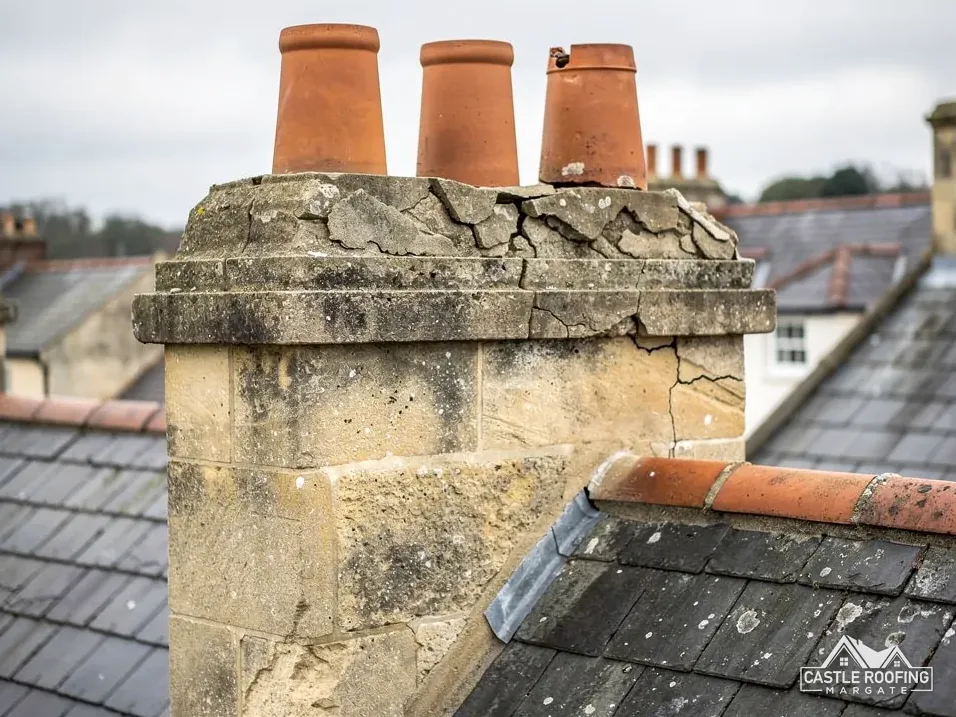
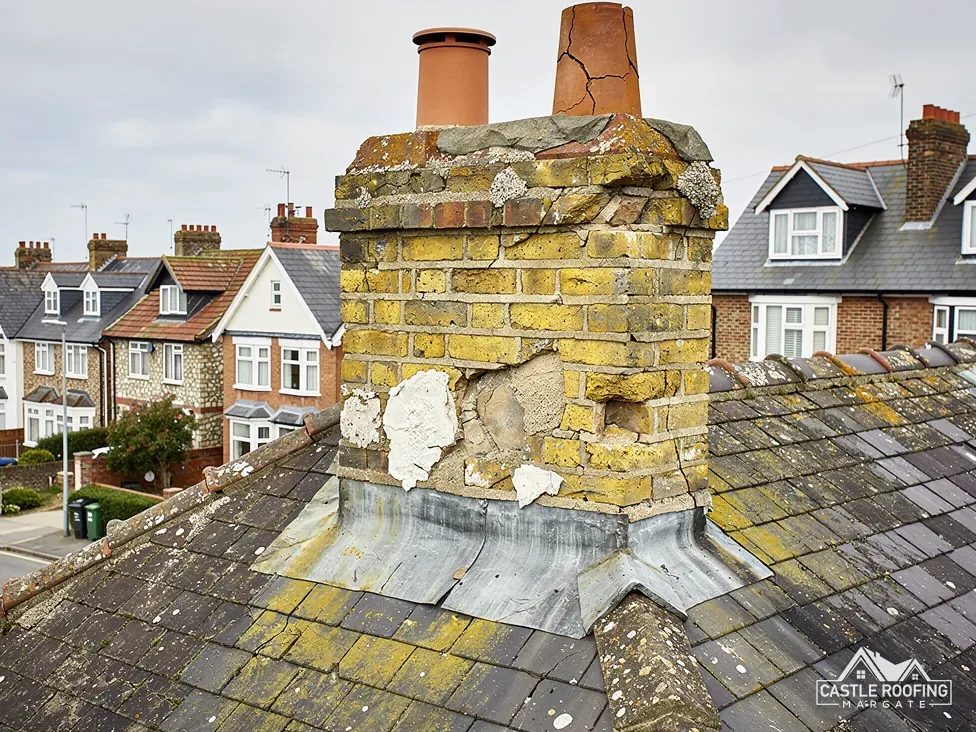
- Brickwork near the pots that looks darker than the rest, flaking, or sprouting moss.
A damp patch does not always mean the flue is at fault. Failed flashings, cracked flaunching or a leaking roof near the stack cause the same marks, so the survey checks the roof as well as the flue. See a damp chimney breast for the wider causes.
Opening a capped flue to look is a job for a roofer or chimney specialist, because soot and debris can fall and a cowl may be fixed in place. A sealed fireplace behind furniture is easy to forget, so check there for the damp signs as well as at the top.
Fires, stoves and what to ask
If a boiler, gas fire, wood burner or stove uses the flue, it must not be capped. The installer who fitted the appliance can say what the flue needs, and any change to a working flue should go through them first.
Before a disused flue is capped, put these questions to whoever is doing it:
- Will the cap let air through and keep rain out?
- Is there a vent at the bottom, and where will it sit?
- Has the flue been swept and cleared first?
- Are the pots, flaunching and flashings in good order, so the vents are not working against a leak?
If the breast is to be taken out altogether, building regulations approval always applies, and a party wall notice may be needed. That is a different job from venting the flue.
The number of flues, the height and the access decide the cost of capping and venting, and the survey establishes all three. You then get one written total. Every other stack job is covered under chimney repairs.