Three usual causes of a damp breast
Inside the house, the chimney breast is the brick column jutting from the wall, with the flue running up inside it, and it connects straight to the weather at the roof. A damp patch on it usually traces back to one of three sources.
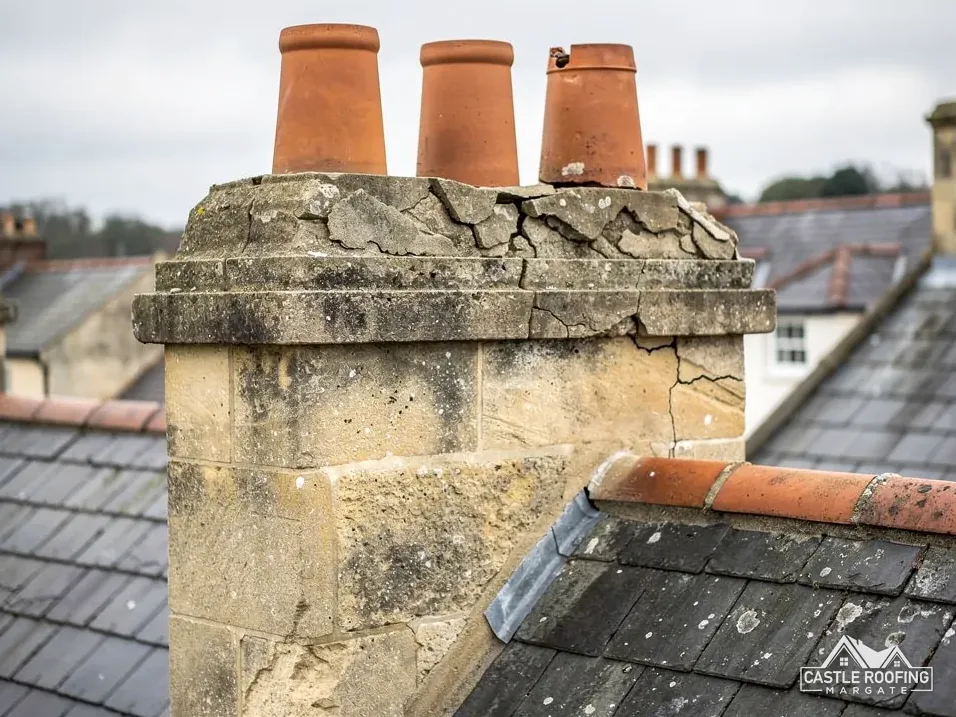
- Rain entry: water gets into the brickwork through cracked flaunching, open mortar joints or damaged brick at the top, and runs down.
- Condensation in the flue: a flue that has been capped without ventilation traps damp air, and the moisture condenses on the cool walls of the shaft and soaks into the brick.
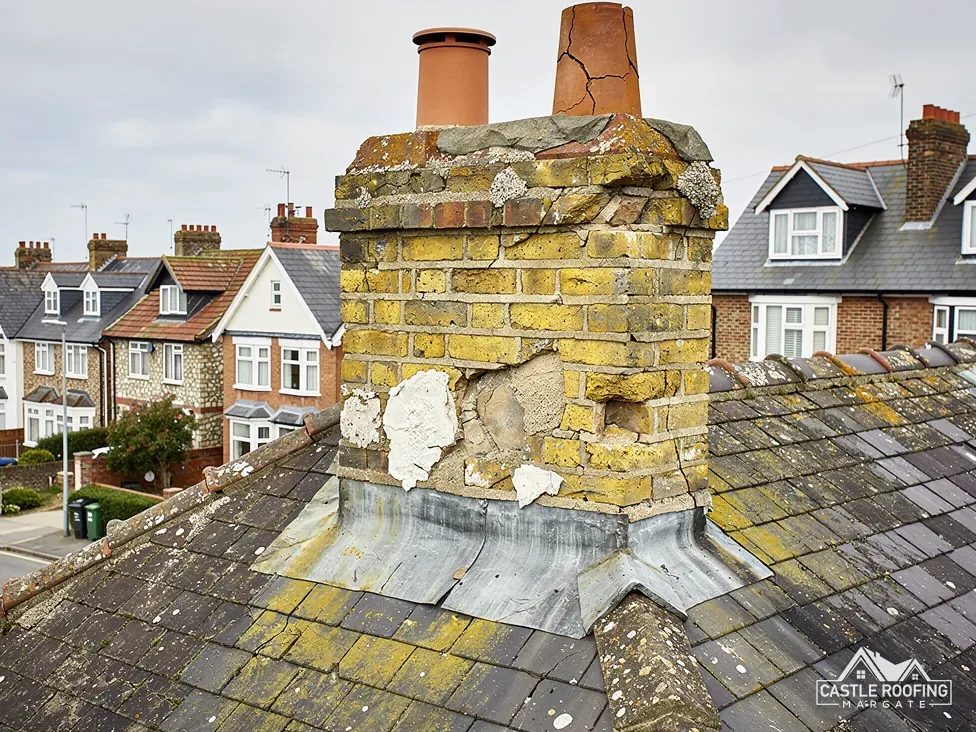
- Failed flashings: the lead weathering round the stack base lifts or splits, and water tracks down the brickwork or through the roof into the loft.
They can also combine. A stack with open joints and a capped flue can be wet from both ends.
The signs differ a little. Rain entry tends to show after wet weather and clear up in dry spells. Condensation is slower and more constant, with a musty smell, and it may be worse in cold weather. A flashing leak often marks the ceiling or wall near where the stack passes through the roof.
Checking from outside and in the loft
A good deal can be learned without leaving the ground. Using binoculars, look at the top of the stack from a window or the street. Check the flaunching round the pots for cracks, the mortar joints for gaps, the bricks for flaking, and the flashings for gaps or lifted edges.
In the loft, with a torch, look at the stack where it passes through. Dark staining on the brick, damp timbers beside it or a wet patch on the insulation point to a leak above. Tide marks on the brick often show where water has come in and run down.
In the room itself, note whether the damp sits high or low on the breast. A stain near the ceiling suggests water arriving from above. A damp patch low down, or a band of white salts, can be a sign of moisture inside the brick, and the page on efflorescence on a chimney explains the white marks.
If you cannot reach a conclusion, a roofer can survey the stack in a visit. Do not climb up yourself to test it. Pictures taken from the garden and the loft are enough for a first view.
Fixes in order, outside first
The order of repairs matters, because drying out a wall that is still being rained on only wastes the effort.
- Stop the water. Repair or replace flaunching, repoint open joints, replace damaged bricks and renew failed lead flashings.
- If the flue is capped, provide ventilation so air moves through it. The page on ventilating a capped chimney explains how.
- Let the breast dry. This can take weeks, and a wall that feels dry to the hand can still hold moisture inside the brick.
- Redecorate only when the wall is dry and the staining has stopped coming back.
Skipping step one is the mistake to avoid. Painting over a damp patch, or using a damp-proof paint on the room side, hides the problem and does nothing about the source. Salts and moisture will push through and spoil the finish again.
Roof-level work is ours, so the stack, the pots, the flaunching and the flashings are what we survey and price. Interior drying and decoration are for your decorator after the cause is dealt with.
When the stack itself is the problem
Sometimes the damp is a symptom of a stack that is past patching. Brick that has lost its face holds water like a sponge, and mortar that has perished lets rain through the full thickness of the stack. In these cases, repointing alone gives a short-term result, and rebuilding the top courses or the whole stack above the roof is the longer-lasting fix.
Standing proud of the roof, the stack takes rain on all four faces and across its top, with no slope beside it to shelter it and little warmth reaching it once the fires below have stopped, which is why damp can show there before it shows elsewhere. A wet stack also dries slowly in winter, so the moisture has longer to work down into the room.
Find out more on chimney stack repointing. Spalling brick and full rebuilds are covered elsewhere in our chimney repairs work. Whichever route suits your stack, the price is written once we have seen it, and you get photographs of what we found so you can judge it for yourself.