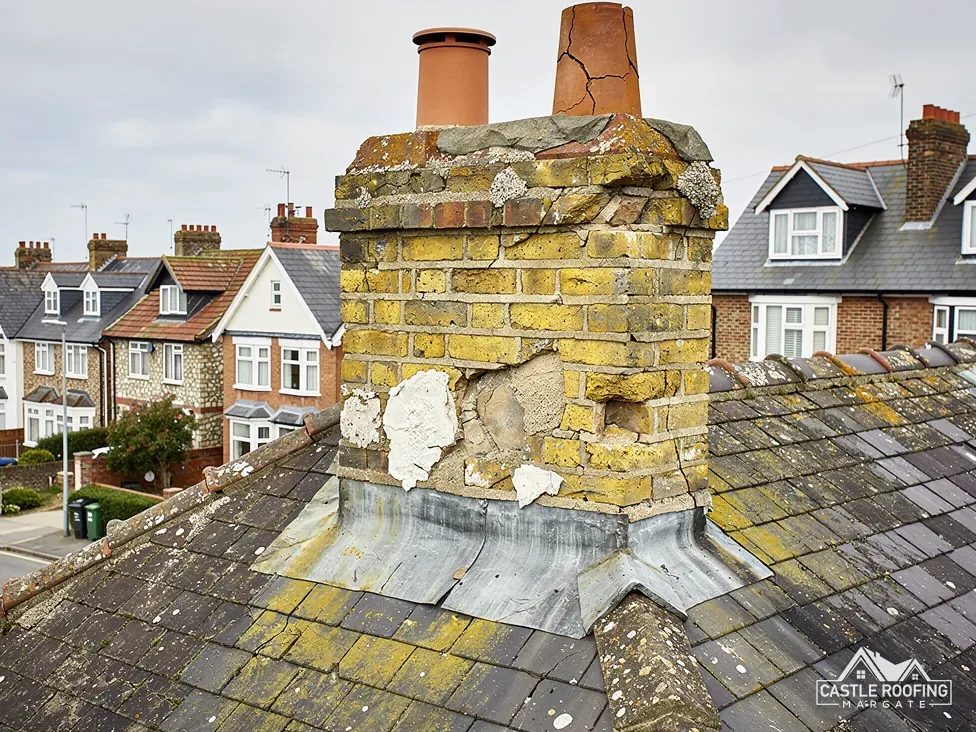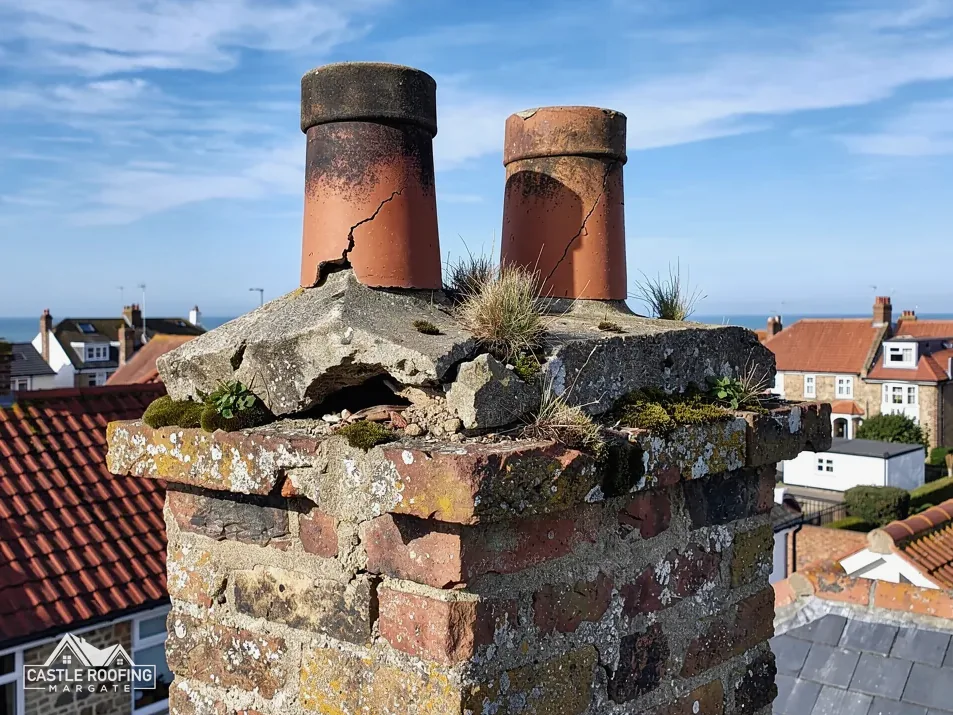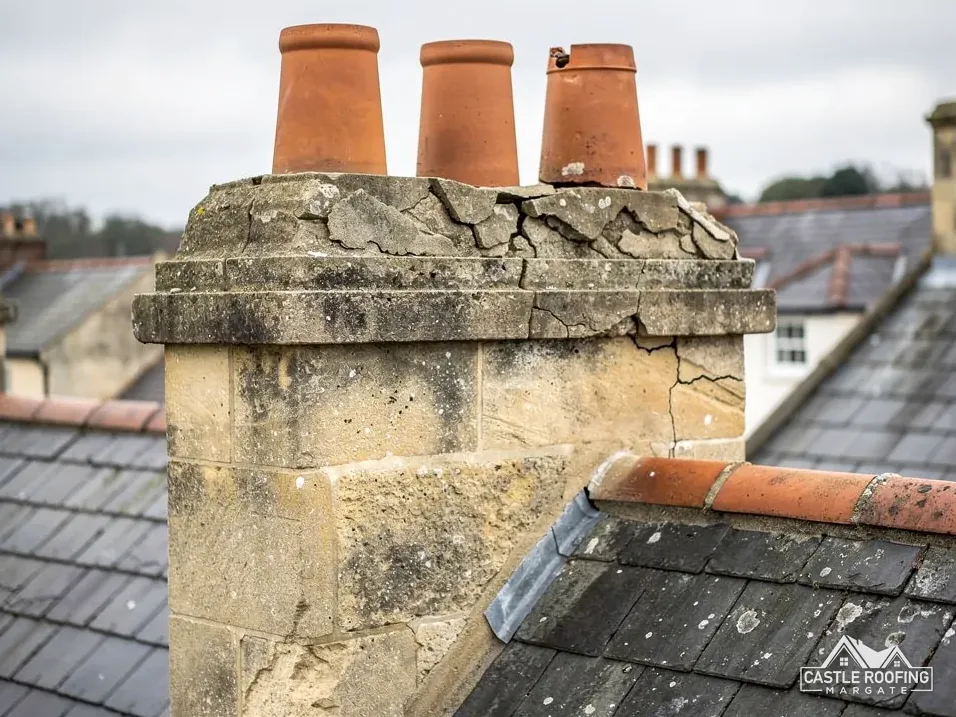
A stack carries the weather on every face. This guide shows what failed joints look like from the ground, why repointing is sometimes the right answer and sometimes not, and what sets the single written price for it.
Repointing means raking out the old mortar from the joints between the bricks and filling them again with new mortar. On a chimney stack the joints have a hard life, because a stack stands in the open on every side. Rain reaches it from all four directions, the wind loads it, and the sun and frost work on its faces through the year.
The mortar in the joints is the part that gives way first. It is meant to be the sacrificial element, softer than the brick, so that the joints wear before the bricks do. That is why a stack can look sound from the street while its joints are open an inch deep, and why the right repair is sometimes as small as new pointing and sometimes a full rebuild.
This guide runs through the signs of failure, the effect of frost and wind on a stack, the decision between repointing and rebuilding, and the way the work is done and reached. It belongs with our chimney repairs work, and it ends with what sets the price, since repointing is priced after a survey and not from a list.
Signs that the joints have failed
A problem can first show from the garden or the pavement, with binoculars or a phone zoomed in on the top of the stack. What to look for is below, and a surveyor on the roof sees the same things much more closely.
- Mortar that has crumbled back from the brick faces, leaving the edges of the bricks showing.
- Gaps wide enough to see daylight or to fit a finger nail into.
- A sandy grit on the roof slope, in the valley or in the gutter below the stack, which is mortar that has washed out.
- Bricks that move when pressed, or a stack with a visible hairline crack running through several courses.
- Damp patches on the chimney breast inside the house, in the loft or on the bedroom wall, after rain.
A damp stain on its own does not prove the joints are the cause. Water can enter through the flaunching, the lead tray at the base, a cracked pot or a failed flashing, and each of those is a separate repair. The survey follows the water from where it shows to where it gets in.
You see photos of your own stack from the roof, so the open joints, the cracked bricks and the state of the flaunching are on screen before any price is given. That is the point of looking before pricing: the same stack can need pointing alone, pointing and a lead tray, or a rebuild.
Frost, wind and rain on a stack in the open
Water that gets into an open joint stays there until it dries or freezes. When it freezes it expands, and it pushes the faces off the bricks and widens the gap, so the next rain gets further in. That cycle is a general mechanism behind failed pointing, and the number of cold nights a place gets sets how often it repeats.
The Met Office climate averages for Manston, covering 1991 to 2020, are a published set of figures from inside Thanet:
| Measure | Average |
|---|---|
| Days of air frost a year | 21.43 |
| Rainfall a year | About 613 mm |
| Days with 1 mm or more of rain | 110.05 |
| Mean wind at 10 m | 9.86 knots |
These are long-term averages for one station and not a forecast for any one street. They show why a stack is judged on its own exposure: it is a thin tower of brickwork above the ridge with nothing to shelter it, and a house in a lane can see different wind to one on a headland.
For a stack, the working question is how much of the joint is lost, not how old the pointing is. A survey measures that from the roof, so the answer comes from the brickwork itself. Probing each open joint shows how far the loss runs behind the face, and a joint that looks shallow from the ground can be deep. Wind adds to the load on a loosened stack, which is one reason open joints near the top are dealt with before the rest.
Repointing, or a bigger repair
Repointing is the right repair while the bricks are sound and the stack stands straight. It stops being enough when the damage is in the bricks or in the structure of the stack itself. The signs that point beyond repointing are set out in the list.
- Bricks with their faces flaking away. Our page on spalling chimney bricks explains what causes it and what follows.
- A stack that leans, or a bulge in one face. Pointing hides a lean without curing it.
- Cracks running through the bricks, not only along the joints.
- Flaunching that has split away from the pots, which needs its own repair.
- Joints open so deep, over so many courses, that raking them out would leave the bricks loose.
Each of these moves the job towards rebuilding some or all of the stack. A partial rebuild takes down the top few courses and relays them with the same bricks where they are sound, and a full rebuild takes the stack down to the roof.
Honest advice sometimes goes the other way. A stack with open joints and nothing worse is a repointing job, and a rebuild would be more work than the stack needs. The survey says which, with photos, and the written price covers the one that suits the stack.
The mortar matters as much as the decision. New pointing should be matched to the old in strength and colour, and our guide to lime mortar chimney repointing goes into the choice.
How a stack is repointed
The work follows an order, and each step protects the next. A stack repointed in a rush looks neat for a season and fails again in the first hard frost.
- The pots and any cowl are checked, and the flaunching is looked at before any mortar is disturbed.
- The old mortar is raked out of every open joint to a sound depth, by hand or with a small tool, without cutting into the brick edges.
- Dust and loose grit are brushed out, and the brickwork is dampened so it does not pull the water from the new mortar too fast.
- New mortar is pushed into the joints in layers, working from the top down so that nothing falls on finished work.
- The joints are struck to a finish that sheds water and matches the original profile.
- Last, the flaunching and the lead at the foot of the stack are looked at once more, and repaired if either is the cause of the damp.
Flaunching is the sloped mortar that sets the pots into the top of the stack and carries rain away from the flues. If it has cracked, water runs behind the pots no matter how good the pointing is. Repairing it is a job of its own, and a split in it is worth showing the surveyor.
You see photos of the stack when it is finished, and the debris from raking out goes into the skip, not into your gutters.
Reaching the stack: scaffold or access tower
Stack work at the top of a two or three storey house cannot safely be done from a ladder. Regulation 6 of the Work at Height Regulations 2005 puts the duty on employers to stop falls, so far as is reasonably practicable. For stack work we use a scaffold or an access tower, and the choice follows the roof and the site.
A full scaffold gives a platform at eaves and ridge level, with edge protection, and suits a stack that needs more than pointing. A tower is lighter and quicker, and can be enough for a single stack that needs only pointing and flaunching. The survey records where the structure will stand.
If either stands on the pavement, it is a structure on the highway and needs a licence from Kent County Council under section 169 of the Highways Act 1980:
- The scaffolding firm makes the application.
- The application goes in at least 5 working days ahead of the first day of the licence.
- The fee is £52 per week for 2026 to 2027, with a £78 inspection if the council decides one is needed.
- The applicant holds public liability insurance of £5 million.
A stack reached from a back garden involves no highway licence, although the ground still has to be firm and clear. Our guide to scaffolding for chimney repairs deals with the choices in more depth.
What sets the price of repointing a stack
A repointing price is set after a survey, from the stack itself, and not read from a table. The things that move it are below.
- How tall the stack is, and how many faces and courses are to be pointed.
- How deep and how widespread the failed joints are.
- How many stacks there are on the house, and whether they are joined.
- Whether bricks need replacing before the pointing, and how many.
- Whether the flaunching, the pots or the lead tray need work in the same visit.
- How the stack is reached: a tower, a full scaffold, or a roof that already has one up.
Scaffold is a real part of the cost on a small job, because the same structure serves a stack, a ridge repair and a flashing. If other roof work is due, doing it in one visit saves putting the structure up twice. Whichever quotes you hold, look for scaffold and VAT in each, since a VAT-registered roofer adds VAT at 20 per cent to a homeowner's bill.
Citizens Advice says to try for written quotes from at least 3 different traders before choosing one. Compare what each one covers as well as the total, and ask what is being done to the flaunching and the lead. Our own quote describes the work in plain words, covers the access and the pointing together, and comes as a single figure once the survey is done.