What spalling is and where the water comes from
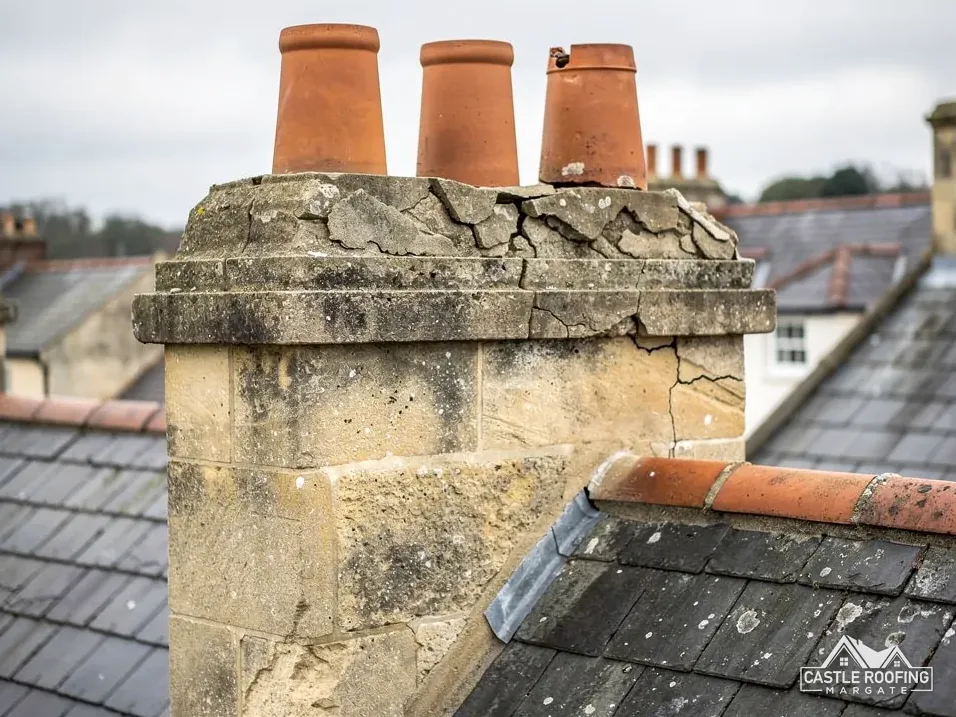
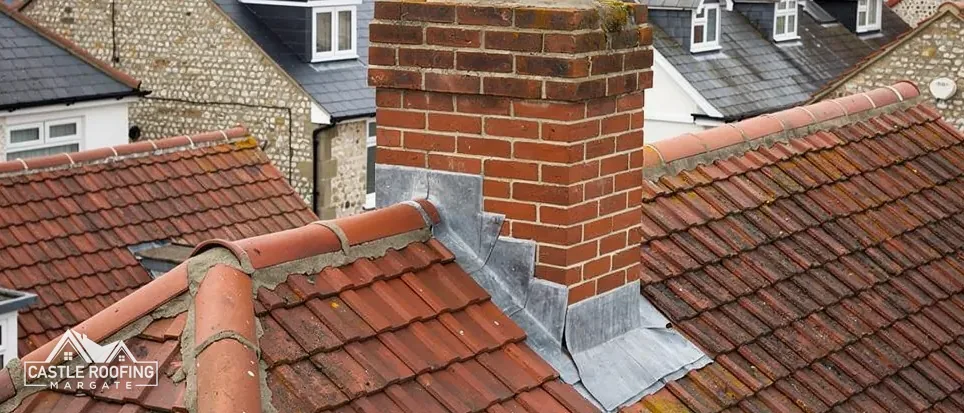
Spalling is the loss of the outer face of a brick, in flakes, scales or crumbling chunks. A brick is porous, so it takes in a little water on every wet day. In frost, water inside the brick freezes and expands, and over many winters the surface gives up.
Met Office figures for the Manston climate station (1991 to 2020) give a sense of the weather an East Kent stack stands in: about 613 mm of rain a year, 110.05 days with 1 mm or more of rain, and 21.43 days of air frost. Those figures describe one station over thirty years rather than your street, yet they show that a wet spell followed by frost is part of the normal year.
A stack is exposed on four sides and the top. It gets no shelter from the roof and no warmth from the house, except where a flue is in use. The water has several routes in:
- Open or crumbling mortar joints, which let rain soak into the brick edges.
- Cracked flaunching, where water runs under the pots and down inside the stack.
- Failed lead flashings at the base, which soak the lower courses.
- Soft or very old bricks that were never well fired to start with.
Repair: replacing bricks and repointing
If the damage is in a few bricks and the rest of the stack is sound, the repair is local. The damaged bricks are cut out one at a time and replaced with bricks that match in size and colour, then the surrounding joints are repointed. Done well, the patch is hard to see from the street.
Repointing on its own helps when the joints are the weak point and the brick is only just beginning to flake. Getting the joints tight again stops more water entering, and in many cases that is enough to slow the damage. The mortar should suit the brick; the lime mortar for old chimneys answer explains the choice.
Spalling does not repair itself, and a coating on the surface will not mend a brick that is breaking up from within. A sealant painted over a failing face can trap water and make things worse, so cover-ups are not part of the repair.
Fixing the cause matters as much as the bricks. If the flaunching has cracked or the flashing has lifted, new bricks will only start to spall again, so those are renewed at the same time. See repairing cracked chimney flaunching.
When a rebuild is the answer
A stack where the damage covers many courses, or where the brick is soft right through, will not hold a patch. New bricks set in among weak ones do not bring the whole stack back to strength. At that point the choice is between a rebuild now and repeated repairs that return every few winters.
Signs that point to a rebuild:
- Spalling over several faces or most of the height of the stack, not just one patch.
- Bricks that crumble in the hand when loose pieces are taken off.
- A lean or movement as well as the surface damage.
- Repeated repointing that has not held.
A rebuild dismantles the stack to sound masonry, then builds up again in matching brick with new flaunching and flashings. It costs more than a patch, and it removes the cycle of small repairs. Our guide to rebuilding a chimney stack covers the approvals and the neighbours.
If the house is listed, ask the council before bricks are replaced, as listed building consent can apply to works that affect the building's character.
Looking at it safely, and the cost
You can see most of this from the garden or street. Look for fallen fragments on the roof, in the gutters or on the ground below, for bricks with a rough, scaly face and for joints that have worn back from the surface. A pair of binoculars does the job, or a phone held up at full zoom. Climbing up to look is not worth the risk, since a stack that sheds pieces may drop a whole brick.
If anything is coming off, keep children and pets off the ground beneath it until the stack has been checked. A roofer can look from a safe position and tell you whether the brickwork is sound.
The survey sets the price, because height, access, the number of bricks affected and whether flashings or flaunching need renewing all change the job. You receive one written total afterwards. Winter is the season when spalling gets worse, so a stack that is already shedding faces is better looked at before the coldest weeks. Waiting a season rarely shrinks the repair, because every freeze opens the damage a little further.
For the full range of stack work, see chimney repairs.