Why the mortar should be the softer part of the stack
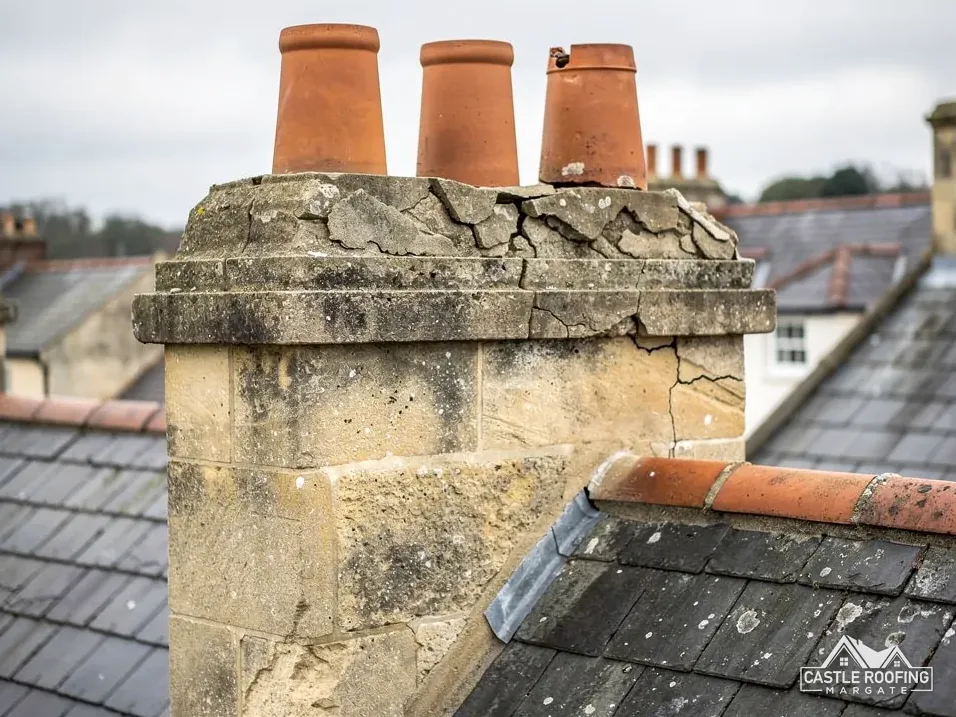
A chimney stack stands out in the weather on every side. Rain soaks into it, wind pushes that water sideways, and in winter the damp freezes and thaws inside the masonry. Something has to give each time, and in a well-built old stack it is meant to be the mortar joint, not the brick.
Lime mortar is softer than cement and lets moisture move through it and out. The sacrificial idea is simple: when the joint wears, you rake it out and repoint it, and the bricks stay as they were laid. A hard cement mix reverses that. Water that cannot leave through the stiff joint finds the face of the brick instead, and the brick is the part you cannot easily put back.
That is why the old advice is to match the mortar to the masonry rather than to the newest bag on the van. Soft red brick, handmade brick and brick laid in a pale, sandy lime all point to a lime repoint. A stack built or rebuilt in a harder brick with a cement mortar is a separate question, and the answer comes from looking at the joints, not from a rule.
Consent on a listed or conservation-area house
On a listed house, repointing a chimney can change the character of the building. Section 7 of the Planning (Listed Buildings and Conservation Areas) Act 1990 requires listed building consent for works that affect that character. Canterbury City Council tells owners that any change touching the building's character needs consent. A mortar with a different colour, a different sand or a wider joint can do exactly that, so the council is asked before the work, not after.
In a conservation area the position is lighter but not nil. Thanet District Council's guidance says work that is like for like makes planning permission less likely to be required, which stops short of a promise. An Article 4 direction can withdraw permitted development rights on a particular street. Thanet lists such directions for three Ramsgate-area conservation areas, and elsewhere the council covering the street is the one to ask.
Three questions settle most of it:
- Is the house listed, and does the work change how the stack looks?
- Is it in a conservation area, and does an Article 4 direction apply to that street?
- Is the new mortar matched to the existing joint, or is it something different?
Matching the mortar that is already there
Repointing replaces the joint, not the brick, so the new work has to read as part of the old stack. The matching is where lime repointing earns its keep, because a stack patched in the wrong colour shows from the street for years.
What gets matched:
- The colour and grain, which come from the sand and the lime, so a small sample is dried and compared against a clean section of the old joint.
- The joint finish, whether flush, slightly recessed or with the older tooled profile, since the profile throws the shadow lines you see from below.
- The depth of the rake-out, taken back far enough for the new mortar to bond, but not so far that the brick edges are damaged.
- The brick itself, where individual bricks are too far gone and a few have to be swapped for something close in size and colour.
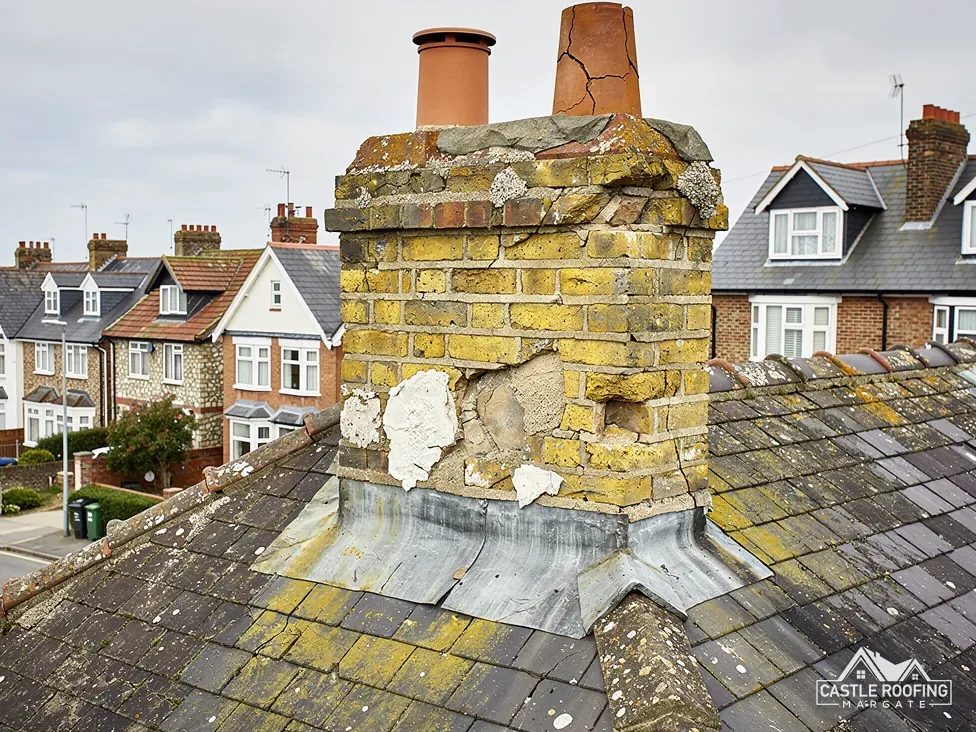
Older stacks often show a patchwork of repairs from different decades. Part of the survey is working out which joints are original lime and which were filled with cement at some point, because the cement patches may need cutting out first. Clear shots of the stack from the garden and from an upstairs window help us read this before anyone climbs.
Weather, access and the price
Lime sets slowly and does not like being rushed or left exposed. The usual precautions are to dampen the brick before pointing, keep fresh joints out of driving rain and cover the stack if a frost is forecast. That makes timing part of the job: a stack repointed in a hurry on a cold, wet week is a stack that may have to be done again.
The stack also has to be reached safely, normally by scaffold or access tower. Where any of it is built on the footway, a Kent County Council licence comes into play, and the scaffolding for chimney repairs answer explains who applies for it.
Repointing a chimney is priced after a survey, since the number of joints, the height, the access and the state of the brick all change the work. Photographs start the conversation, the survey settles the mortar and the finish, and a single written total follows.
If the joints are the only problem, repointing is the repair. If bricks are crumbling or the stack leans, see repointing a chimney stack and the wider chimney repairs hub.