A stack is the part of a period roof that people see from the street, which is why councils take an interest in it. This guide sets out what to ask, whom to ask, and in what order, before any work is priced.
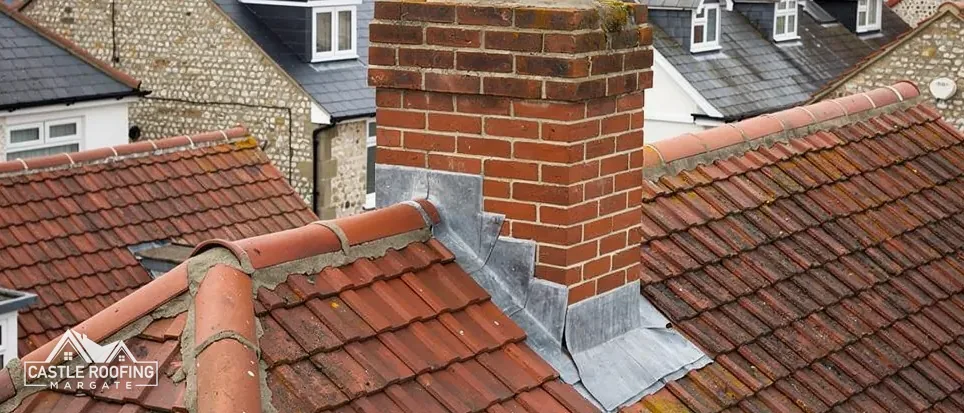
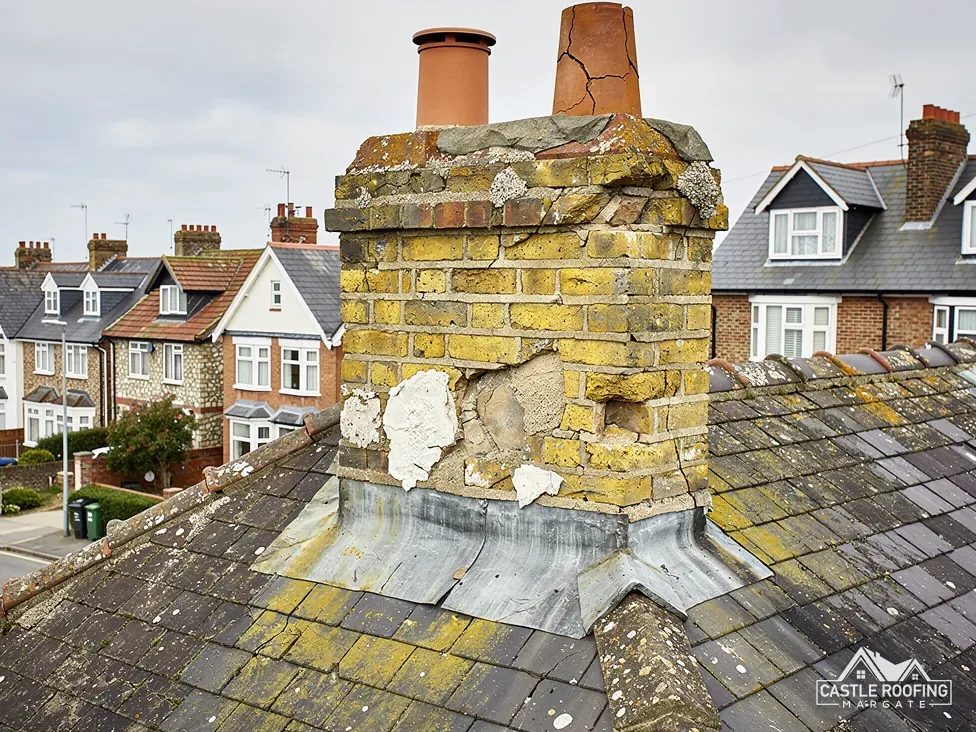
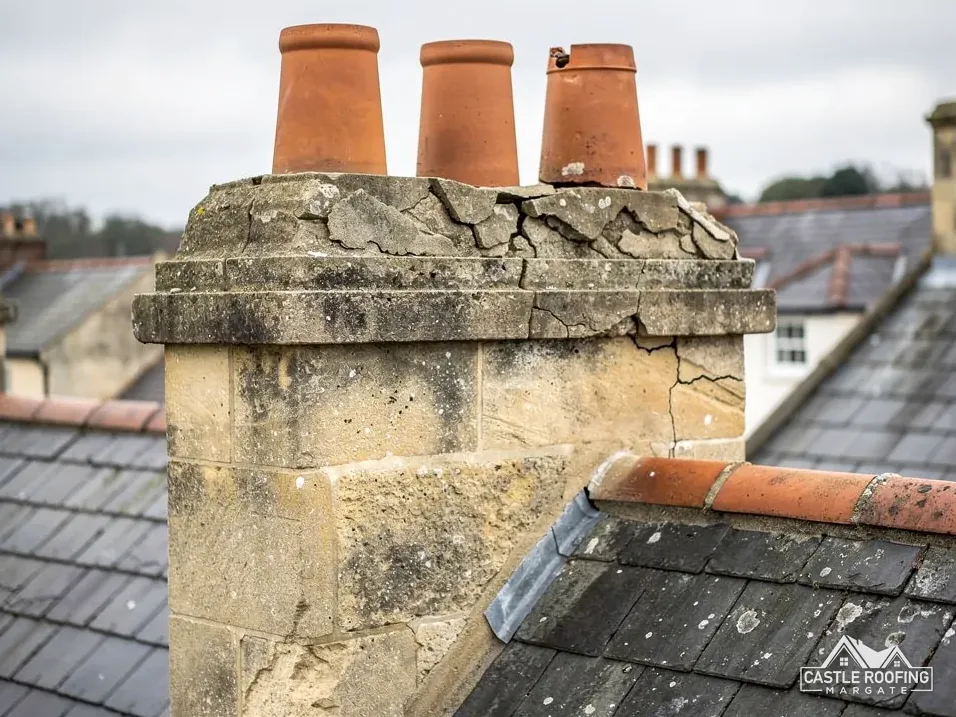
A chimney stack is the section of chimney that stands clear of the roof: the brickwork, the flaunching (the sloped mortar cap that holds the pots), the pots themselves and the lead tray or flashing where the stack meets the slope. In a conservation area it is often what gives a terrace its outline, so a repair that changes it draws interest from the council as well as from the weather.
Thanet District Council lists 27 conservation areas. Its appraisal of the Cliftonville Clifftop area records that a good number of tall stacks still stand there, and a stack like that is something an owner wants to keep rather than shorten. Whether a repair needs any consent depends on what is being done to the stack, which council the house sits under and whether the house is listed.
This guide takes the questions in the order they come up, from what like for like means to the scaffold on the pavement. It sits under our chimney repairs work, and it is written so that you can put the right question to the council's planning team before the roof is priced, not after.
Why a stack matters in a conservation area
Thanet's appraisal for Cliftonville Clifftop describes the roofs there as a mixture that includes red clay tiles and natural slate, and adds that many tall stacks have lasted. That is a council describing a street, and it explains why a stack is treated as part of the character of an area and not as a pipe that happens to sit on top of a roof.
A conservation area is an area a council has designated for its character. Each council keeps its own list, and the counts below are the councils' own:
- Thanet District Council: 27, among them Birchington, Minster, Westgate on Sea, Broadstairs, Ramsgate, Dalby Square in Cliftonville, and Margate.
- Canterbury City Council: 97.
- Dover District Council: 57.
- Swale Borough Council: 51.
Folkestone & Hythe District Council publishes an interactive map in place of a count, so for an address in that district the map is the first place to look.
Standing inside a boundary changes the route, not the roof. Dormers lose their permitted development right on this kind of land, but the class that covers other roof alterations is not removed by it. A chimney is the point where that class itself stops, which the third section sets out.
The practical result is a short list of questions to settle before a quote means anything: is the house listed, does a direction apply, and is the planned work a repair or a change. A survey of the stack answers the third, and the council answers the first two.
What like for like means on a stack
Thanet's conservation area page says like for like work makes an application less likely. That is not the same as never, so it helps to know what the phrase covers on a stack. The Town and Country Planning Act 1990 leaves out work that does not change a building's outward look in any material way, and on a stack that test comes down to what the street would see.
These repairs leave the stack looking as it did:
- Repointing the joints in a mortar that matches the old one in colour and in hardness.
- Replacing a few cracked or spalled bricks (bricks whose faces have flaked away) with bricks of the same size, colour and texture.
- Renewing the flaunching, and the lead tray or flashing at the base.
- Rebuilding the stack course by course to the same height, with the same corbelling (the stepped brick projections near the top), reusing the old bricks where they are sound.
These changes alter what the street sees, and each one starts with a question to the council: taking the stack down lower, swapping brick for render, fitting pots of a different style, or capping the flues with a different finish.
When a stack is rebuilt we record the old courses and pots on camera before anything comes down, so the rebuild has something to follow. You see those photos first, and they can go to the planning officer if a question comes back.
Where Class C stops at the chimney
Class C of the permitted development rules is the catch-all class for roof alterations to a house, and it is the reason a re-covered house roof is normally allowed without an application. It comes with conditions. One of them, C.1(d), takes out any alteration that would put in, change or replace a chimney, a flue or a soil and vent pipe.
Read plainly, a chimney sits outside the class. That does not turn every chimney job into a planning application. Repointing and small repairs may not be development in the first place, because of the appearance test in the section above. It does mean that altering or replacing a chimney cannot lean on Class C as its permission, so the sensible step is to ask the council's planning team in writing and keep the reply.
Three more points belong with this:
- Article 2(3) land, which takes in conservation areas, the Kent Downs National Landscape and the Canterbury World Heritage Site, removes the dormer class. It leaves Class C in place, so the chimney condition is the one that matters for a stack.
- A listed house keeps its permitted development classes but needs listed building consent for work that touches its character, whichever council it is under.
- Demolishing an unlisted building in a conservation area without the necessary planning permission is an offence, a further reason to ask before a whole stack comes down.
Which councils publish Article 4 detail
An Article 4 direction lets a council withdraw specified permitted development rights across a defined area. Where one reaches roofs, a job that would otherwise need no application may need one. The councils publish their directions in different amounts of detail, so the table gives only what each council's own pages say.
| Council | What its pages say |
|---|---|
| Thanet | Directions are in place for Pegwell, for Ramsgate and for the marina extension there |
| Dover | Directions may take in changes to a house roof where that side of the house is seen from a road, waterway or open space |
| Swale | The Faversham direction reaches roof coverings on street-facing principal elevations |
| Canterbury | A map shows the areas covered |
| Folkestone & Hythe | Ask the council |
| Ashford | Its interactive map carries the directions |
Thanet does not set out the classes address by address, so an owner in one of those three areas asks Thanet District Council which rights the direction removes. For Canterbury and for Folkestone & Hythe, the council's planning officer is the one to say what a direction covers.
The question to put is short: does an Article 4 direction apply to this address, and does it reach a chimney stack? Ask it in an email, so the answer is on file when the scaffold goes up. In the Dover district, where a direction can reach the road-facing side of a house as well as sides facing water or open public land, the question matters most for a stack on a street-facing gable.
Scaffold on the pavement outside a period terrace
A terrace that fronts the footway puts a stack repair on the highway: the scaffold or access tower stands on the pavement, and that needs a licence from Kent County Council under section 169 of the Highways Act 1980. Kent County Council's own page says the scaffolding firm applies for it on your behalf, so the paperwork sits with the scaffolder, though the dates are worth planning together.
- Notice: 5 working days between the application and the first day of the licence.
- Fee: £52 per week for 2026 to 2027, plus a £78 inspection charge if the county sends someone to check the site.
- Cover: public liability insurance of £5 million, which the applicant holds before registering.
- On the street: a clear 1.2 metres between scaffold and carriageway, and a light at night where the scaffold is in or within 45 cm of the road.
Before an application goes in, Kent County Council's highways line is 03000 41 81 81.
The order of events matters. Ask the council about consent first, then book the scaffold for a date that leaves the 5 working days, then book the bricklayer and the lead. If the council asks for a sample of the brick or the mortar, the scaffold is not yet needed.
Our guide to scaffolding for chimney repairs goes through the access options in more detail, including when a tower is enough and when a full lift is needed, and what each means for the footway outside.
What to send the council, and in what order
A request that names the work gets a useful reply. A request that says only "chimney" gets a general one. Whether the council answers in a day or a month is its own matter, so it is worth sending the request before the scaffold date is fixed, and well before the bricklayer is booked.
A clear request carries these:
- The address, and a statement of whether the house is listed.
- A photo of the stack from the street, and one close up of the damage.
- The work in a sentence: repoint, replace named bricks, renew flaunching, or rebuild to the same height.
- The materials: brick colour and size, the mortar mix, the pots and the lead.
- The question: is planning permission or listed building consent needed, and does an Article 4 direction apply.
If the house is listed and the work would affect its character, the application goes to the council's planning team as one for listed building consent, and the stack is judged on its own merits. Our page on listed building chimney repairs covers that route.
Keep the reply with the quote. If the council says an application is needed, the written price waits for the decision and the survey results together. If it says none is needed, the reply is the record that the question was asked. Either way you hold a written answer, and the price that follows the survey is one total, so nothing is added once the scaffold stands.