Making safe comes first, in any month
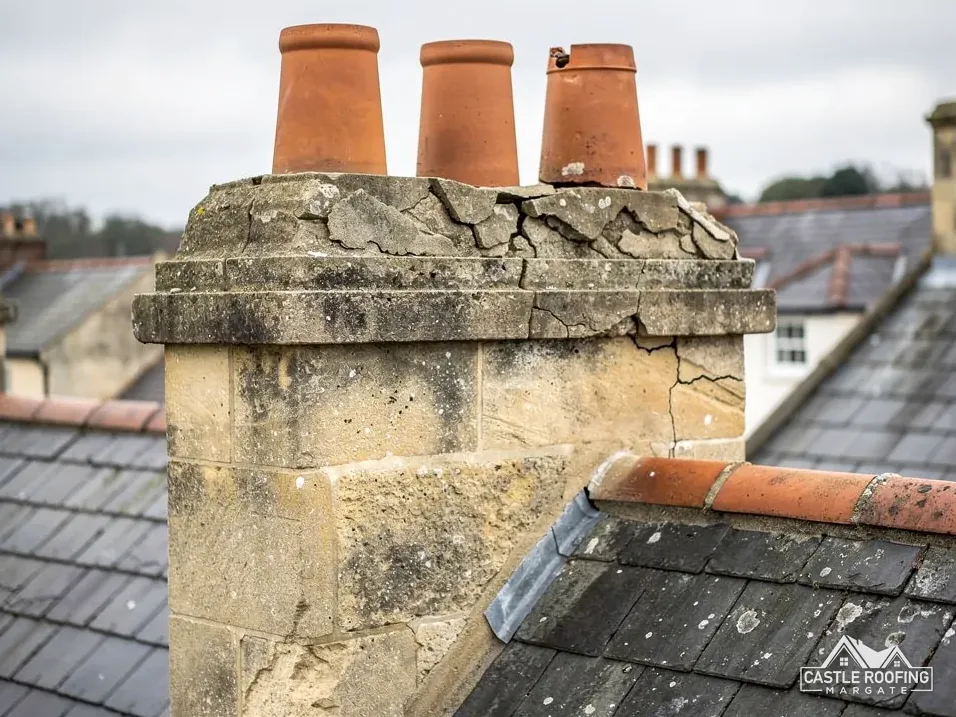
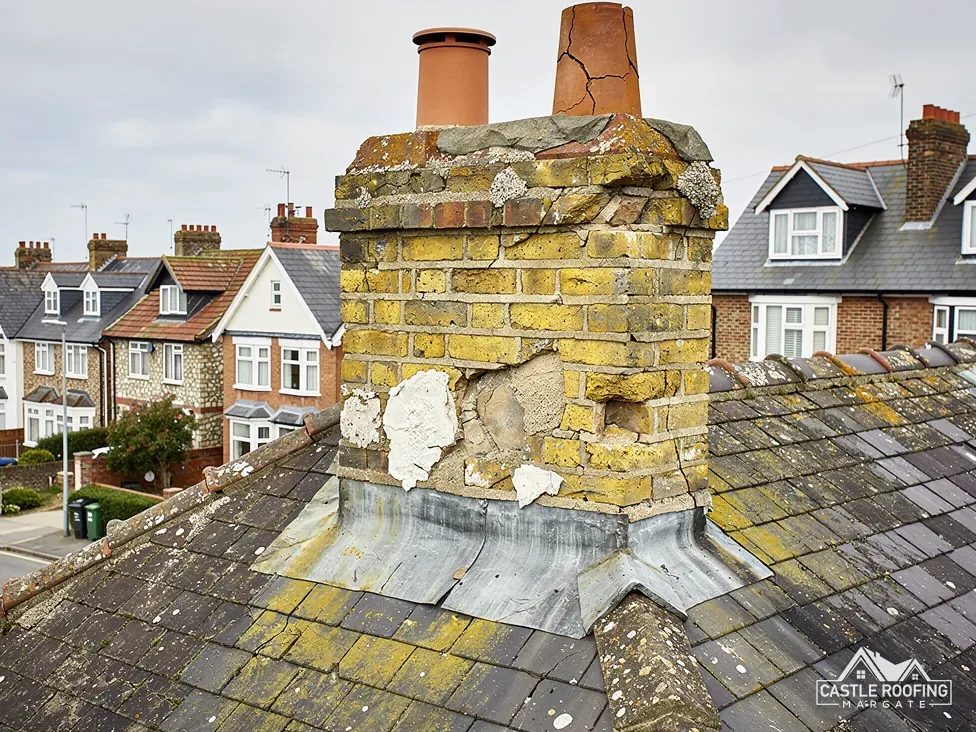
Some chimney problems cannot be left until the weather turns. A pot that has slipped, a stack that has started to lean, bricks hanging loose at the top or flaunching that has cracked open can all drop onto a path or through a roof. Winter gales make them worse, not better.
The first visit is therefore about safety:
- take down anything loose enough to fall;
- cover an open flue or exposed brickwork so rain does not run in;
- protect the roof slope below if bricks have already struck it;
- report on what is wrong and what the full repair involves.
None of this needs the mortar to set, so it can happen on a day when the full repair could not. A temporary cover is a stop-gap, and it should be treated as one. The permanent repair follows when conditions allow, and the stack is not left to take the rest of the winter unprotected. Photographs taken before and after the make-safe tell you what was done.
Where a stack is on the edge of failing, we would rather make it safe in January than leave it to February, and have the rebuild planned with the owner for the first suitable spell.
Mortar, water and frost
Mortar is a mix of sand, binder and water, and it hardens by setting and curing over days and weeks. Water in the mix is part of the process. If the joint freezes before it has gained strength, the water inside expands and can break up the mortar from within. The result is a joint that looks fine for a few weeks, then crumbles when it should have lasted.
Cold, wet days slow the curing. Rain washes fresh mortar out of an open joint before it has firmed up. Both are reasons to choose the repair window carefully, which is why a well-run winter job watches the forecast and covers fresh work when the day's work is done.
The Met Office climate averages for Manston, from 1991 to 2020, put air frost at 21.43 days a year and rain of 1 mm or more at 110.05 days. These are Manston station averages, not a forecast for any given week. They do show why a long winter job is rarely done in one go: there will be mornings when the stack is too cold or too wet to work on.
What goes ahead and what waits
Not every task depends on the mortar, so a winter chimney job often runs in stages.
| Task | In winter? |
|---|---|
| Taking down loose pots and bricks | Yes, any day it is safe to be up there |
| Covering an open flue | Yes |
| Replacing lead flashings | Usually yes, in dry weather |
| Repointing or rebuilding brick | Waits for a dry, frost-free spell |
| Re-flaunching pots | Waits for a dry, frost-free spell |
Lead is not affected by frost the way mortar is, but a wet slope is slippery and unsafe to work on, and a roofer will not go up in high wind. Safety sets the limit before the mortar does. Short winter days matter too: a job that fits a summer day may need two visits when the light fails early.
If your stack is in poor shape but not dangerous, it may be better to have a survey now and book the repair for the first good spell. The survey itself can be done in any season, because it is a look from the roof or from the ground with a camera.
Booking a repair for the winter months
A sensible winter plan has three parts, and the owner is told which part each visit covers. First, the stack is looked at and made safe. Second, the repair is priced in writing while the work is waiting for the weather. Third, the mortar work goes in on the first run of dry, frost-free days, with a scaffold already arranged so there is no delay when they arrive.
Scaffold is part of the picture. A chimney stack on a tall house usually needs one, and one that stands on the pavement needs a highway licence. For Kent addresses the licence is from Kent County Council, and the scaffolding company applies. See our page on the Kent scaffold licence for how that works.
It is worth reading about stack repointing and storm-damaged chimneys, two jobs closely tied to cold, wet months. Both explain what the survey looks at and how the repair is ordered, so you can ask sensible questions before the visit. The overall service is on the chimney repairs page.