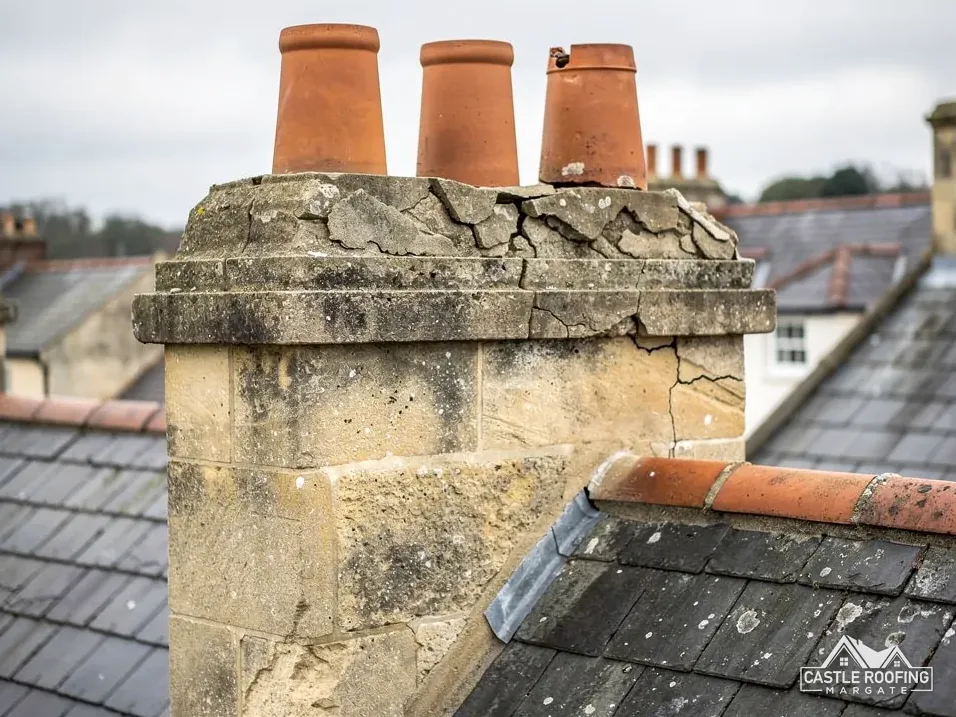
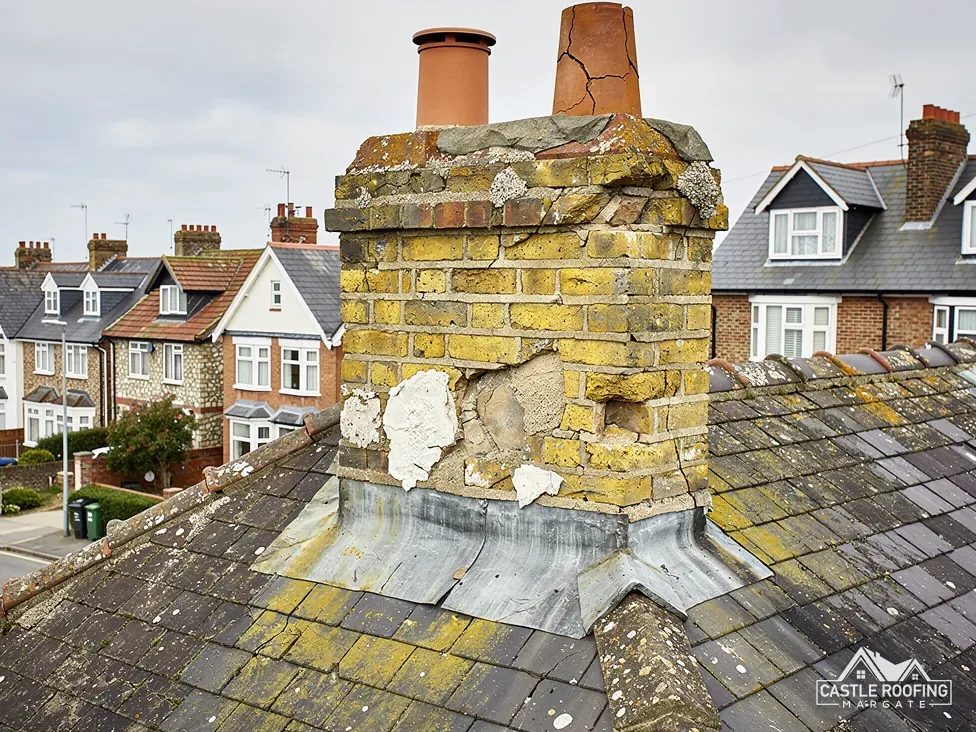
How salts end up on the surface
Brick and mortar carry small amounts of soluble salts in them, and more can arrive from the air, from rain or from the soil at the base of a wall. When water passes through the brickwork, it dissolves some of those salts and carries them toward the surface. At the face, the water evaporates and the salts stay behind as a white, fluffy or crusty deposit.
On a chimney stack this is common, because a stack is exposed on every side and wets and dries repeatedly. Wet weather soaks it, and a dry spell or a breeze draws the moisture out again.
The pattern gives clues. Efflorescence often shows after a long wet spell and fades in summer, then returns the next winter. It can sit in bands, patches or streaks, and it tends to gather where the water has travelled, such as under a cracked flaunching or below a failed flashing.
It looks worrying, but the powder itself does no damage. What counts is what it shows: moisture is passing through the stack, and that is the thing that can go on to crack joints and flake bricks.
A sign of water getting in
White marks are a symptom, so think of them as a signpost. The places to look for the source include:
- Flaunching round the pots that has cracked or shrunk away from the pot, letting rain in at the top.
- Mortar joints that are open, hollow or washed out, especially on the weather-facing side.
- Lead flashings round the foot of the stack that have lifted, split or pulled out of the joint.
- Brick faces that have started to flake, so the soft inner brick takes up more water.
- A capped flue with no ventilation, where damp builds up inside and moves outwards.
The same salts can show on the chimney breast indoors, where they appear as a white bloom on the plaster or wallpaper, often with a faint chalky feel when you rub it. The page on a damp chimney breast explains how to trace that side of it.
If the brickwork is flaking as well as marked, the water has probably been getting in for some time, and the page on spalling chimney bricks covers what comes next. Marks that sit only near the base of a stack inside the loft point to a different route for the water than marks at the top.
What to do about the marks themselves
The temptation is to scrub the marks off with water, and it is the one thing to avoid. Wetting the brick dissolves the salts and pulls them back into the brickwork, so they return as the wall dries. Dry methods are better.
- Brush the powder off with a dry, stiff brush while the wall is dry, working gently so the brick face is not scratched.
- Sweep up and bin what falls, because left on the ground it can be washed back in.
- Expect more salts to appear for a while, as the remaining moisture works its way out.
- Brush again as needed until nothing new appears.
Do not apply sealers or paint over wet or salty brick. They trap the moisture and the salts, and the surface can blister or flake, which makes things worse. Wait until the stack has dried out and stayed clear for a full season before deciding on any finish.
Brushing a stack is a ground-level job at best, and often only the lower reach of a breast or a garden wall can be done that way. Do not work from a ladder at the top, and do not lean on the brickwork if it feels loose.
Fixing the cause at the top
Once the marks have been brushed back, the lasting fix is to stop the water. A roofer surveys the stack, finds where rain is entering and makes that good. Typical repairs are re-flaunching the pots, repointing open joints, replacing damaged bricks and renewing the lead flashings round the foot.
After repairs the stack dries over weeks or months, and a little efflorescence may continue to appear in that time. If it clears up and stays clear, the repair has worked. If marks come back through a full season, the water is still finding a way in, and a second look is worthwhile.
A stack that has been marked for years may be well beyond a quick patch. In that case a partial rebuild of the top courses is the sounder buy, and the survey report says so with photographs. The written price follows what we find, and you can weigh it against a repair that only buys a winter or two.
See also chimney stack repointing, and the full list of work under chimney repairs.