A liner is an appliance question first
A flue liner is a tube that runs up inside the chimney, from the appliance to the top of the stack. It gives the smoke and gases a smooth, sealed path of their own, instead of leaving them to pass through old brickwork and joints. Liners come in different materials, and which one suits depends on the fuel, the appliance and the flue itself.
That choice is not a roofing decision. It belongs with the fire or stove and its installation, which is the work of the appliance installer, or of a chimney sweep who can inspect the flue and tell you what condition it is in. A sweep can also run a camera up the flue.
The questions to put to them are straightforward:
- What does the appliance burn, and does it suit the flue as it stands?
- What state are the flue and its joints in after years of use?
- If a liner is advised, which type, and where does it end?
Flue rules and the choice of liner are for the installer who knows the appliance and the flue.
Where the roofer comes in at the top
The liner has to finish somewhere, and it finishes at the top of the stack. That is where the roofer works, whether or not the liner itself was fitted by someone else.
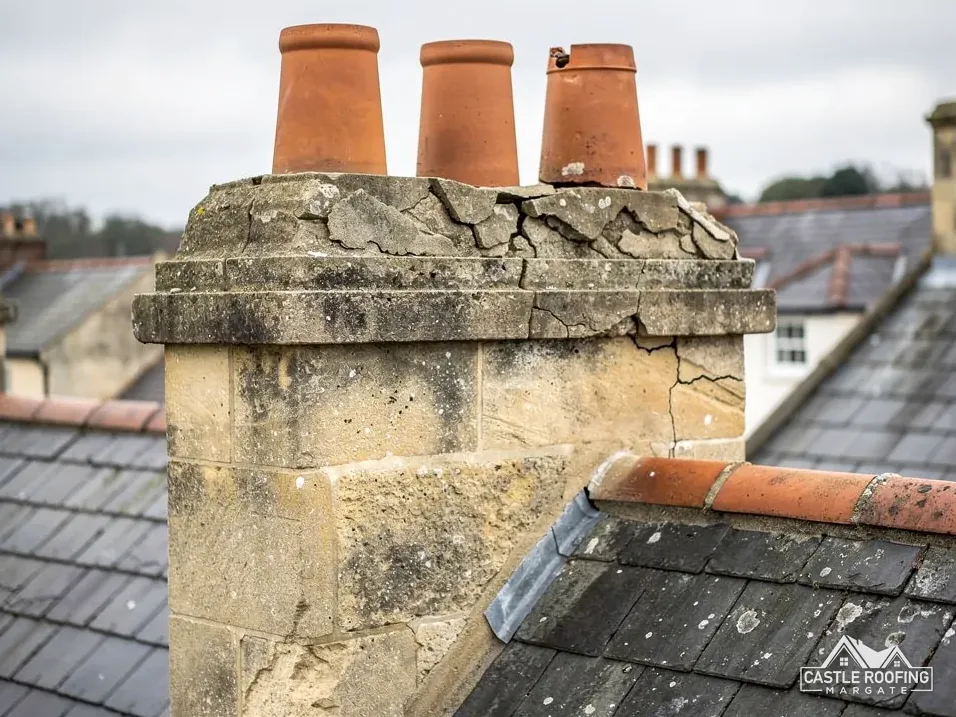
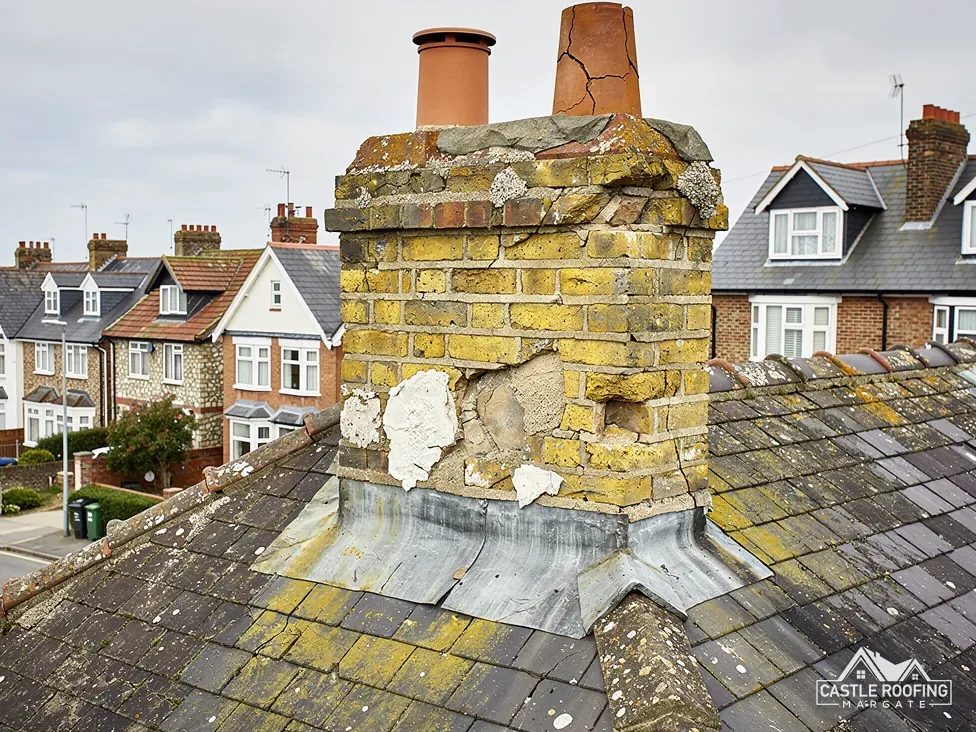
At the top of a stack you will find the chimney pot, the flaunching (the mortar bed the pot is set in), the top courses of brick and the flashings round the base of the stack. A liner passing up through the pot means the pot may need lifting, cutting or replacing, and the flaunching taken off and laid again around the new arrangement so that rain runs away from the opening.
If the top courses are weak, they are repointed or rebuilt before a liner goes in. A cracked stack leaks round a liner just as it leaks round a fire, and the damp comes through the breast in the room below.
The roofer also checks that a cowl or guard on top does not choke the opening. Whether a cowl is wanted at all is a call to make with the installer who knows how the appliance burns.
Working in the right order
Liner work and roof work touch the same few metres of chimney, and the order saves repeat work and scaffold time.
- The sweep or installer inspects the flue and says whether a liner is wanted.
- The roofer surveys the stack, the pot, the flaunching and the flashings, and reports on any repair needed at the top.
- Repairs to weak courses, flashings and flaunching are done first, so the stack is sound before it carries a new liner.
- The liner is installed by the person responsible for the appliance.
- The roofer finishes the top: flaunching, pot or cowl, and any lead dressed back round the base.
Sometimes steps three and four can share one scaffold, which means one erection and one removal. That only works if the installer and roofer talk before either arrives, and the owner sets the date. Finding a cracked pot halfway through would stall both trades, so the roofer's look at the top is best done first.
If the stack leans noticeably, a repair or rebuild may come before any liner discussion. The page on leaning stacks covers that case, and the owner usually hears about it in the survey report rather than on the roof.
A disused flue is a different case
Not every chimney in a house is in use. Many older houses have flues that serve a fireplace long since boarded up, and for these the question is not a liner at all. It is whether the stack should be capped, ventilated or taken down.
An unused flue is better left breathing, because stale air trapped in the shaft makes the walls round it damp. A vented cap on the top lets that air through while keeping rain out. If the flue is to be reused later, its condition is a question for the sweep or installer before any fire is lit.
Do not light a fire in a flue that has been closed, capped or left alone for years until it has been inspected. Old flues can be cracked, blocked with fallen debris, or hold a nest, and a sweep can tell you which before anything is lit.
If you are weighing up what to do with an old stack, read about capping a disused chimney and ventilating it afterwards. Both sit within our chimney repairs service.