Shared stacks and party walls
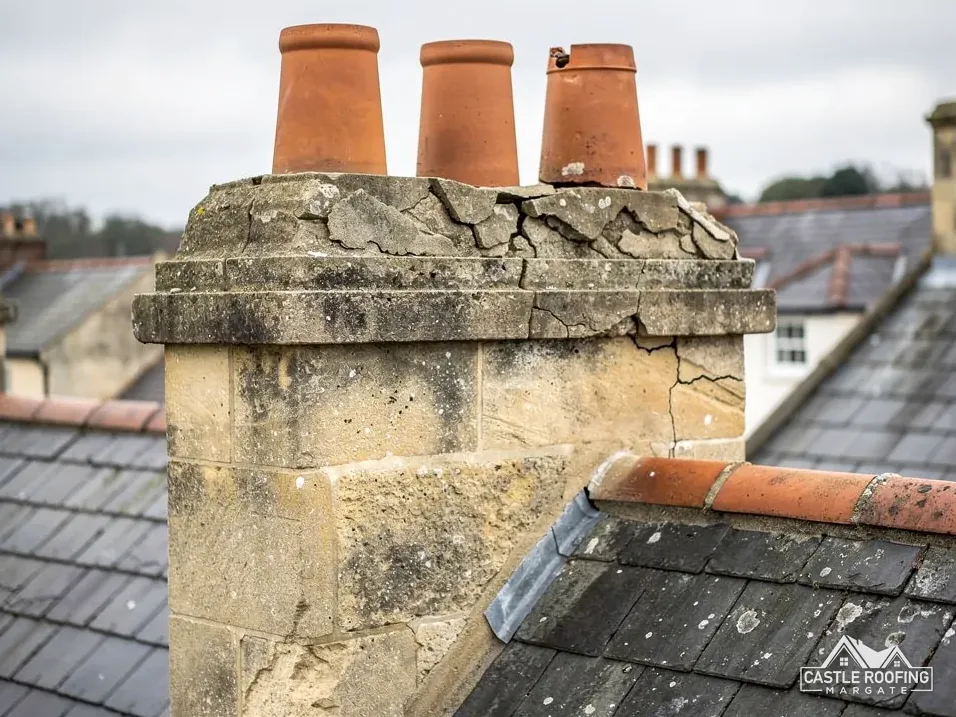
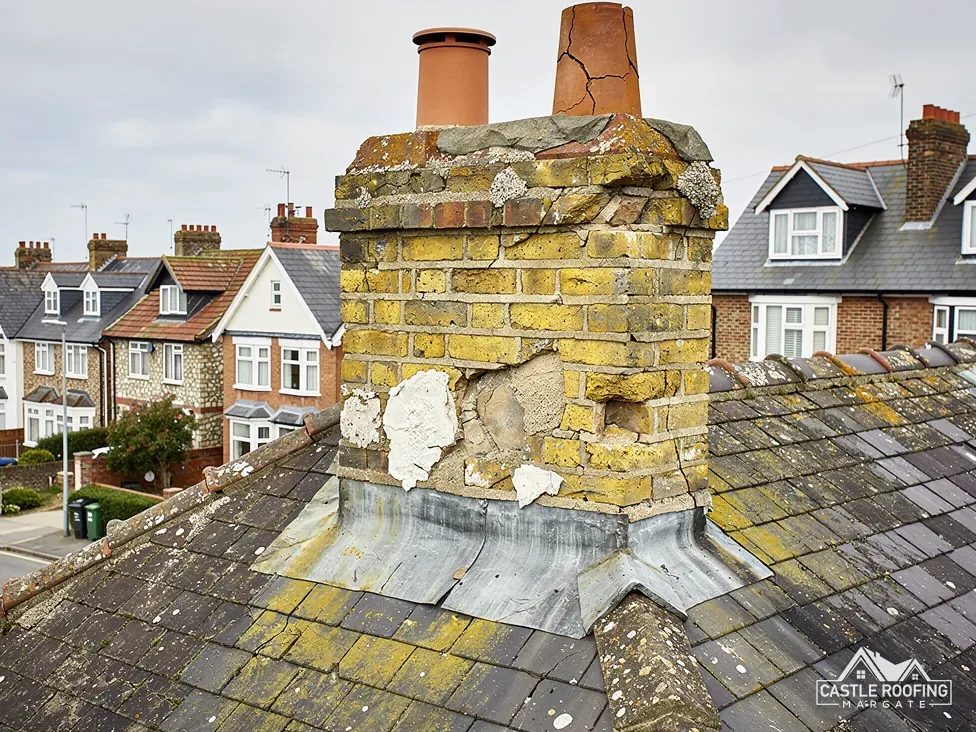
In a terrace, one chimney stack can carry the flues of the houses on either side of the party wall. The stack is physically one structure, so a lean, a cracked course or failing flaunching on your side is a problem for the other house too. It also means a repair or rebuild is not wholly on your own property.
The Party Wall etc. Act 1996 deals with building work to a wall shared with a neighbour. Section 2(2)(g) allows an owner to cut away the projecting parts of a chimney on that wall, whether breast, jamb or flue,, and section 3(2) asks for notice two months or more before the start date. Where the neighbouring owners and occupiers agree in writing, section 3(3)(a) lets the work proceed. GOV.UK adds that a lack of reply is not agreement.
Party wall questions go to a party wall surveyor, not building control, and GOV.UK says a surveyor must be appointed if owners cannot agree. The pages on shared chimney stack repairs go into the detail.
Reaching the stack from the street
Many terraced houses open straight onto the pavement, with no front garden and only a narrow or shared passage behind, which leaves the street as the only workable side for a scaffold. The stack is reached by scaffold, and with nowhere else to put it the scaffold stands on the footway.
Under section 169 of the Highways Act 1980, any scaffold obstructing the highway needs a licence, and on a terrace the footway counts as highway. In Kent that licence is Kent County Council's, requested by the scaffold company rather than the householder, at £52 per week for 2026 to 2027 and with 5 working days' notice. District councils do not issue them.
On a narrow pavement, the licence terms can shape the design. Kent County Council's conditions keep a gap between scaffold and carriageway, which can mean a different footing or a gantry over the path. If the rear is reachable through an alley, access there may be an alternative, though an alley has its own limits on space and carrying distance.
For the full picture, see scaffolding for chimney repairs.
Telling the neighbours first
The practical side matters as much as the legal side. A scaffold on a terrace may be fixed close to the next house, workers may need to see the neighbour's roof slope and dust and noise carry along the row.
What helps, in a sensible order:
- Talk to the neighbour before any notice arrives, and explain what is wrong with the stack.
- Agree who needs access, and when, so nobody is surprised by poles at the window.
- Put the plan in writing, including the dates and the scaffold position.
- Ask for their written consent, or serve party wall notice if the work needs it.
- Check whether they own the other side of the stack and will want their half repaired at the same time.
Doing both halves together can save a second scaffold. The cost split is a matter between the two owners, so agree it in writing before the work. Once the scaffold is up, extra jobs on either roof, such as a loose ridge or a tired valley, are cheaper to add than to come back for.
Neighbours may also share the leadwork where the stack meets both roofs, which makes it worth agreeing the repair on both sides before work begins, and sharing the date so that both roofs are covered while the stack is open.
What changes in the repair itself
The work on a terraced stack is the same trades as any other: repointing, flaunching, flashings, pots and sometimes a rebuild. What changes is the order and the care taken around the shared parts.
A stack that must come down to its base is taken apart from the top, with the neighbour's flues covered so debris does not drop into them, and the work paused if wind gets up. The new brickwork is matched to the old courses and joints so the two halves of the stack still look like one. The pots and flaunching on top go back to one pattern across both halves, whoever owns which flue. Where the lead at the base runs across the party line, both sides are done together.
If either house is listed, or the terrace is in a conservation area, check the consent position first. See chimney repairs in a conservation area.
Height, street access and how much of the stack is shared all move the price, and they are measured on the survey. One written total follows. The full range of stack work is under chimney repairs.