Five common causes of a leaking chimney, a table that matches the symptom to the fault and the fix, and what to check before anyone puts up a scaffold.
A chimney is the tallest part of the house, standing clear of everything around it, and it is built from several materials that all move at different rates. Brick, mortar, a sloping mortar cap, a pot, and the lead strips that tie the stack to the slope each take weather in their own way. When rain gets in, it rarely comes through the brick in a single obvious place. It finds the weakest joint between two of those parts and follows the structure down.
The signs show up indoors first: a tide mark on the chimney breast, wallpaper lifting beside the fireplace, a damp smell in the bedroom above, or a drip in the loft that lands on the same beam every time. This piece takes those symptoms and traces them back, one cause at a time, then says what each repair involves so you can read a roofer's quote with some confidence. The wider job is described on our chimney repairs page, and a good place to start is the question of what flaunching actually is, which our short answer on what flaunching is explains.
Five places a chimney lets water in
Working from the top down, these are the parts to check on a leaking stack. Each has its own look, and knowing the names helps when a roofer explains the fault.
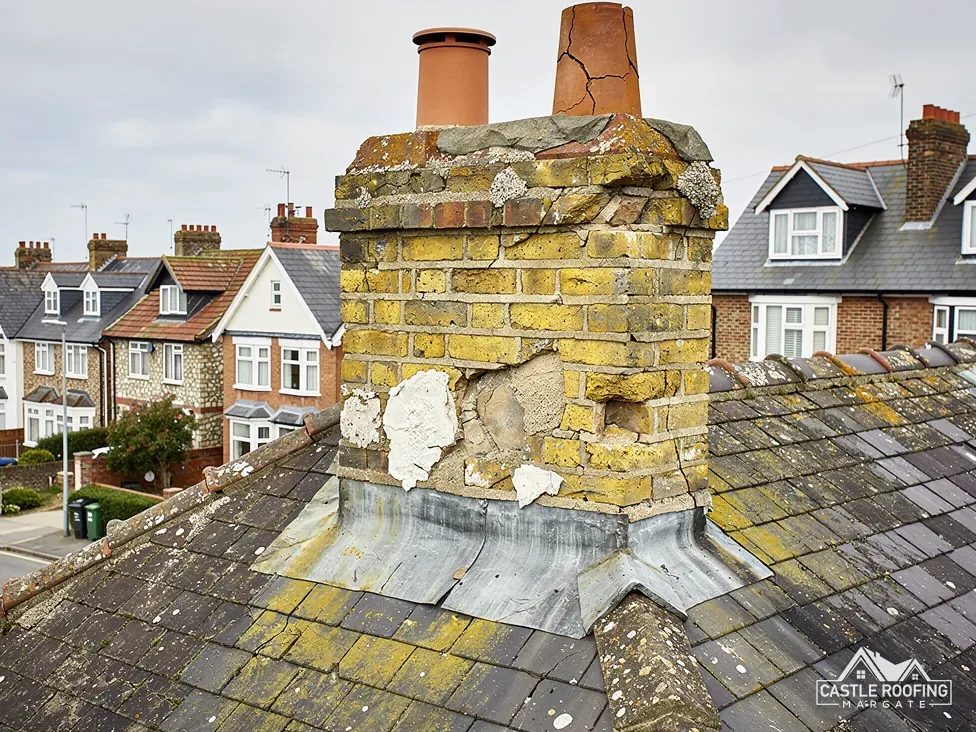
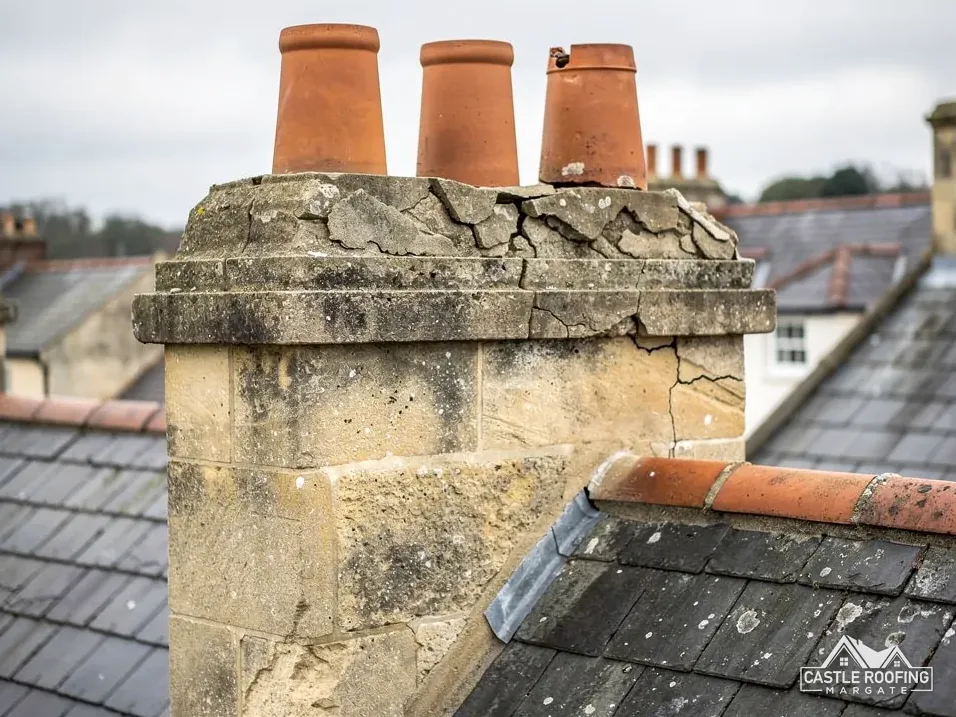
- The flaunching: the mortar fillet at the pot base, sloped so rain runs away from the pot and off the stack head. Cracked or hollow flaunching lets water into the head of the stack.
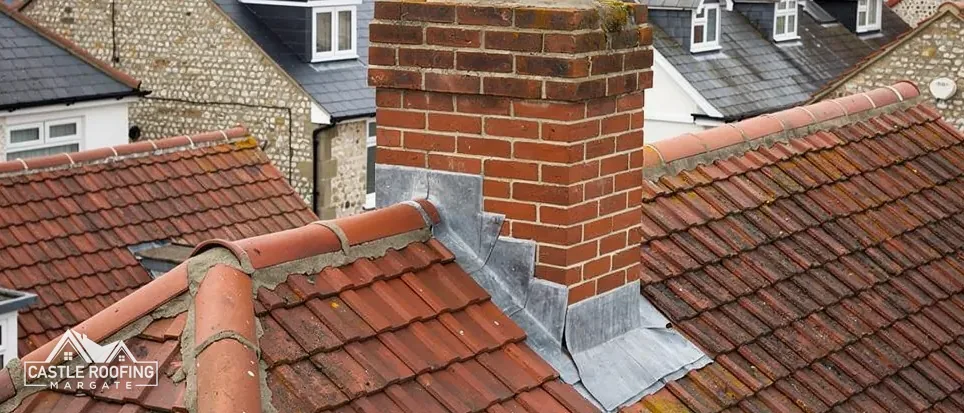
- The flashing: strips of lead that seal the joint where the stack meets the roof slope. A gap or a lifted edge sends water down beside the brickwork.
- The brick and mortar joints: old pointing that has eroded, or soft brick that has started to flake, can soak up a driving shower and pass it inside.
- The pot and cowl: an open pot over a fireplace that is now disused lets rain run straight down the flue.
- Condensation: not a leak from outside at all, but warm damp air in a cold flue condensing on the walls and staining the breast.
These can overlap. A stack with perished mortar at the top may have tired flashing as well, so finding one fault does not rule out the other. That is why a good look at the whole stack, with photos, matters more than a quick dab at the first crack that shows.
The location of the stain gives a clue. A mark high on the breast in the room under the roof suggests the head of the stack. A mark that appears at roof level, or in the loft beside the chimney, points to the lead. A stain on the whole breast after days of wet suggests porous brick.
Symptom, cause and fix at a glance
Use the table to narrow the likely fault before a roofer visits. It is a starting point and does not replace a proper look, because the same stain can come from more than one place.
| Symptom | Likely cause | Usual fix |
|---|---|---|
| Drip in loft beside stack | Failed flashing | Renew the lead |
| Stain high on breast | Cracked flaunching | Rebuild the cap |
| Whole breast damp after wet spells | Porous brick, open joints | Repoint, then assess |
| Water down an unused flue | No cowl on the pot | Fit a cowl or cap |
| Stain on dry, cold days | Condensation | Ventilate or line the flue |
If the stain only appears after a spell of driving rain from one side, mention that to the roofer. It tells them which face of the stack to inspect first.
Indoors, note which room the mark is in and whether it grows during the rain or hours afterwards, because timing separates a quick route in from a slow one.
- A mark that grows during a downpour points to the cap, the flashing or an open joint.
- A mark that appears a day or two later points to wet masonry drying out slowly.
- A mark on a cold, dry morning points to condensation.
A phone photo of the mark each day, with the date, shows whether it is spreading and gives the roofer something to compare against when they look at the stack. Our guide to finding the source of a roof leak covers the loft checks that go with this one.
Flashing and soakers
A flashing is lead tucked into a brick joint on one side and dressed over the roof covering on the other, so water runs across the join and not into it. Where a stack meets a slate or tile slope, the flashing is usually made in stages: a step-shaped piece up each side, a back gutter behind the stack, and an apron across the front. Soakers are the small folded pieces of lead that are tucked in under each course of tiles or slates along the stack, so that each course has its own waterproof edge.
Lead comes in codes, which are thicknesses. In the Royston Lead brochure, Code 3 is the one recommended for soakers alone. For each other detail on a stack, such as the back gutter or the apron, the specification written for your house sets the code, and you should expect to see it named in the quote.
Lead fails in a few ways. It can split where it has been bent too many times, lift at a loose edge, or be pulled away when the mortar joint it is wedged into crumbles. Fixing a flashing with a bead of sealant does not cure any of those, and it hides the real state of the joint.
On cost, MyJobQuote gives chimney leadwork a typical UK range of £350 to £920, last updated in September 2026. The figure for your own stack will depend on the height, the number of faces and the access, so it will not match that range exactly.
Flaunching, pots and cowls
Flaunching is the mortar crown right at the head of the stack, bedding the pot and sloping away so water runs off. Because it takes every shower first, it deserves a look before anything lower down. Cracks open as the mortar dries out, frost gets into them, and pieces fall away. Once the flaunching is hollow, rain runs down inside the stack and shows up as damp on the breast far below.
The fix is to remove the failed mortar and rebed the pot on fresh flaunching, shaped to fall away from the pot on every side. The short guide to chimney flaunching repair goes into the method.
A pot is the clay or metal outlet fitted on a flue. If the fire it served is gone, the open pot still takes rain. A cowl or cap that keeps rain out while letting air through is the usual answer, and an unused flue should keep a vent so the walls stay dry. A flue that is sealed tight at both ends can end up wetter than one that breathes.
- A rain cap suits a flue you plan to use again.
- A ventilated cap suits a flue you have closed off.
- A bird guard suits a pot where jackdaws or pigeons try to nest.
Our page on chimney cowls and pots sets out the differences. Fresh flaunching washes out if heavy rain soaks it before it sets, so a repair is best timed for a dry spell.
Brick, mortar and condensation
Brickwork that is soft or heavily weathered can take in water like a sponge. In a long wet spell, moisture passes through the stack and appears on the breast, where it can bring salts to the surface as a white crust. That crust is a sign of water moving through the masonry, not a fault in itself, but it points to a stack that needs looking at.
Repointing replaces eroded mortar in the joints with new mortar of the right strength. A roofer who offers to point a stack should say which mortar mix goes in and why it suits the bricks already there. The price follows a survey, because it turns on the height and the extent of the repair.
Condensation is the odd one out. A flue that serves a gas boiler or a closed-off fire can run cold, and warm damp air meeting those cold walls drops water, which stains the breast without any rain getting in. The stain tends to show on cold, still days. The usual answers are ventilation at the top and bottom of an unused flue or, for a working one, a liner. If you are not sure whether it is condensation or a leak, check whether the mark grows after rain or on dry days.
A chimney that leans, or has bricks that have shifted out of line, is a different matter. Stop using the fireplace and have it looked at, because a leaning stack can come down in a storm.
Access, cost and what to ask
Stacks stand at the top of the roof, so work on them needs safe access, and that is often a scaffold. Kent County Council has to permit any scaffold standing on the pavement, and the scaffolders apply at least 5 working days ahead. Kent County Council charges £52 per week for 2026 to 2027 for scaffolding placed on the highway. A roofer who proposes to reach a stack by ladder alone, for anything beyond a look, is working without a platform, which is worth asking about. Build the licence notice into the repair date when you plan it.
A short temporary make-safe, such as a sheet over an open stack, can keep the weather out while the permanent work is planned. It should be described to you as temporary and removed when the repair is done.
Before you agree to a repair, it helps to ask:
- Which part has failed, and can I see a photo of it?
- Is the lead being renewed or patched, and which code is it?
- Is the flaunching being rebuilt or covered over?
- Does the quote include the scaffold and VAT?
Collecting written quotes from at least 3 traders is Citizens Advice's suggestion before you choose. Our overview of the rules around chimneys, from insurance to removal, is in chimney rules explained. Photos of the stack, the loft beside it and the stain make the first visit quicker.