Use this to know what a post-storm inspection covers, what to photograph before anyone climbs a ladder, and how the Financial Ombudsman Service describes a storm when you read your policy.
Wind and rain show up first at the edges and joints of a roof, and the damage is often somewhere you cannot see from the garden. A slate that has slid an inch will not look wrong from the pavement, yet it lets water behind the covering the next time it rains. An inspection after a storm is a methodical search for exactly that kind of small movement.
It is also a record. Whether you plan to claim or only want to know where you stand, the findings are written down with photos while the damage is fresh and before more weather changes it. This guide takes the roof in the order a roofer walks it: the ridge and hips, the verges, the flashings and chimney, any flat roof and its outlets, and then the loft. It finishes with the photos an insurer asks for and the wording the Financial Ombudsman Service uses for a storm.
It belongs to our roof inspection work across Margate and Thanet. If water is coming in right now, make the house safe first and read the rest once the buckets are down.
Before anyone goes up: safety and first photos
The first job is to stay off the roof yourself. A storm leaves slates loose, wet lead slippery and debris on the slopes, and a fall from a ladder costs far more than any roof repair. Everything useful at this stage is possible from the garden, the pavement or inside the house, so there is no need to climb anything at all.
The Institution of Structural Engineers (IStructE) calls photographs vital evidence in a claim, because they show the damage as it was. Take them before anything is moved, and take them wide as well as close, so the picture shows where each piece sat on the house.
From the garden and the pavement, photograph:
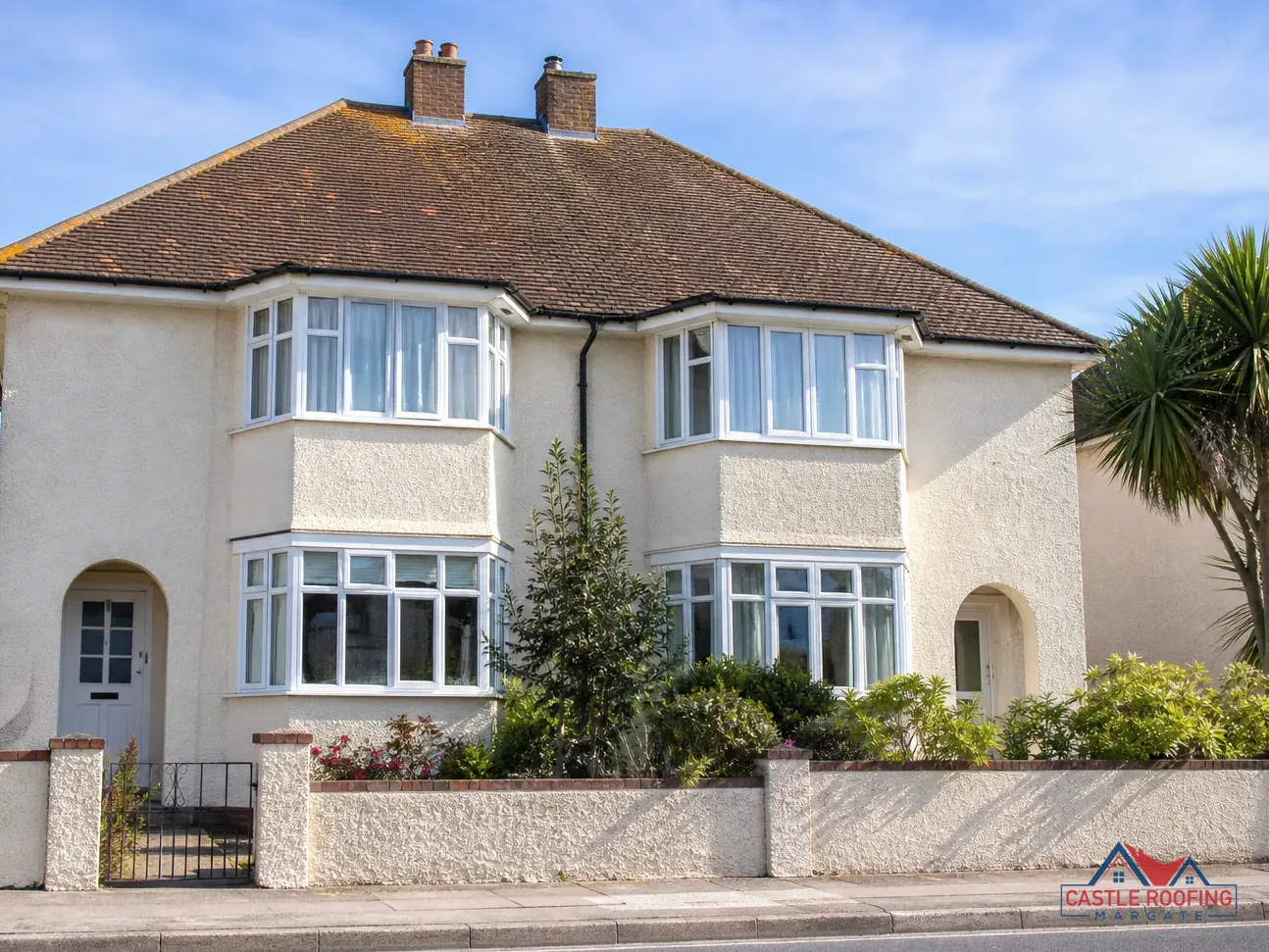
- the whole elevation, front and back, in daylight
- any slates, tiles or ridge pieces lying on the ground, where they fell
- gutters hanging or full of debris
- a fallen chimney pot or loose brickwork, at a distance
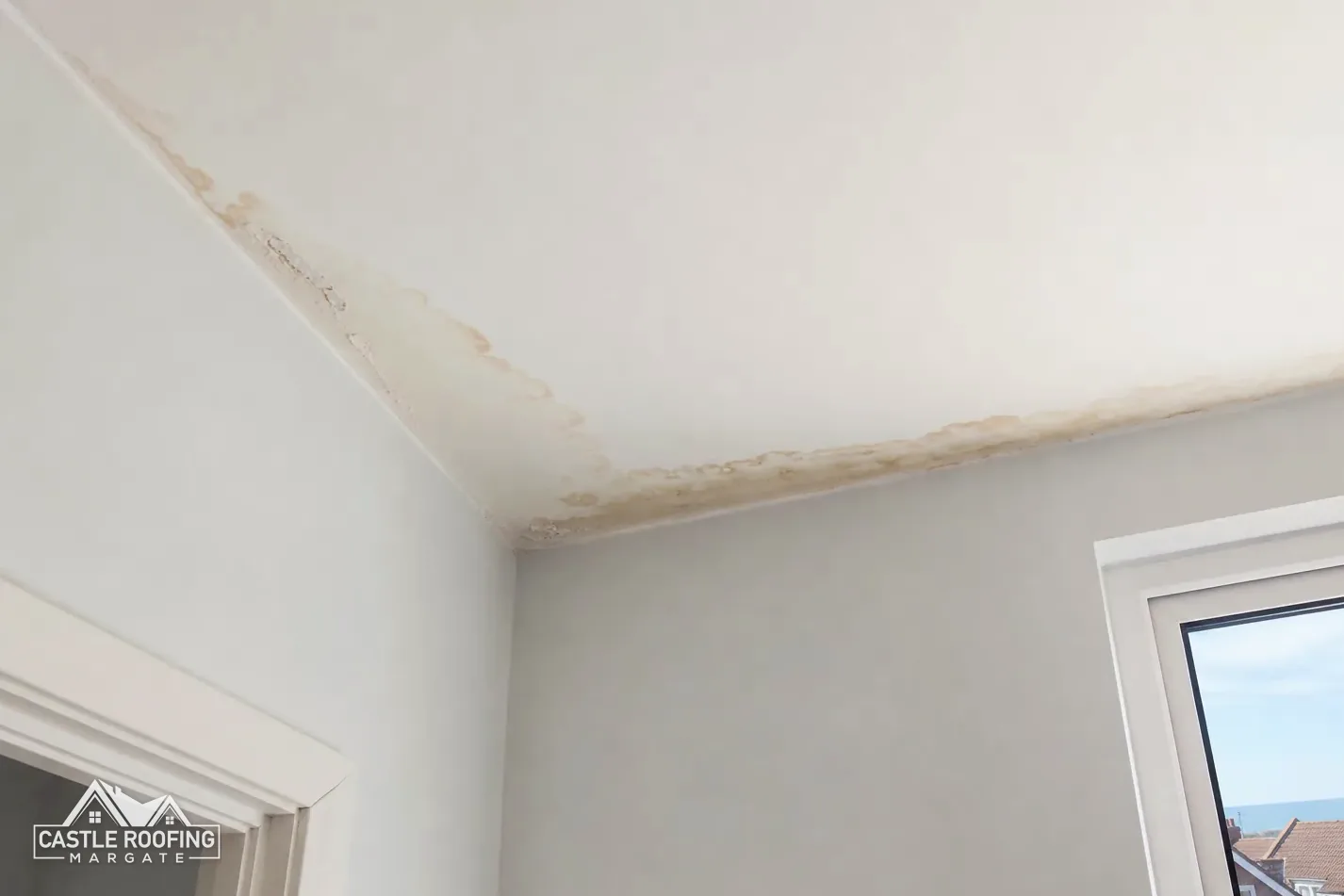
- every ceiling stain or wet patch inside, with a coin or tape in shot for scale
Then ring your insurer, because the order that works is insurer first, make safe, keep photos and receipts. Keep every receipt for temporary protection such as sheeting, and do not throw broken pieces away until the insurer has said it does not need them. A roofer arriving afterwards can read the debris like a map of where the wind took hold, which is one more reason to leave it where it landed.
Ridges and hips, where the wind lifts first
The ridge is the line of capping along the highest point, and a hip is the same line running down a corner where two slopes meet at a projecting angle. Both stand proud of the slopes and take the full push of the wind, so a roofer starts there.
On a mortar-bedded ridge the signs are cracks along the joints, a capping that rocks when pressed, or a gap where the bed has dropped. Marley says the 2015 amendments to BS 5534 settled that mortar alone is no longer enough to secure the covering, and BS 8612:2018 is the standard for dry-fix kits at the ridge, hips and verges. A dry-fix ridge fails differently, with a clip that has let go or a piece that has slid along the line.
For wind, the Met Office's Manston station gives a mean wind speed of 9.86 knots across 1991 to 2020, and 11.21 knots in January. Those are long-run averages for the station, not a description of any single storm. They explain why fixings on an exposed roof are calculated for the site rather than assumed.
What the roofer records at this stage:
- which ridge and hip pieces have moved, cracked or gone
- whether the bed or the clips below them are still sound
- any gap through which the underlay can be seen
Underlay is the sheet under the battens, and a ridge gap that shows it needs covering promptly. Photograph the gap from the ladder or the scaffold before it is covered, so the report shows exactly what was open. The same goes for any ridge piece found lying on a flat roof or in a gutter, which tells you which way the wind was blowing.
Verges, flashings and the chimney
Verges run up the sides of a gable-ended roof, where the covering finishes short of the wall. Wind gets under them from the side, so slates and tiles along the verge slip or lift before the middle of the slope does. The roofer sights along the line for a ragged edge and presses each piece to feel for a loose bed or a missing fixing.
Flashings are lead or another metal worked over a joint, and the chimney is full of them. Storms lift the edge of a flashing, tear it from the brickwork or bend it back on itself. Soakers are the little lead sheets tucked under the slates where a slope runs up to a wall. The Royston Lead table gives Code 3, at 1.32 mm, as the soaker code; any other detail takes whichever code the specification names.
| Part | What a storm does | What is checked |
|---|---|---|
| Verge | Lifts or slips edge pieces | Bed, fixings, line |
| Flashing | Peels from the brickwork | Edge, wall chase, dressing |
| Flaunching | Cracks around the pot | Bed, pot, joint to stack |
| Valley | Clogs and overflows | Gutter lining, debris, laps |
Flaunching is the mortar bed around the foot of a chimney pot, sloped so rain runs clear of the stack top. A cracked flaunching can let damp into the chimney breast, so it is checked even when the pot looks upright. The roofer also notes any lean in the stack itself, because a stack that leans needs an engineer or builder to look at it before any roof repair begins.
Flat roofs and their outlets
A flat roof gives way in other spots than a pitched roof does. Wind lifts the edge of a membrane, the waterproof skin, along the perimeter where it turns up a wall or over a trim. Heavy rain finds low spots and sits there. Leaves and grit block the outlet, which is where the water is meant to leave the roof, and a blocked outlet can send water over the kerb at the back of a parapet.
The roofer walks the surface only if it is safe to do so, and otherwise inspects from a ladder or window. The checks:
- Look along each edge and trim for a lifted or split membrane.
- Press seams and laps, and look for blisters.
- Clear and examine each outlet, and note where water has been standing.
- Check the upturned edges where the membrane meets a wall for gaps in the flashing or sealant.
Falls matter here. BS 6229:2025 is the current code for membrane flat roofs, and it keeps a minimum 1:80 finished fall for general roof areas. A roof that held water before the storm is still wrong afterwards, and the report should say so separately from the storm damage.
Our guide to flat roof inspection explains the routine visit. After a storm the aim is narrower: separate what the weather did this week from what has been building for years.
The loft, where the damage confirms itself
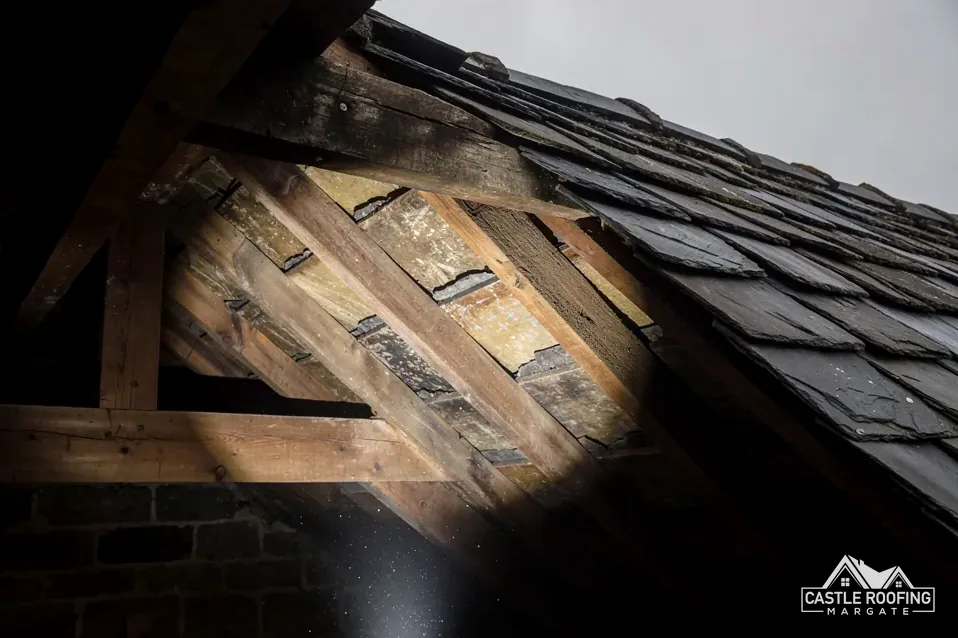
From the hatch, a torch and a dry afternoon show a roofer what the covering above has let through. The underside of the covering shows light where a slate has gone, tracks of damp on the battens and rafters, and a wet patch on the insulation below. If floorboards or stored boxes cover the loft, the roofer asks to see the rafters nearest the chimney, the valleys and the eaves, because those are the places that stain first.
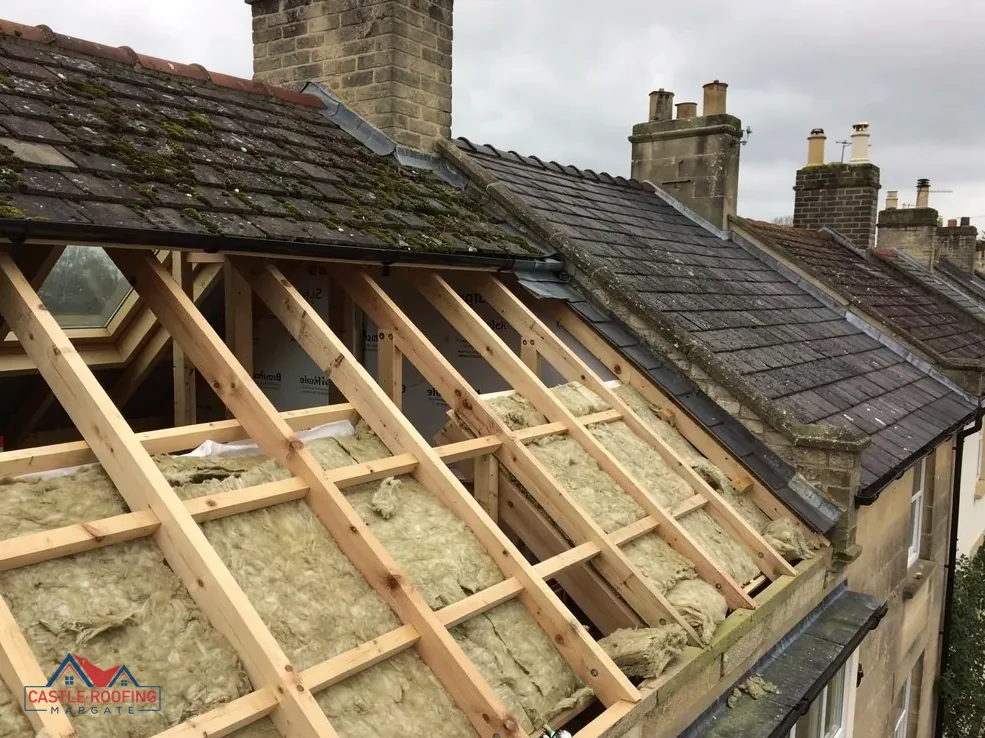
Battens are the thin timbers across the rafters that the covering is fixed to, and rafters are the sloping beams that carry them. Fresh, dark staining that follows a single rafter points to a single entry point. A broad, old tide mark with a pale edge points to something that has been happening for longer.
That difference matters for the report. Policies can exclude certain kinds of damage. A roofer cannot tell you what an insurer will decide, but a clear note of what looks sudden and what looks old gives you accurate material to work from, and it stops the whole roof being blamed on one night's weather.
What the loft check records:
- the position of every wet or stained area, measured from the gable end or chimney
- whether the underlay is torn, sagging or sound
- damp on the ceiling side of the insulation
- any sign the roof was leaking before the storm
Our page on loft inspection for roof problems covers the routine version of this visit.
Photos, receipts and what the storm wording says
A roofer's photos and written note are evidence for the insurer to weigh, and the insurer makes the decision. They give your own account something to stand on, which is why they are worth taking before any temporary repair hides the fault.
The Financial Ombudsman Service is the body that settles disputes when a claim is turned down. In its own words, a storm "usually involves violent winds", and rain, hail or snow tend to come with them. The Ombudsman adds that rain, hail or snow can sometimes be enough without the wind, that it takes the Beaufort Scale into account, and that some insurers draw a line on that scale, counting only stronger winds as storm-force. That is why the definition to read is the one written into your policy.
The same Ombudsman page lists two common exclusions, "gradual damage" and "wear and tear". Neither is a reason to stay quiet about old defects. It is a reason to have the roof described accurately, so that new damage and old wear are not blurred together.
Keep a simple file:
- dated photos from the ground, the loft and the ceilings
- receipts for sheeting, tarpaulins and emergency repairs
- the roofer's written report, with its photos of each fault
- the date and time you first noticed the damage
If a claim is refused and you disagree, the Financial Ombudsman Service helpline is 0800 023 4567. No report guarantees a payout, and nobody can promise one. Our guide to a roof report for an insurance claim shows what a useful report holds.