Gutters and downpipes come first
Gutters are easy to neglect, and a blocked one soon puts water where it should not be. A gutter full of leaves holds water against the fascia (the board the gutter is fixed to), overflows down the wall and can force water back under the lowest row of tiles.
A winter check looks at:
- Leaves, moss and silt in the channel and at the outlet.
- Joints that drip, brackets that have pulled away and sections that have sagged.
- Falls, because water should run to the outlet. Brett Martin gives a fall of 1mm for every 600mm of gutter.
- Downpipes clear to the bottom, with the shoe or gully taking the water away from the wall.
Which? Trusted Traders price a full gutter clear-out at £75 to £350 ex VAT (November 2025 survey), with bills expected to run higher across the South East, Kent included.
If a stretch of gutter is leaking or crooked, mark it for repair now. A joint that drips in October will run freely in January, and ice makes a cracked section worse.
Ridges, verges and flashings
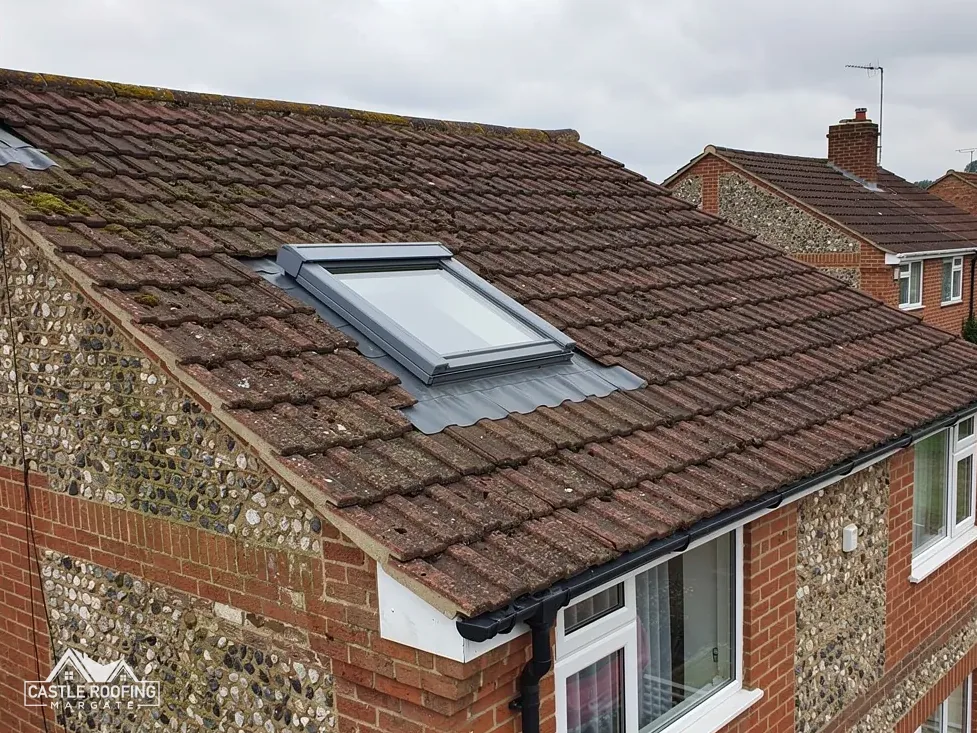
These are the parts that wind and rain test hardest, so they are worth a close look from street level and the loft hatch. The ridge caps the apex, with the hips running down each corner. Pieces along them need firm fixing. Marley's reading of the 2015 amendments to BS 5534 is that ridge and hip pieces cannot depend on mortar alone.
At a gable end the verge is where the covering finishes along the sloping edge. Loose verge pieces let wind get under the covering. Dry-fix systems, covered by BS 8612:2018, fix the verge mechanically rather than relying on mortar alone.
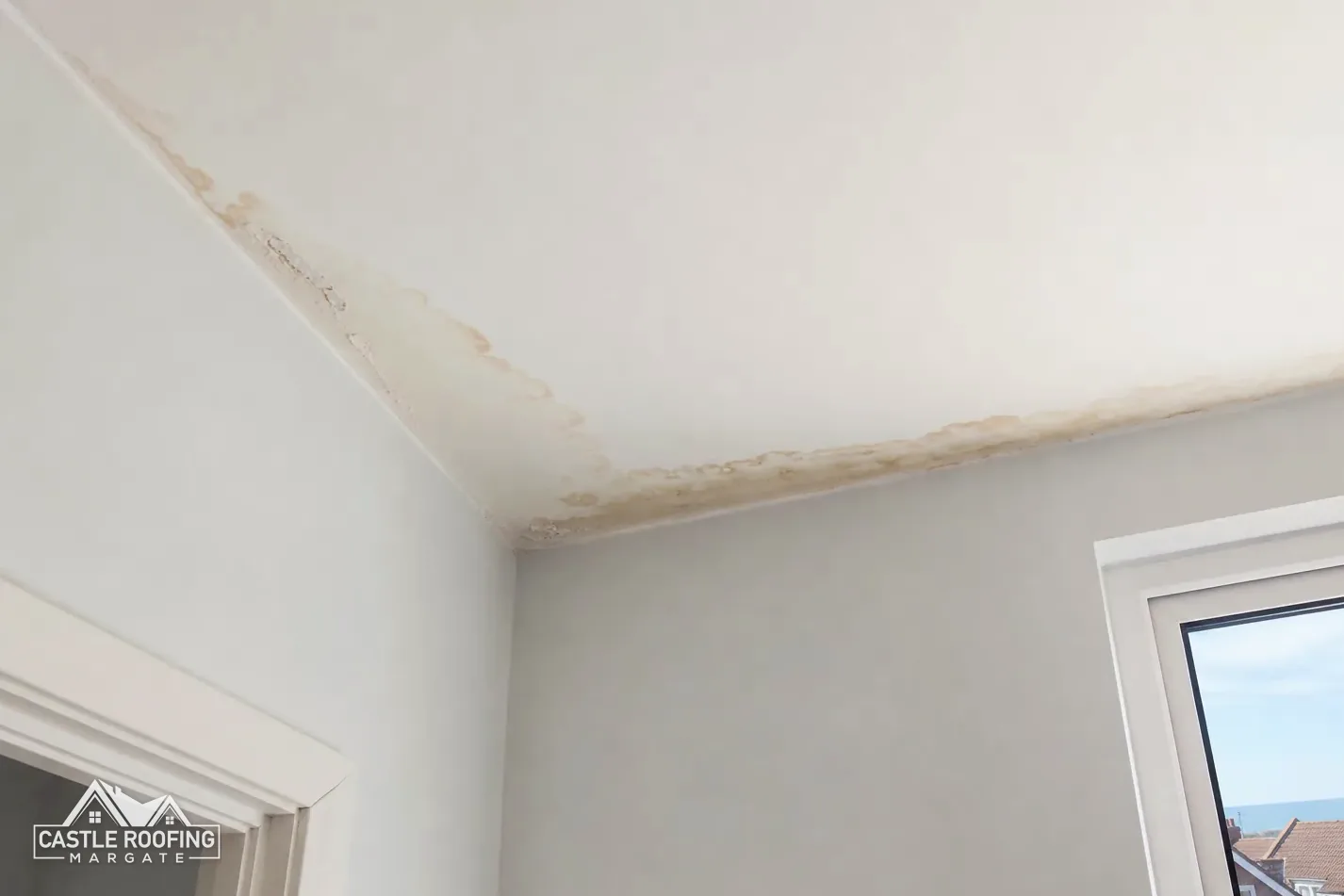
Flashings are the strips, usually lead, that weatherproof the junction where roof meets chimney or wall. The signs of trouble are lifted edges, gaps at the mortar line and staining on the ceiling below. In the words of MyJobQuote, lead flashing "can last for over 80 years", a lower limit and not a promise, so a sound one is worth keeping.
Look for cracked, slipped or missing tiles and slates too. A single gap is enough to let water reach the underlay, and from there it reaches the battens, the slim timbers under the covering.
What the Manston averages mean for timing
For this part of Kent, the Met Office's thirty-year averages for its Manston climate station run from 1991 to 2020. They are averages, so they describe a typical year rather than any particular storm.
| Measure | Average |
|---|---|
| Rainfall per year | 612.64 mm |
| Days with 1 mm of rain or more | 110.05 |
| Mean wind speed at 10 m | 9.86 knots |
| Mean wind speed in January | 11.21 knots |
| Air frost days | 21.43 |
Read them as a reminder of what a roof here meets over a year. Met Office figures for Manston put January's mean wind at 11.21 knots against 9.86 for the year, so the start of the year runs breezier than the average. A frost day matters because water in a crack freezes and widens it, and Manston averages 21.43 air-frost days a year, which gives that plenty of chances.
BS 5534 calls for fixings to be calculated against the exposure of the individual site, so a covering fixed correctly should cope. A check exists to catch whatever has loosened since.
Small repairs first, and when to book
The best result of a pre-winter check is a short list of small jobs rather than one large one. A handful of replaced tiles, a re-bedded or re-fixed ridge piece, a new flashing and a cleared gutter together cost far less than a leak that has soaked an insulated ceiling.
Which? Trusted Traders give £80 to £300, ex VAT, to put a new ridge tile in place, and £75 to £400 to swap a few broken standard tiles. These are national figures and not our prices.
A sensible order for a check is:
- Clear the gutters and downpipes.
- Repair anything that lets water in.
- Refix loose ridge, hip and verge pieces.
- Renew worn flashings.
- Look in the loft for damp, daylight and wet insulation.
Book before the weather turns, because repairs on a wet, windy roof are slower and less secure. If the check shows that the whole covering is nearing its end, that gets said plainly, though repair is the first suggestion wherever it will do. See roof inspections and inspection after a storm.