Use this to set up a routine for the roofs in your care: what a check should cover, how gutters and flat roofs differ, what to file afterwards, and how to get a clear price for each repair.
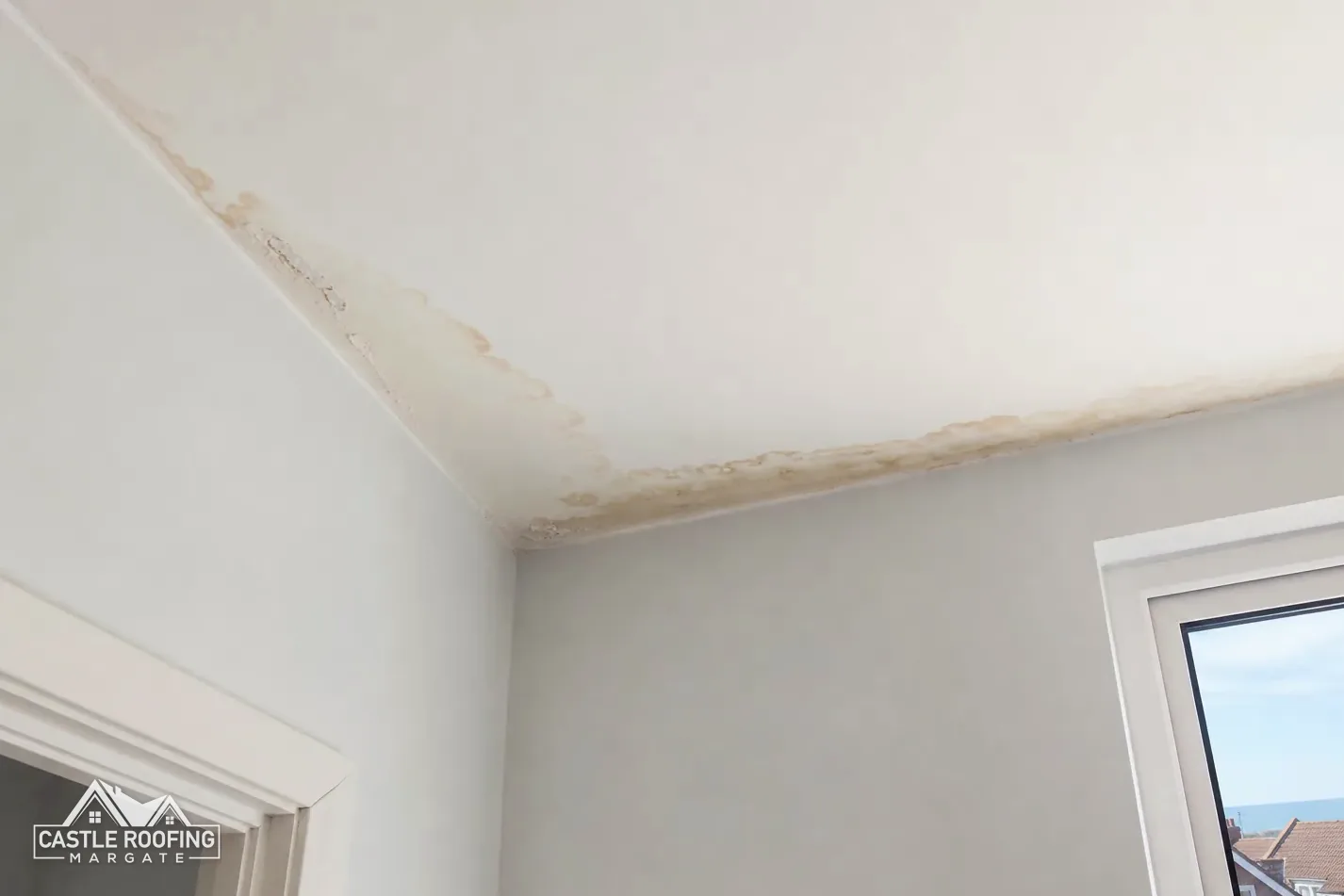
A roof fault in a let property can be found late. The owner is somewhere else, the tenant does not go into the loft, and a damp patch on a ceiling is easy to blame on a window or on condensation until the plaster comes down. By then a slipped slate or a lifted flashing has become a wet timber, and the repair has grown with it.
A planned check turns that around. Instead of waiting for a phone call, the owner or agent books a roofer to look at the roof on a schedule that suits the building, gets photos and a short written account, and files them. If something is wrong it is found while the repair is still small, and if nothing is wrong there is a dated record that says so.
This guide is for landlords with one or two houses and for letting agents looking after many. It explains what a check covers, why gutters and flat roofs deserve their own attention, what records to keep and how repairs are priced. It belongs to our roof inspection service for Margate and the towns around it, and every point applies equally to a terrace, a converted house or a block with a flat roof over the rear.
Why a planned check suits a let property
An owner-occupier lives under the roof and notices when something changes: a drip in the night, a new stain, a draught that was not there. A let property has nobody doing that for the owner. The tenant may spot a leak, but may also not mention it, or may mention it only once it has become a nuisance.
A planned check replaces that daily watching with a scheduled one. It works best when the visit is fixed in advance, the tenant is told, and the roofer is given a clear brief: look at every part of the roof, photograph what is found, and write down what needs doing and how soon.
Three things make a planned check worth more than a reactive visit:
- it finds small faults before they have caused damage inside
- it leaves a dated note of how the roof stood at the start and end of a tenancy
- it lets repairs be bundled into one visit instead of arriving as a string of call-outs
None of this requires an elaborate programme. For a single house, an inspection at a sensible interval, plus one after severe weather, is a routine you can keep up. For an agent with a portfolio, the same report format used on every property makes the results easy to compare and file.
Our guide to how often a roof should be inspected looks at the interval question in more detail.
What a check on a rented house covers
The visit follows the same path as any thorough roof inspection, with a few additions suited to rented homes. A roofer works round the outside first, then goes into the loft if the hatch allows.
The parts that matter most:
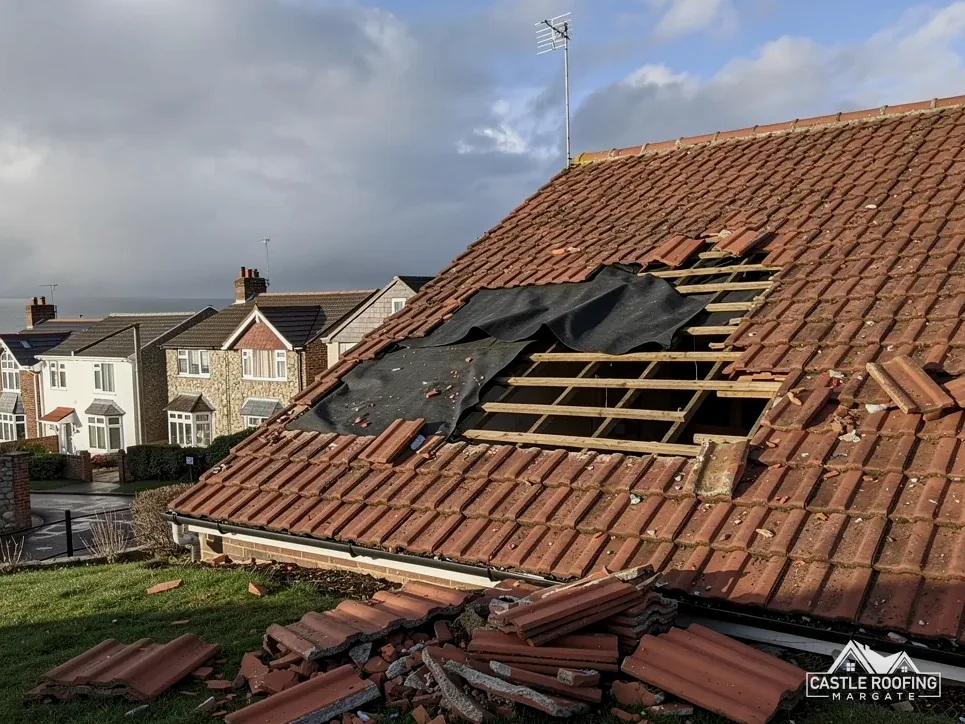
- slopes, for slates and tiles that have slid, split or gone altogether
- the ridge and hips, for movement and cracking
- the verges, where the roof finishes at a gable wall
- flashings, the metal worked over joints at chimneys and walls
- the chimney stack, its pots and the mortar bed round them
- gutters, downpipes and the fascia and soffit boards behind them
- any flat roof, such as a rear extension, a bay or a garage
Inside, the roofer checks the loft for daylight, damp on timbers, a torn underlay and wet insulation. Underlay is the sheet beneath the battens, the thin timbers the covering is nailed to.
Photos matter more on a rented property than on an occupied one, because the person reading the report may be an owner who has never seen the roof, an agent who manages it from an office, or a contractor asked to quote. A picture of the fault settles arguments about what was meant.
If a check turns up something outside the roof, such as a damp wall below a leaking gutter, it should be noted in the report with a photo, even though the repair belongs to a different trade.
Gutters and downpipes, the quiet source of damp
Gutters are easy to overlook in a let property, because nothing inside the house changes when one fills with leaves. Then a joint leaks onto a wall, a downpipe overflows at a corner, and a patch of damp appears on the inside face of a gable.
A roofer checks the run of each gutter for sagging, loose brackets, split joints and blocked outlets. The fall matters too. Brett Martin, a guttering maker, gives the guide as 1mm for every 600mm, so a gutter that holds water along its length has probably dropped out of line and needs its brackets resetting.
On cost, Which? Trusted Traders gives £75 to £350 ex VAT to clear every gutter on a house, front and rear. MyJobQuote puts gutter replacement at around £1,000 to £1,600. The gap between those two figures is a reason to look at a gutter before it fails, since on those figures a clear costs a fraction of a replacement.
For a landlord the practical points are:
- Ask for gutter condition to be a line in every report, with a photo of any joint that leaks.
- Have gutters cleared at a point in the year that suits the trees around the property.
- Treat a stained wall below a gutter as a gutter fault until a roofer says otherwise.
Water spilling at the eaves also soaks the fascia and the rafter ends behind it, so a blocked downpipe is a roof matter as well as a drainage one.
Flat roofs on lets: extensions, bays and garages
Some rented houses have a flat roof somewhere, over a kitchen extension, a bay or a garage. Their coverings have shorter published lives than slate or clay, so an owner is more likely to face a replacement on them while still holding the property.
| Covering | HomeBuilding | Less |
|---|---|---|
| EPDM | 25-30 years | 30 to 50 years |
| GRP | 25-30 years | 25 to 40 years |
| Felt (torch-on) | 10-15 years | 10 to 20 years |
These are typical ranges quoted by two guides, and they do not agree. They are not promises for a particular roof, and a covering can fail early if the roof is poorly drained or has been damaged. EPDM is a rubber single-ply sheet, GRP is a glass-fibre and resin laminate, and torch-on felt is bitumen felt bonded by flame.
A planned check on a flat roof looks for ponding, where water stands after rain, for splits and blisters in the membrane, for lifted edges and for blocked outlets. Under BS 6229:2025 the minimum finished fall is 1:80, so standing water is a sign something is wrong with the fall or the drainage.
Knowing the covering and its age, and writing both on the file, lets an owner plan: patch repairs while the roof is sound, and set money aside for replacement when it is not, rather than meeting the bill in a hurry after a leak. Our guide to flat roof inspection explains the visit.
Records that make a check worth having
A report that sits in an inbox is worth little. A report that is filed, dated and tied to a property is worth a lot when a tenancy ends, when a claim is made or when a buyer asks about the roof.
A simple folder for each property, on paper or on a drive, holds:
- the date of each inspection and who carried it out
- the photos of each part of the roof, named by slope and detail
- the written account of what was found and what was recommended
- the repairs done, with the date and the written price for each
- receipts for any temporary protection after storms
Photos should be identifiable. A picture of a chimney is hard to tell from the next; a picture named "rear slope, left of stack" is not. Ask the roofer to label them, or to number them against the report.
Agents managing many properties gain most from consistency. Use the same checklist each time and the reports can be put side by side: which roofs have flat sections, which have chimneys that need attention, which are due a second look.
Records also protect the owner in a dispute. If a tenant reports a leak and the last inspection shows the roof sound six months earlier, the cause is easier to find. Our page on roof inspection photos shows what a useful set looks like.
One written price for each repair
When a check finds something, the owner or agent needs a figure to approve. The workable form is one written total for each repair, covering everything the job needs from start to finish. That way the person approving the spend can see the whole cost at once, and can compare it with another quote.
Citizens Advice says to seek at least 3 written quotes from different traders. For a large repair or a replacement that is a sensible step. For a small job found on a routine check, such as a handful of tiles, it may be quicker to approve the figure from the roofer who has already seen the roof and has the photos.
Questions for any repair quote on a let property:
- what exactly is being done, and on which part of the roof
- whether scaffold is included, and whether the Kent County Council licence is covered where one is needed
- whether VAT is in the figure
- how access to the property will be arranged with the tenant
Access deserves a line of its own. A tenant should be told when the roofer is coming, and a loft hatch inside a bedroom cupboard has to be cleared. A well-run job agrees the day with the tenant before the roofer arrives, so the visit is not wasted.
Afterwards the owner should receive photos of the finished repair next to the earlier ones, filed in the same folder.