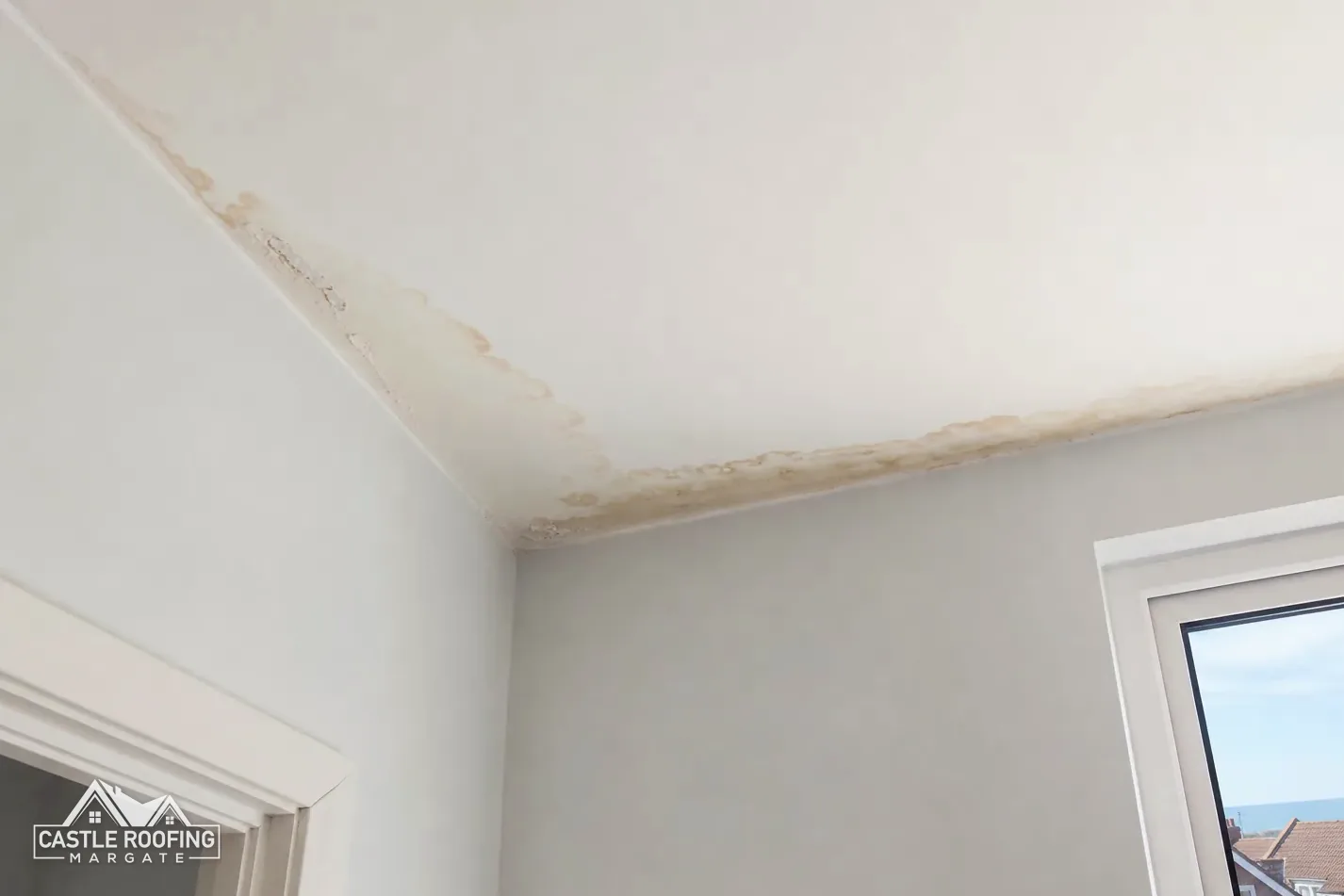
Paperwork that dates a roof
The best evidence is a document with a date on it. Look through the house file, the solicitor's bundle from your purchase and any folder left by the previous owner. Useful items include:
- an invoice or receipt from the roofer who last did work, with the date and the area covered
- a completion certificate from building control, if the work needed approval
- a survey report from when you bought, which may describe the roof's age and condition
- for a new-build, the NHBC Buildmark papers, which cover 2 years with the builder and then 8 years of insurance for defects in certain parts of the home
Thanet District Council's building control team holds a register of completion certificates, and says a copy costs £54 (including VAT) per copy. That route only helps if the roofing work was notified at the time, which is a question the next section answers.
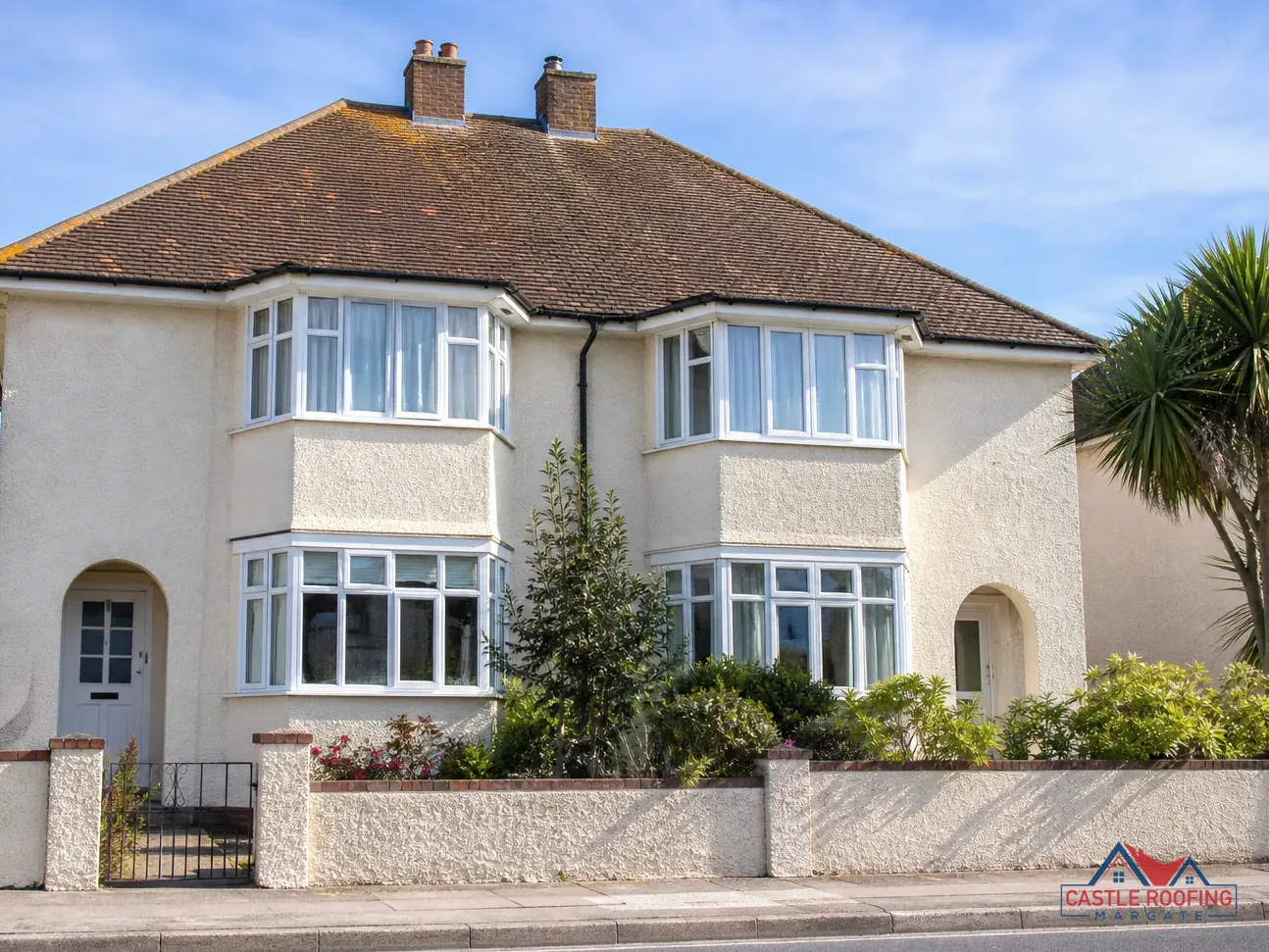
Neighbours can fill gaps too. If the house next door was re-roofed, ask who did it and when, since a pair of semis or a terrace may have been done in a single campaign.
Why a missing certificate proves little
A re-roof does not always need building control. The Planning Portal's test is whether less than 25 per cent of the building envelope is affected and less than 50 per cent of the roof. On the Planning Portal test, approval is also needed if the replacement covering is heavier by 15 per cent or more.
So a house with no certificate may still have had smaller roof work that sat inside those limits, or a re-roof that was never notified, and a house with one may have had only a partial job. Dover District Council takes a stricter line: its building control team asks for approval to replace a roof covering like for like, so a Dover address may have a record even for a like-for-like re-cover. Thanet, where we are based, points owners to the Planning Portal test instead.
Treat paperwork as a starting point, not the last word. Where it is missing, move on to what the roof itself shows. You can also ask your solicitor whether the sale papers mention any roof work, since sellers are sometimes asked about it when they complete the forms.
Clues in the slopes and the timbers
A trained eye reads age from a mix of small signs, none of which gives a date alone. From the ground or the loft you may see:
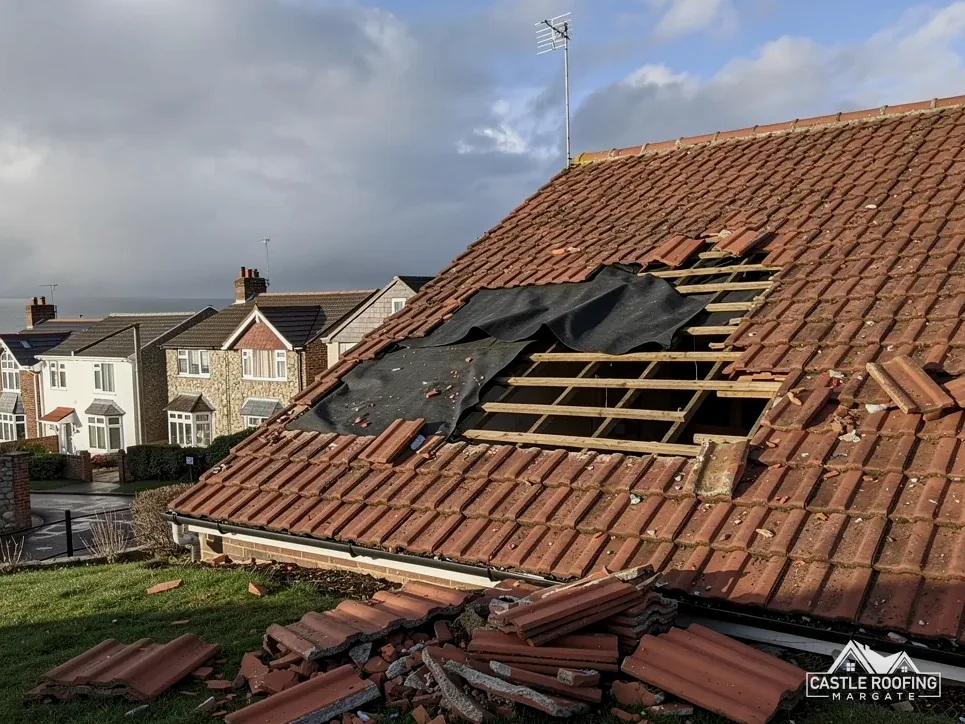
- patches of tiles or slates in a different colour or texture, which mark a repair rather than the original covering
- ridge tiles bedded in mortar that has cracked and crumbled, or newer dry-fix ridge clips
- lead flashings that are thin and split, or newer ones with clean edges
- underlay in the loft that is torn, brittle and dark, or one that looks clean and flat
- nail heads on the battens rusting through
Compare your roof with the neighbours if you live in a row. A roof that looks newer than the rest of the row has been renewed at some point, even if nobody can say when.
The way timber has aged helps too. Battens that are grey, dry and cracked belong to an old roof, while pale clean wood suggests recent work. None of this replaces a roofer's visit, and a period property roof inspection goes further into what older roofs reveal on close inspection.
Typical lifespans as context
Once you have a rough age, set it against the covering. Published guides give these typical ranges, which are a guide and no promise:
| Covering | Typical life |
|---|---|
| Welsh slate | 100 years or more (HomeBuilding) |
| Clay tile | 60 to 80 years (HomeBuilding) |
| Concrete tile | 40 to 50 years (HomeBuilding) |
A roof inside its range can still be failing if the underlay or flashings have given up, and one beyond its range can still be sound. Marley, the tile maker, says its own quoted figure is not a promise of how long a tile will last, which is a fair warning to read any lifespan as a guide only. HomeBuilding puts Spanish slate at 75 to 100 years and reclaimed Welsh slate at 50 to 80, so even within one material the range is wide, and age alone settles little.
Age sets how often to check. See how often a roof should be inspected, and the hub page on roof inspections for a full condition report, with photographs of the faults found. A condition report also tells you what is left in the covering, which is often more useful than a date.