Class C and the ordinary house
Planning permission is the council's consent to development. Permitted development rights are national rules that give that consent in advance for common jobs, so no application is made and no fee is paid.
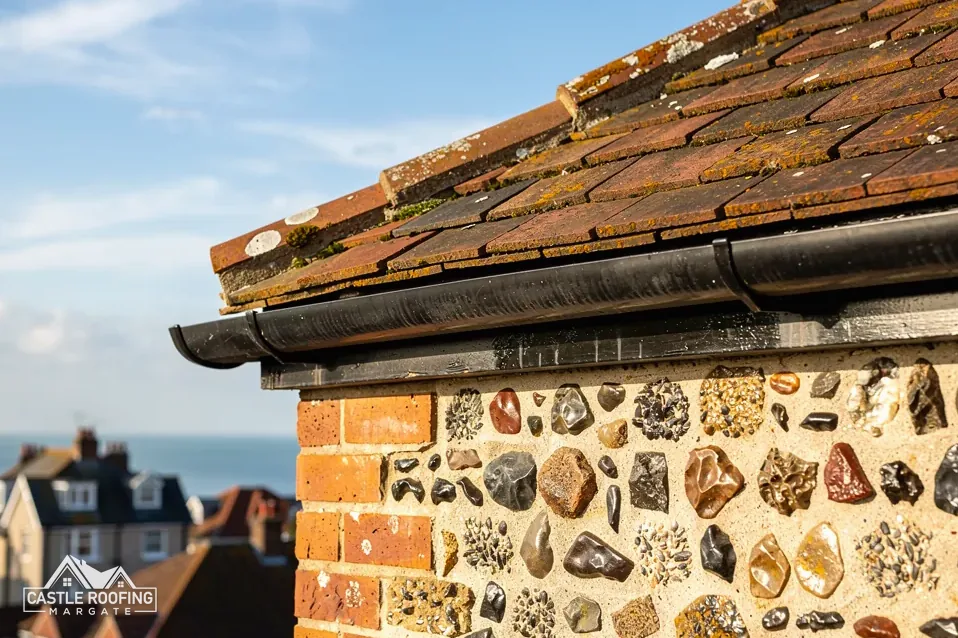
For a house, the right that matters here is Class C, in Schedule 2, Part 1 of the 2015 Order. It takes in roof alterations to a house, and re-roofing sits inside it. Replacing concrete tiles with clay, or one slate with another, is therefore normally permitted development.
Class C does carry limits. It falls away if the alteration would stand more than 0.15 metres proud of the original roof slope, or lift the highest part of the roof above the original. A new covering laid on the existing rafters and battens sits nowhere near either limit.
Section 55 of the 1990 Act also sets aside works that leave a building looking largely as it did, which can reach a like-for-like repair that looks the same afterwards. Where the look changes, treat the job as a Class C alteration and run through the cases in the next section.
Where the answer changes
Four situations call for a check before any tile comes off, and one house can fall into more than one of them:
- A flat or maisonette. Under the Order these are not dwellinghouses, and Canterbury City Council says they have no permitted development rights, so a new covering that changes how a flat looks from outside needs an application to the council.
- A listed building. Class C still applies, but work that alters its character also needs listed building consent under section 7 of the 1990 Act, which is a separate application.
- An Article 4 area. A direction withdraws chosen permitted development rights across a mapped area. Swale's direction for the Faversham conservation area takes in the roof coverings of street-facing principal elevations.
- Another conservation area. Designation alone does not remove Class C, though a council may have added its own direction on top.
Conservation areas do remove Class B dormer rights, which is a different matter from re-tiling a slope. The council's planning team can confirm which of the four cases your address falls into.
Thanet, Dover and Building Regulations
Thanet District Council's conservation area page gives a guide on likelihood: a covering that matches the old one stands a lower chance of needing an application. It is not a promise. The same page records Article 4 directions for the Pegwell conservation area, for Ramsgate's and for its marina extension, and for those only the council can tell you which classes a direction covers.
Planning is one test and Building Regulations are another. The Planning Portal's two tests are less than 25 per cent of the building envelope affected and less than 50 per cent of the roof affected, and passing both normally means no application. A new covering that is 15 per cent or more heavier needs approval first. The survey therefore notes which tile or slate is on the roof today and which is planned, and the Planning Portal suggests that a structural engineer or surveyor look at heavier work before it begins.
Dover is stricter. Its building control team asks for approval to replace roof coverings even where the new ones match the old. That applies to Dover addresses only, and Thanet instead points owners to the Planning Portal test above.
Neither test replaces the other, so a job can be free of planning yet still need building control.
Checking before the scaffold goes up
The survey records what the house is: a house or a flat, listed or not, and whether it sits in a conservation area or under a direction. That tells us whether the job needs no application, a call to the planning team or a consent route, and it is written into the report you receive after the visit.
For a listed home the consent comes first, and the covering is usually planned to match what is there. Our listed house tile repairs page goes further, and matching old roof tiles covers the choice of tile itself.
If the conversation moves to windows in the roof slope, the separate rules sit in the roof window planning guide. Everything tiled belongs under pitched roofing.
If you are unsure about your own address, email the planning team with the address and the work so a dated answer is on file. It is worth far more than a phone call when you sell. Tell us:
- The full address.
- Whether it is a house or a flat.
- Any listing or conservation area you know of.