The board under the eaves
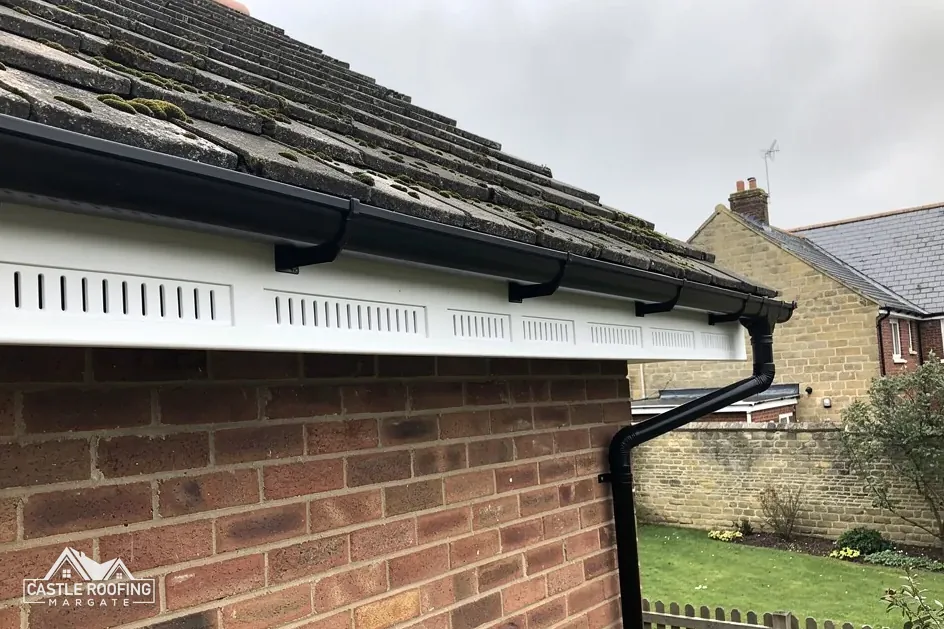
Where a roof overhangs the wall, the underside of the overhang would be open to the sky, with the ends of the rafters showing. The soffit closes that gap. It is a flat board fixed beneath the rafter ends, running from the back of the fascia (the board facing outwards at the front) to the wall of the house.
It does a simple job, but a necessary one. It stops rain blowing up into the eaves, keeps out birds and insects, and gives a neat finish below the roof edge. Look straight up from beneath the eaves and you can see where the soffit meets the wall and where it meets the fascia. On a house with a deep overhang you will see a wide soffit, and on one with a short overhang you may see a narrow strip.
The soffit is related to the other roofline parts, but separate from them. The fascia faces out and carries the gutter. The bargeboard runs along a gable end. Our page on what a fascia board is sets out the difference. Soffits are made in timber, in uPVC and, in some older houses, in sheet materials that need care, which a later section covers.
Ventilation and why soffits matter
Many roofs rely on the soffit to ventilate the loft. Air enters through vents in or beside the board, travels over the insulation and leaves higher up the roof. That air flow carries away the moisture a house makes, so the roof timbers stay dry. BS 5250:2021 is the current code for managing moisture in buildings.
Marley sets a 25mm eaves vent for pitches of 15° or less, and 10mm for steeper pitches, where a cold roof has non-breathable HR underlay. When a soffit is replaced or covered, the vents must not be lost, and the insulation must not be pushed up against the eaves. Our page on soffit vents goes into the detail.
A soffit also hides things. Behind it can be a gap that birds use for a nest, or a roost that bats use. Our pages on birds nesting in soffits and bats behind fascia boards explain what to do if you find either. In both cases the first move is to stop and look, not to block the gap, and to hold the work until the nest or roost has been looked at properly.
Asbestos insulating board in older soffits
Some older houses have soffits made of asbestos insulating board, known as AIB. HSE lists external soffits among the places AIB is found, and advises assuming asbestos is present wherever a building was built or refurbished before 2000. Only testing settles whether a particular board contains it.
That does not mean every old soffit contains it, and it is no reason to panic. It means do not drill, saw, scrub or break an old board, and do not pull it down yourself. Disturbing AIB releases fibres, which are harmful when breathed in.
HSE treats the work differently depending on the material and the job. It counts AIB work as licensable unless the risk assessment finds it short in duration, and short removal jobs within a refurbishment fall into notifiable non-licensed work. When a soffit may be AIB, licensable work goes to a specialist firm that holds the licence for it. Our page on asbestos in soffits explains the steps, and the work as a whole is under guttering, soffits and fascias.
Signs a soffit needs attention
You can check a soffit from the ground without touching it. Look up at it from a few angles, in daylight, and note anything out of the ordinary:
- Sagging, bowed or missing sections of board.
- Peeling paint, damp stains or dark algae.
- Holes or gaps along the edge, especially where birds go in and out.
- Blocked or painted-over vents.
- Fascia timber that is soft where it meets the soffit.
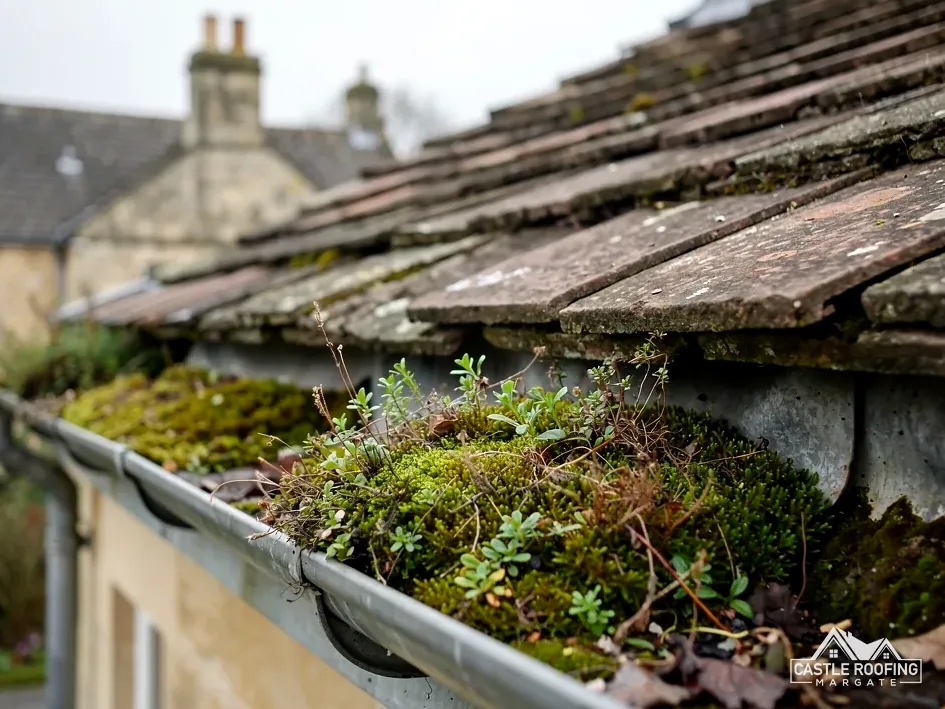
A soffit that has sagged has usually been wet. The cause is often a failing gutter above, a leak at a joint or a damp fascia, so the gutter and fascia are looked at with it. Fascia and soffit work normally go together, and fascia and soffit replacement sets out the order.
Do not try to mend an old board that may be AIB. A photograph from below is enough to see its condition, and the age of the house tells us whether asbestos is in question. Work from the ground, keep clear of anything that is crumbling, and wash your hands if you have handled loose debris.