Metal or plastic: what you are choosing between
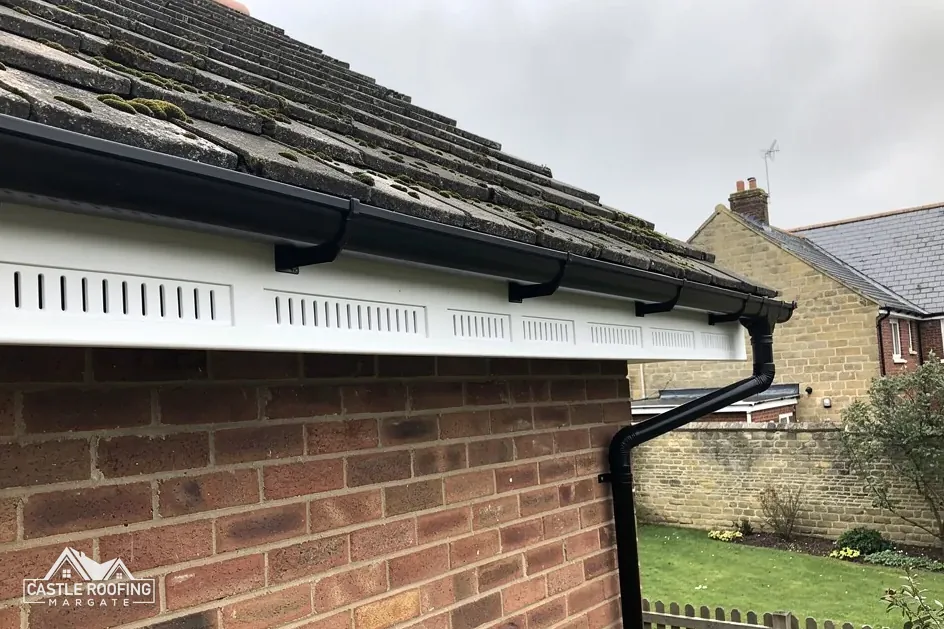
A gutter is a long, shallow channel that has to hold its line for decades while rain, sun and frost work on it. Aluminium and uPVC (unplasticised polyvinyl chloride, the rigid plastic, often white or black, found on modern rainwater goods) go about that job differently.
| Point | Aluminium | uPVC |
|---|---|---|
| Material | Coated metal | Rigid plastic |
| Colour | Applied as a coating | Runs right through |
| Joints | Sealed or riveted | Clip-in seals |
| Look | Crisp, slim edges | Standard profiles |
Both expand and contract as the temperature swings, so both need a little room at each joint. Both rely on sound brackets screwed into something solid, and neither will cope with a fascia board that has gone soft behind it.
That last point is why the board matters as much as the channel. A new gutter fixed to rotten timber will sag, whichever material sits on the shelf at the merchant, and the failure will be blamed on the wrong thing. Ask to see the board before it is covered, since it decides how long the new run lasts.
How long each one lasts, and what is known
A retailer's guide to uPVC roofline products puts their life between 20 and 40 years. That is one retailer's range for the plastic, not a promise from a maker or from us, and a warranty term says nothing about lifespan.
For aluminium, the coating, the fixings and the upkeep set the life, so any number would be a guess. What can be said is what shortens the life of any gutter:
- Brackets spaced too far apart, so the channel droops between them.
- Joints that were never resealed after the first few winters.
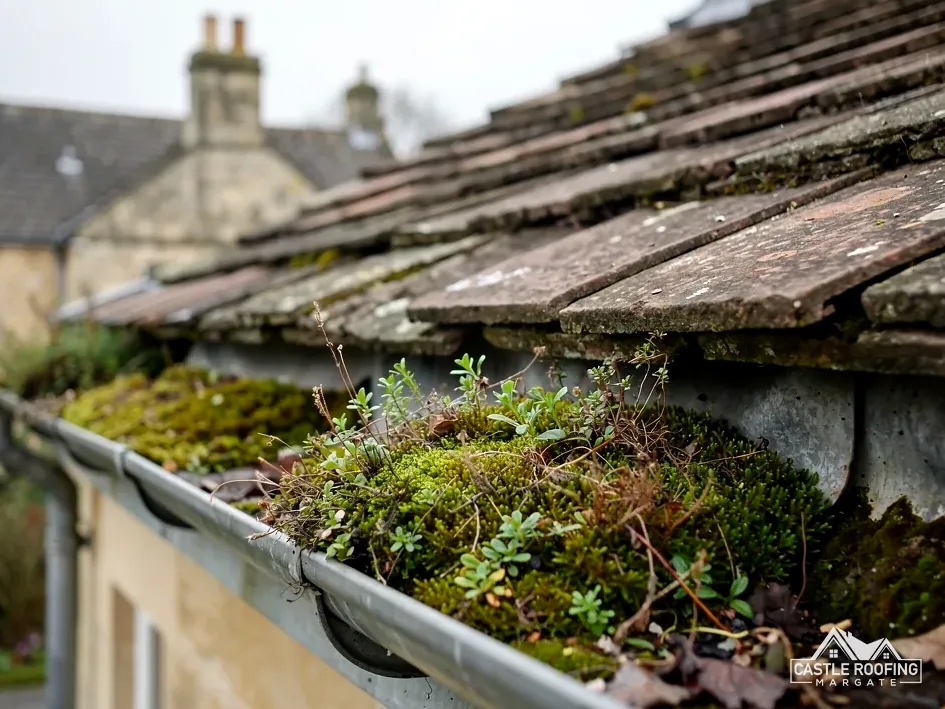
- Leaves and moss left to sit in the channel for years.
- A fascia that is damp or rotten behind the fixings.
Look after those four things and either material has its best chance of a long working life. Neglect them and either will fail early, long before a lifespan figure comes into it.
If you are weighing up cost, MyJobQuote gave around £1,000 to £1,600 for gutter replacement in October 2026 as a typical UK range. It is a national guide and not our price. One written total comes after we have seen the house.
When aluminium is worth a closer look
Aluminium tends to come into the picture in a few situations. The house may have older metal rainwater goods that the owner wants the new run to sit alongside. The building is in a conservation area or is listed, and the council has a view on the material. Or the owner simply prefers a slimmer, sharper edge under the eaves.
The planning point is easy to miss. Thanet District Council's guidance leans on the phrase like for like: a replacement that copies the existing run stands a better chance of needing no application. Swapping cast iron or painted timber for another material does not match, so the answer can change. Our short guide to gutters in a conservation area covers who to ask.
On an ordinary house with no such constraint, uPVC remains a perfectly sound choice. If you are replacing a rotten run like for like and the budget is tight, that is often the sensible answer. A repair, or a re-seal of the joints on a sound gutter, is better value than either material.
Where the old run is cast iron, it may be worth asking whether it can be mended before anything is replaced at all.
Questions to put to a roofer before you decide
The material is one line on a quote. These are the questions that decide whether the gutter performs once it is up:
- Which profile and size is being fitted, and why does it suit the roof area draining into it? Our note on what size gutter explains the sizing.
- How far apart will the brackets be?
- What fall will the run have towards the downpipe?
- How will the joints and stop ends be sealed?
- Is the fascia behind it sound, or does it need work first?
- Does the price include VAT and any scaffold?
A roofer who answers those from looking at your house, rather than from a catalogue, is the one to listen to. A visit to the roof edge comes before any figure, with photos of your own gutters sent to you. A run that is cheap to buy and wrong for the roof is the expensive one in the end. If a quote names only a material and a colour, ask what else is in it.
For the wider job, start at guttering, soffits and fascias.