What over-cladding is, and what HSE says about the sheets
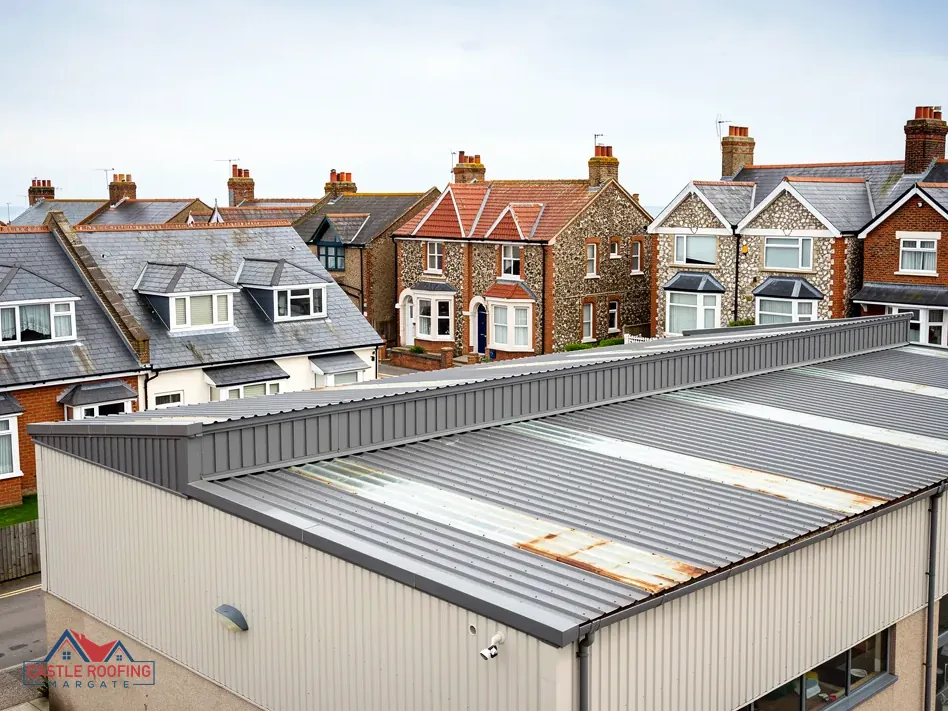
Over-cladding is a method of re-roofing in which new profiled sheets are fixed over the existing roof instead of replacing it. The old sheets stay in place under the new covering, so nothing is stripped off and carted away. On an industrial roof with asbestos cement sheeting, that is the whole attraction: no removal, no waste stream.
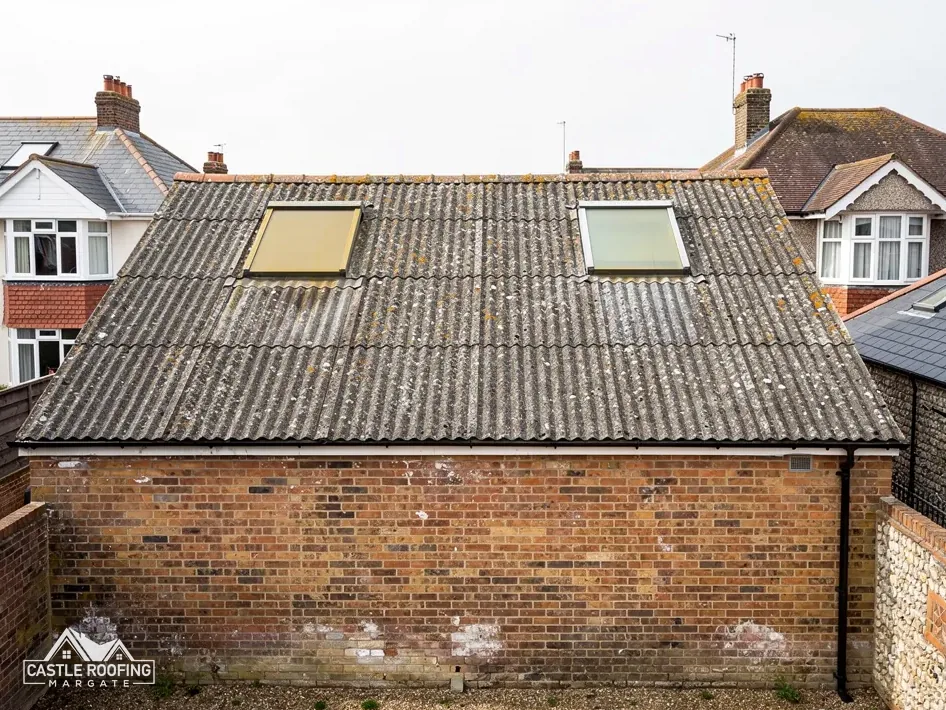
HSE sets the starting point. For a building constructed or refurbished before 2000, the working assumption is that asbestos is present, and HSE treats asbestos cement roofing as fragile in every case. It places the careful removal of asbestos cement roof sheeting in the non-licensed category, as long as nothing is broken up on the way down.
That wording matters to the choice. Fixing new sheets means working across, and often through, the old ones, so the route must be planned for the risk of damage before any tube is delivered. Sheets that are weathered but whole call for one method. Sheets already cracked or broken are treated differently by HSE, once the damage is substantial, so the survey has to record their condition.
Fragile roof safety from the first hour
An asbestos cement roof cannot take a person's weight on the sheets themselves, and weathering makes them more brittle. Every task on the roof is planned around that, before the first operative climbs up. The order on any fragile surface runs like this:
- Edge protection and access towers set up first, so nobody reaches the roof by an unprotected route.
- Crawling boards or staging laid across the supports, so weight goes to the structure and not the sheet.
- Netting or platforms below the work, where the building layout allows it, in case a sheet fails.
- Rooflights marked and covered, because they are often the weakest part of the roof.
Work at height has its own rule. Regulation 6(3) of the Work at Height Regulations 2005 puts the burden on employers to guard against falls, within what is reasonably practicable for the job. On a fragile roof that burden dictates the method, and it is why no sheet is trusted until the plan says so. The wider guidance is in fragile roof safety.
What the structure and the survey need to settle
Two questions come before any price. First, can the building carry a second covering? Planning Portal's re-roofing guidance suggests taking structural advice from an engineer or surveyor if a new covering adds weight, and it treats a gain of 15 per cent or more as a trigger for building control approval. Over-cladding puts a new layer on top of an old one, so the purlins (the horizontal rails the sheets fix to), the fixings and the frame all need to be looked at.
Second, what exactly are the sheets? A sample or an asbestos survey identifies the material, and the survey also finds other asbestos on the same roof. Soffits can hold asbestos too: HSE lists external soffits as one location for insulating board. Insulating board is a different material with different rules, and where its removal is licensable we pass that work to a licensed firm.
The survey also records the condition of the sheets, their lap joints and any previous patches. See the asbestos survey before roof work for what that involves.
Over-cladding or removal: how the choice is made
Neither route is right for every roof. Over-cladding is worth weighing when the old sheets are sound, the frame has spare capacity and the building must stay in use. Removal is worth weighing when the sheets are broken, the frame is weak or the building is due to be altered, because the asbestos has to be dealt with at some point whatever happens now.
If sheets are removed, the waste rules apply. On disposal, HSE wants double wrapping, a label and a locked container in place of an open skip. Waste from a roofer's work is trade waste, moved under a consignment note by a registered carrier.
A roof that is over-clad still has asbestos under it. That means a record of where it is, a warning for anyone who works on the building later and a sensible plan for the day the building is finally demolished or stripped. Ask for those to be written down.
The full options are covered under asbestos cement roof sheets, and the wider service sits under commercial roofing. Your written price follows the survey.