What a lining does, and what it needs beneath it
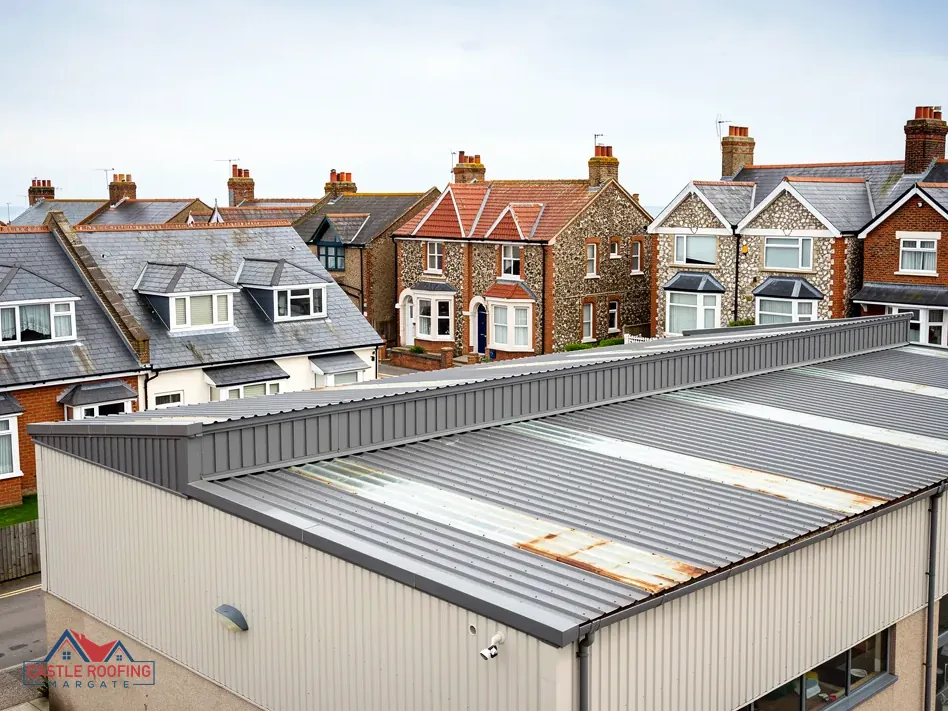
A gutter lining is a waterproof layer applied inside the existing channel, so the old gutter becomes the mould for a new skin. On a factory or warehouse that usually means a box gutter, which is a channel set between two roof slopes or behind a parapet (the low wall along a roof edge). These gutters are long, sit above the stock or machinery, and are hard to swap without stripping the sheets either side.
The attraction is plain: the roof coverings stay where they are and the leak is dealt with from inside the channel. But a lining is only as good as the surface under it. The channel has to be clean, dry enough to take the product and firm. Loose rust, old failed coatings and flaking paint are taken back before anything goes on, otherwise the new layer peels away with them.
Linings suit gutters where the trouble is a failed joint, pin-holing along a seam or a worn old coating. They do not suit a channel whose metal has thinned to the point that a boot would go through it, because the lining would be bridging a hole with no support.
Outlets and falls: the drainage behind a gutter leak
A leak that looks like a bad gutter can turn out to be a drainage problem. Water that cannot leave the channel stands in it, and standing water works its way into every weak joint. Two things control that: the falls and the outlets.
Falls are the slope of the gutter bed running down to each outlet. The slope is gentle, so a long run can lose its fall through slight movement in the supports without anyone noticing from the ground. A lining follows the shape it is laid on, so it will not correct a sag. It can only seal it, and a sealed dip still holds a puddle.
Outlets are the openings where the gutter drains into the downpipe. Leaves, moss and debris block them, and corroded outlet fittings leak around the edge. A lining has to be dressed into each outlet so water passes over the joint, not behind it. If the outlet is too small, too few or damaged, the surveyor will say so, because lining a gutter that overflows only moves the leak somewhere else.
When replacing the gutter is the better answer
Replacement is the right call when lining would only hide a bigger fault. The usual signs are these:
- Rust holes through the base or sides of the channel, rather than surface staining.
- Sections that sag, so water ponds along the run even after cleaning.
- Brackets, supports or the roof sheets either side that have moved, which means the gutter will keep moving.
- Several earlier patches or coatings already peeling, so there is no sound surface to bond to.
- Outlets that are too few or too small to clear heavy rain, however clean they are kept.
A new gutter lets the falls be reset and the outlets enlarged or repositioned, which a lining cannot do. It costs more disruption, because the adjoining sheets or flashings often have to be lifted, but it solves the cause. Where only a stretch is bad, a mixed answer can suit: replace the failed length, line the sound remainder and fit new outlets throughout.
Work at this height is planned for fragile surfaces and edges before anything starts, as covered in fragile roof safety.
How the survey decides between lining and replacing
The decision is made on the roof, not from a photograph taken at ground level. The surveyor walks the length of the gutter, checks the metal for thinning and holes, looks along the run for sags and looks closely at each outlet and joint. In wet weather they note where water stands and how long it takes to clear.
If the building is older, they also consider what the roof sheets are made of. Older industrial units can carry asbestos cement sheeting, and any work alongside it follows the rules in asbestos cement roof sheets.
You are given the findings in plain terms: which lengths can be lined, which need replacing and why, with photos of each fault. The recommendation can be a full lining, a full replacement or a mix of the two. For a wider look at the commercial side, start at commercial roofing.
Whichever route suits the gutter, the price comes as a single written total, with the survey photos alongside so each recommendation can be checked against the metal itself.