What EPDM is, and how long it lasts
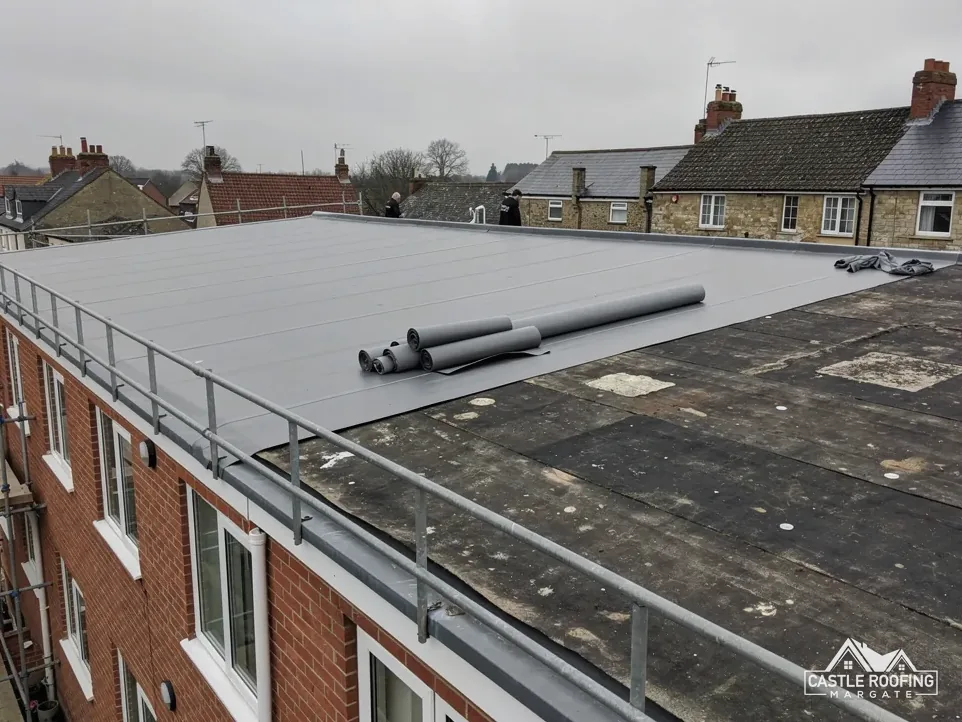
EPDM stands for ethylene propylene diene monomer, a synthetic rubber. On a roof it is supplied as a large sheet that is laid over the deck as a single-ply membrane, with few joints compared with felt. A single-ply membrane is simply a waterproof covering made from one layer of sheet.
Published lifespans differ, and the gap is worth knowing about. HomeBuilding gives "25-30 years" for EPDM, while Less gives "30 to 50 years". The two disagree, so treat both as typical ranges, not promises, and read a long life as the outcome of good installation and sound maintenance, not a guarantee.
The same sources give shorter lives for the alternatives. HomeBuilding puts felt at "10-15 years" and Less at "10 to 20 years", while GRP is "25-30 years" from HomeBuilding and "25 to 40 years" from Less. That context is why EPDM is often considered for roofs that will not be touched for a long time.
A longer life only counts if the roof beneath stays sound. Ask the survey what the deck is made of and how it is drained.
Falls, drainage and BS 6229
A membrane roof has to shed water. BS 6229:2025 is the current British Standard behind membrane flat roofs laid on a continuous deck. It covers membranes, not lead. The previous edition, BS 6229:2018, has been withdrawn.
On falls, trade guidance on the 2025 edition gives 1:80 as the lowest finished fall on open roof areas and in internal gutters, while IKO, citing the code of practice, advises a 1:40 design fall for single-ply. Those are different statements, and neither is a promise that a particular roof will drain: finished fall is measured on the roof as built, not read off the drawing.
Ponding, where water stands on the surface, is a sign the falls are short or the deck has sagged. Standing water also loads the structure and collects debris, so it is recorded at the survey whatever the covering.
Check these points at the survey:
- The falls to outlets, measured on site.
- The condition and fixing of the deck or existing layers.
- The number, size and position of outlets and overflows.
- Any plant or equipment standing on the roof.
Seams, edges and detailing
A membrane is only as good as its joints and edges. Where the sheet runs flat across the deck the joints are few, but corners, upstands, rooflights, vents, pipes and plant bases all need cut and shaped pieces with their own joints.
Those details are where leaks tend to begin on a flat roof, and a quality check at the survey and on completion should look at them first. Ask to see photographs of the details before they are covered up, because a bonded corner or a collar round a pipe cannot be inspected once the next layer is over it. A written close-out record, with a photograph for each outlet and upstand, is a reasonable thing to ask for.
Foot traffic is another point. A roof that needs regular maintenance access to plant should have a defined walkway, since rubber can be marked or punctured by dropped tools or sharp boots. Fire performance of the covering is a separate question, to be settled in the specification before the order is placed.
Compare EPDM with other membranes in our answers on single-ply membrane roofing and PVC against TPO, where the joints are made differently.
Choosing from the survey
EPDM is one option among several, and whether it is the sensible one turns on the roof in front of you. A survey-led choice looks at the deck, the falls, the way the roof is used, how it is reached and what upkeep the owner can realistically commit to.
These findings point towards EPDM being a sound choice:
- A sound deck, or one that can be made sound.
- Falls that work, or can be improved with a tapered system.
- Few penetrations, or details that are straightforward to form.
- Light foot traffic, with a defined route for maintenance.
They point the other way if the deck is failing, the falls cannot be corrected, or plant on the roof needs frequent access. In those cases a different covering, or a coating, may suit better. Our page on commercial roof coatings covers that route, which can suit a roof that is sound but weathered.
We look first, check the layers and the drainage, and send one written price for the system the roof will take. The commercial roofing hub lists the other options.