What PVC and TPO are, in plain terms
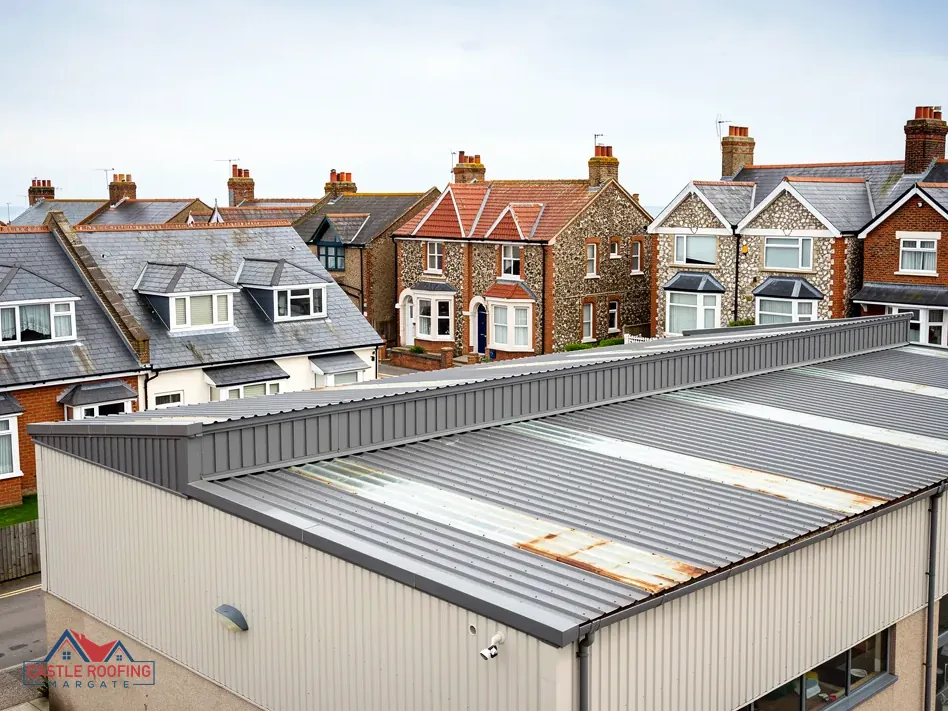
A single-ply membrane is a flexible waterproof sheet, made in a factory and rolled out across the roof as one layer. It is a different idea from built-up felt, which is several layers laid on site. The sheet can be held down by mechanical fixings, by adhesive or by ballast (a covering of stone or slabs), depending on the system and the building.
PVC is polyvinyl chloride, a plastic that has been used for roofing sheets for a long time. TPO stands for thermoplastic polyolefin, a different plastic family that is used in the same way. Both are described as thermoplastic, meaning the plastic softens when heated, which is what lets the installer weld overlaps together with hot air so the seam becomes part of the sheet.
That shared welding method is why the two are so often compared. At every join it is the weld that keeps water out, so the weld quality, the checks made along each seam and the details at upstands and outlets matter at least as much as the name printed on the roll.
Where the two differ, and where the maker decides
The honest position is that the differences sit in each manufacturer's product data, not in a rule that one plastic beats the other. Two products with the same name can be built differently: thickness, reinforcement, surface finish and colour all vary between systems. Some points to compare, using the published data for the exact products under offer, not the generic name:
| Question | Where the answer comes from |
|---|---|
| Fire performance | Maker's data for the whole build-up |
| Minimum fall | Maker's data and the survey |
| Sitting on old felt | Maker's compatibility guidance |
| Fixing method | Deck type, wind and access |
| Accessories | Whether outlets and trims are made for that system |
Lifespan is a question for the maker as well, since two rolls with the same plastic in them can be built quite differently. Ask each maker what it states for its own product, and read closely what any figure covers and what it leaves out, since a stated life is not a promise about your roof. Keep the maker's answer with the quote.
Falls, fire and the existing roof
A single-ply roof still has to drain. BS 6229:2025 governs membrane flat roofs and works from a minimum 1:80 finished fall for the general roof areas, while IKO's own design advice is a 1:40 fall for a single-ply roof. Neither plastic removes the need for falls, and the finished slope has to be checked on the roof, not assumed from the drawing. A roof that ponds water needs its drainage looked at, whichever plastic goes on top.
Fire performance needs care on a commercial building. Planning Portal brings in approval where the new covering's fire behaviour departs significantly from that of the covering it replaces. The roofer matches the specification to what the building needs, and building control is the check on that.
The existing roof settles a great deal, and the survey looks at it layer by layer before a single roll is ordered. A sound deck with old felt on top may take a new sheet over it, or the old layers may need stripping first. A wet or rotten deck has to be put right whichever membrane is chosen, and any trapped moisture in old insulation is dealt with at the same time. For the basics of the type, see single-ply membrane roofing.
How the survey chooses between them
The choice is made after the roof has been inspected, not before. The surveyor checks the deck, the falls, the outlets, the upstands (the short walls where the roof meets a taller wall) and anything that stands on the roof: plant, walkways, rooflights.
They then match the findings against what each system's data sheet allows. Sometimes both PVC and TPO would work, and the decision comes down to the details the maker supports for your roof, the lead time for materials and who will be answerable for the weld checks. Sometimes the roof's shape narrows the choice to one.
You can ask for the reasoning in writing: why this system, what fall it assumes and how it handles the outlets. That is a fair thing to ask, and a straight answer from a roofer shows they have worked it through.
Compare it with what a single-ply roof is for the domestic side, or go back to commercial roofing for the wider options. The single written total comes once the choice is made.