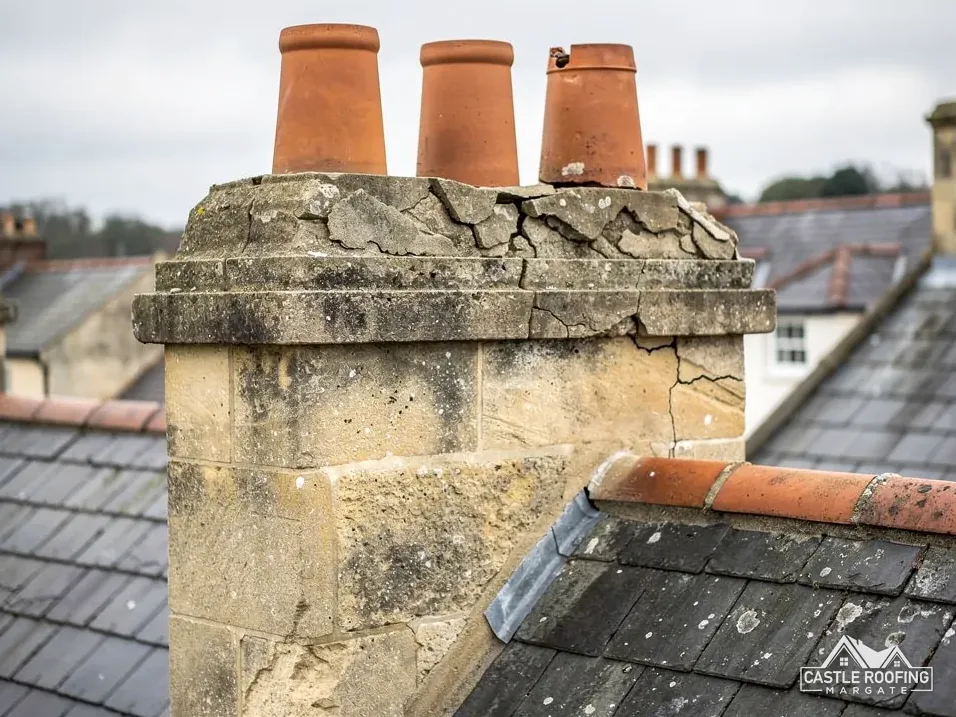
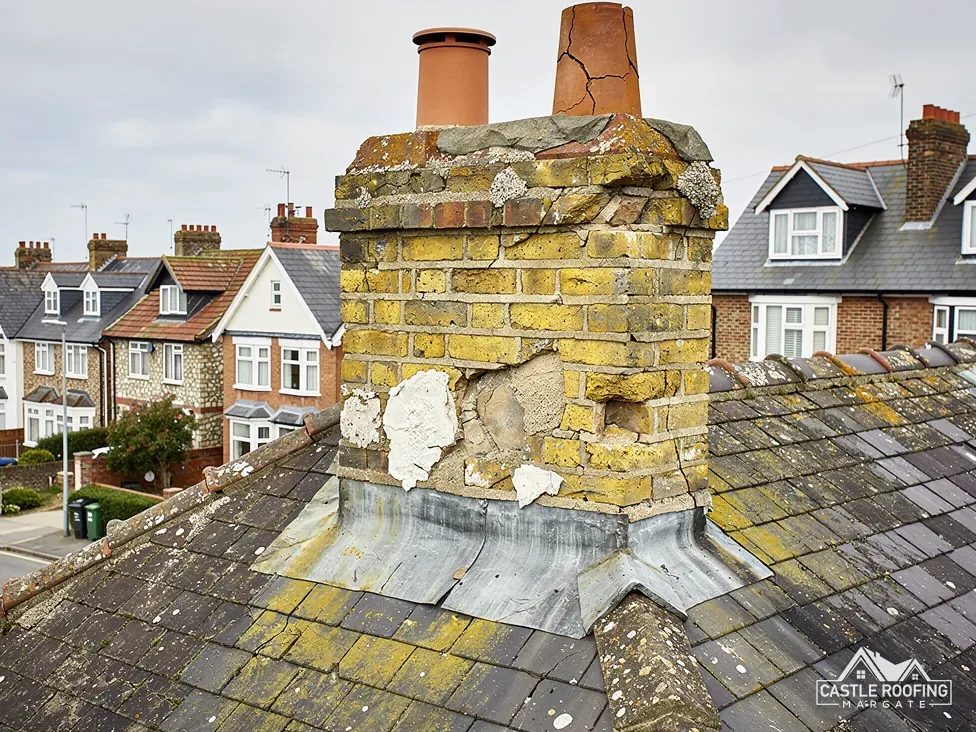
Keep clear and make the ground safe
The first job is to stop anyone being under the stack. A pot that has come off may have come away because the flaunching (the sloping mortar the pots are bedded in) has failed. That same failure can affect the other pots, the top bricks, or whatever has been left sitting loose.
From the ground, do the following:
- Stop anyone using the path, drive or garden beneath the stack.
- Move cars out of the line of fall if you can do so without going under it.
- Check where the pot landed. It may have hit a slope, a gutter or a conservatory roof, and damaged that too.
- Take pictures from a safe spot, with a zoom if you can.
Do not go up a ladder to look, or to tug at what remains. A loosened stack can move, and the next gust may finish what the first one started. Where debris has landed on a slope, leave it for the roofer, because clearing it by hand risks a fall. If anything has come through the roof into a room, move belongings away and put a bowl under any drip.
If a pot or brick has struck something or somebody, that is a different order of problem, and the emergency services come before any roofer.
Tell your insurer first, with photos
Ring the insurer before you book anyone for repairs, then secure the area and hold on to your photos and receipts. The Institution of Structural Engineers advises photographing damage as visual evidence for the insurer. Take them before anything is moved or repaired, and include wide shots that show the pot's position on the stack, the broken pieces where they landed and any damage to the roof or gutter.
Read your policy for its own wording on storms, and ring the helpline. Whether a fallen pot counts as storm damage turns on your policy's own storm definition and on the insurer's decision, and a pot that came away through age may be treated differently from one hit by a gale.
Keep every receipt for emergency work done to stop further damage, even a hired tarpaulin or an hour of a roofer's time. An insurer may ask for them, and a roofer can give you a written description of how the stack looked and what was done.
For the wider insurance picture, see whether house insurance covers chimney repairs.
What the roofer does at the stack
A fallen pot is rarely the whole story. The roofer goes up with the scaffold or a tower in place, and looks at the whole top of the stack before touching it.
- Make safe: take down loose pots, bricks or flaunching that could follow.
- Check the other pots on the stack and test them for movement.
- Look at the uppermost brick courses and the pointing below them.
- Check the flashings (the lead weathering round the base of the stack) for lifting or gaps.
- Cover the open flue if the repair cannot be finished in one visit, so rain does not run down it.
Making safe can be a separate visit from the full repair, and we explain which stage we are at. Scaffold, if the repair needs it, is arranged once the stack has been seen, so the make-safe never waits for it. We say plainly if the fix needs scaffold and more than one visit. The written price follows after the stack has been inspected, whatever the first call seemed to suggest.
Re-flaunch and re-fix the rest
Putting one pot back is seldom enough, because the mortar that held it has usually failed across the whole bed. The usual repair is to take off the old flaunching, bed the pot or pots in fresh mortar, and form it with a sloping top so water sheds away from the pot and not into the joints. The pot's cracked or chipped base is checked first, and a damaged pot is replaced. A new pot should sit well with its neighbours in size and colour, and the roofer will say whether the old ones are worth keeping.
If the fall exposed weak brick or crumbled pointing in the top courses, the same visit can repoint the stack or rebuild the top few courses, so the new flaunching sits on a firm base. For the details, read the notes on flaunching repair.
If the stack leans or the damage is wider than the top, the answer may be a partial rebuild, and storm-damaged chimneys are covered in their own page. The full range of this work sits under chimney repairs.