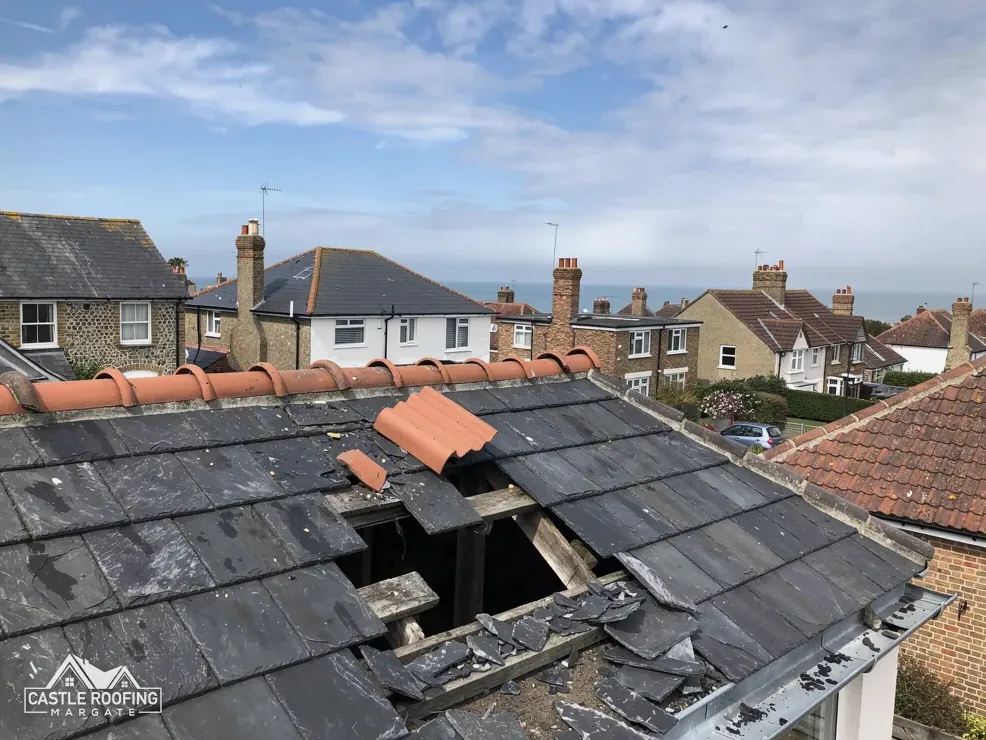
What 100+ years means
HomeBuilding's roof cost guide, last updated on 30 September 2025, lists Welsh slate as lasting 100+ years. The plus sign after the number is what matters. It marks a figure that is open at the top, because well-made slate laid on a sound roof has no fixed end date that anyone can state.
It does not mean that every Welsh slate roof reaches a century. It describes what the material can do when it is correctly laid, correctly fixed and looked after. No figure here is a warranty.
Welsh slate has a long record on British roofs for a straightforward reason. The stone is hard, dense and very low in water uptake, so it resists the freezing and wetting that break weaker slates. A thin, well-split Welsh slate on a house in Thanet has little to fear from the weather.
What it does not resist is the rest of the roof: a hundred-year stone sits on timber, held by metal, under an underlay, and each of those has its own clock. That is the reason the next section matters more than the headline number.
Why fixings fail first
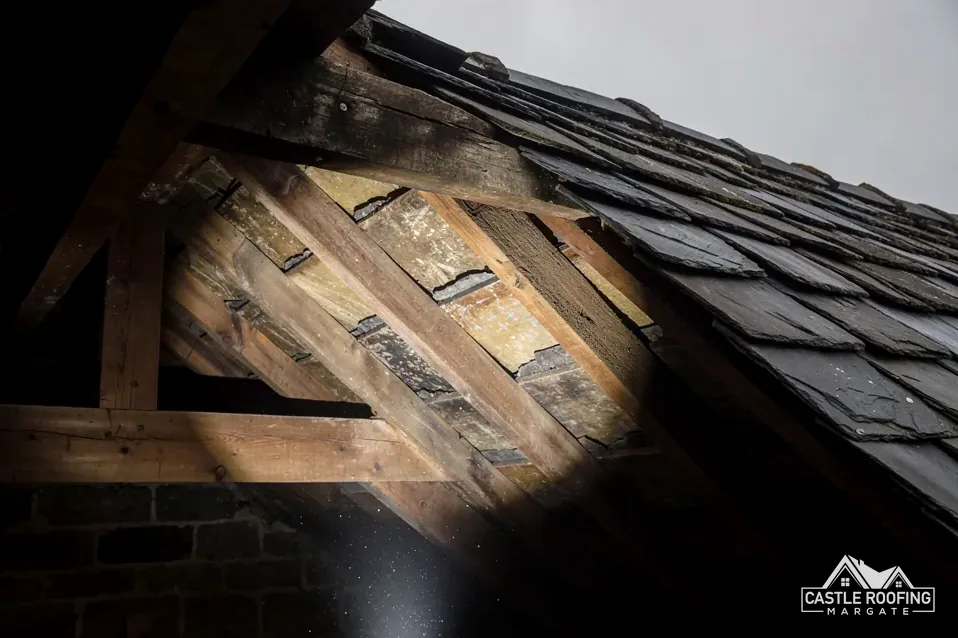
Look at what holds a slate in place. It is not glued or bonded. Each slate hangs from two nails, or from a hook at the tail, and the nails are driven into timber battens. Over many decades the nails corrode, the batten around them softens, and the slate slides.
A roofer sees this on roofs where the slates themselves are in fine condition. The stone is hard, square-edged and ringing, but it has dropped because the holding has gone. Replacing it with a new slate and the same kind of fixing only starts the cycle again.
For that reason the question to ask of an old Welsh roof is not whether the slates are sound but whether the fixings and the battens are. If they are, local repairs hold. If they are not, the slates are lifted, sorted, and put back on new battens, new nails and a new underlay.
Roofers call the gradual failure of the nails nail fatigue, and the page on nail sickness sets out how it is found. Slate hooks and tingles are the usual stop-gap for a slipped slate.
Reclaimed Welsh slate
Reclaimed slate has already had a first life on another roof, so it enters its second one with an age. HomeBuilding gives reclaimed Welsh slate 50 to 80 years, against 100+ for new Welsh. The shortfall is the sensible expectation after a first stretch of weather, nail holes and handling.
That is not a reason to avoid it. For a roof where the look has to match, reclaimed Welsh slate may be the only good option, and sorting it carefully is part of the work. Each slate is checked for cracks, layers lifting and old nail holes in the wrong place, and the ones that fail are discarded.
The things to ask are simple:
- Where did the slate come from, and was it taken from a roof or a stack?
- How many slates were rejected on sorting?
- What sizes and thicknesses are in the batch?
For a longer treatment of the choice, see whether reclaimed slate is worth it. The date on the roof should never be taken as the date of the slate.
What shortens a Welsh slate roof
A long-lived material can still be spoiled by what happens to it. Several things bring a slate roof's life down, and most of them are avoidable.
Foot traffic is one of them. Slate is brittle, and a person stepping on a slate cracks it, often leaving a break that is invisible from below until it lets water through. The page on walking on a slate roof explains where to stand and why.
Poor repairs shorten life as well. A slate pushed back with an inch of mastic, or a crack covered with sealant, lets water in behind and holds it against the timber. Likewise, patching a roof whose fixings are gone adds repairs that hold for a season each. Neglected details matter too. A split lead flashing at the chimney or a blocked valley sends water into the roof structure, and the timber rots beneath a slate that is perfectly sound.
Looking after the roof means catching these early. A survey with photos of your own roof picks them out, and the next step is priced afterwards. More is on the slate roofing page.