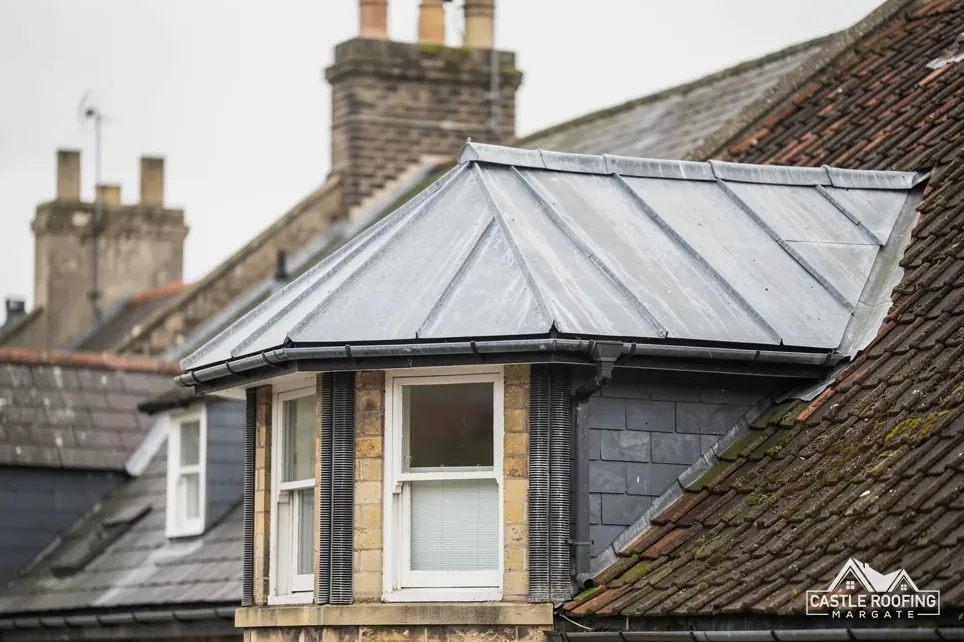
Read this to see when leadwork on a listed building needs consent, what a like-for-like repair means, why historic roofs are specified differently, and which separate routes apply to churches, cathedrals and scheduled monuments.
On an old building, lead is often part of what gives the roof its character. The valleys, gutters, flashings and flat roofs of older houses, chapels and public buildings are often lined with it. When a lead gutter splits or a flashing lifts on a listed building, the repair is not only a roofing question. It is also a question of who has to give permission, and the answer depends on the type of building and how it is used.
For a house or other secular building on the national list, the law that matters is the Planning (Listed Buildings and Conservation Areas) Act 1990. For a church in use, a cathedral or a scheduled monument, different systems apply, and in some cases listed building consent does not apply at all.
This guide explains how consent works for leadwork on listed buildings in general terms, what a like-for-like repair means in practice, how the maker's table lists lead for historic work, and how the church and monument routes differ. It does not replace advice from the council, which decides whether a particular piece of work needs consent. Ask the council before work starts.
When listed building consent applies
Section 7 of the Listed Buildings Act says that work to a listed building which affects its character needs listed building consent. Canterbury City Council puts it plainly on its listed buildings page: you will need listed building consent for any changes which affect the building's character.
The test is the effect on character, not the size of the job. Renewing a small area of lead in the same way as before may leave the character untouched. A change of metal, a change of detail or a change to the look of a roof edge may not.
Consent and planning are separate
Consent is a separate step from planning permission, and it can be needed when planning permission is not. A listed house keeps its permitted development rights under Classes B and C of the General Permitted Development Order, but those rights do not remove the need for listed building consent. A roofer who says that no permission is needed because a job is small has answered only half the question.
The route is a conversation with the council. Send its conservation team photographs and ask whether the proposed repair needs a formal application. Describe the work plainly and say what material is being used.
Settle the question before the work starts. Starting first and asking afterwards leaves the owner with no agreed scope and no written answer to point to. It also puts the roofer in a difficult position, because a repair made in good faith can be the very thing the council later asks to see changed.
What like-for-like leadwork means
On a listed building the safest repair is usually one that replaces what is there with the same thing, laid the same way. For leadwork that has four parts.
- The same metal, which is lead sheet and not a substitute made to look like it.
- The same type of detail, such as a rolled joint in place of a welded one where the building has rolls.
- The same layout, with bays, drips and upstands in the positions they occupied before.
- The same appearance from the ground, including the colour of the weathered surface and the way the edge finishes at the gutter.
The thickness of the new lead is a separate matter. The Royston Lead brochure gives the thickness and weight of every code from 3 to 8, and its table of uses includes a row headed Most work on historic or listed buildings. The one pairing it states in words is Code 3, for soakers only. For any other detail the code is a decision made in the specification drawn up for your building.
Where the old lead has been lifted, a record of what was there is valuable. Photographs of the old layout, the position of the joints and the way the lead meets the walls let a conservation officer see that the repair follows the original.
Where the original detail has been lost or altered in earlier work, the council can say what to follow. The roofer's part is to describe the proposal clearly enough for that decision to be made.
Reading the maker's table for historic work
Royston Lead publishes a brochure of cast lead sheet that includes a table of uses. One of its rows reads: Most work on historic or listed buildings. That row needs careful handling.
The same table names parapet walls, flat roofing, box valleys, pitched valley gutters, hip and ridge flashings, chimney flashings, cover flashings, soakers and the cheeks and roofs of dormers among the uses of sheet lead.
| Code | Millimetres | Colour mark |
|---|---|---|
| 3 | 1.32 | Green |
| 5 | 2.24 | Red |
| 7 | 3.15 | White |
| 8 | 3.55 | Orange |
No shortcut follows from that list. On a listed building the code is agreed in the specification and, where the council asks, in the consent application, so the roofer should be ready to explain the choice for each part of the roof.
If you want to know which code a listed roof needs, the answer depends on the detail. A cheek, a valley and a flat roof on the same building may each take a different weight of lead, and the council may ask to see what is proposed for every one.
Ask for the specification in writing and file it with the other papers for the building, because the next owner and the next roofer will want to see it. A record of what was laid, with the date and the codes, saves a great deal of guesswork when the lead next needs attention.
Churches: faculty, own systems or consent
Churches follow different rules from houses, and the route depends on the denomination and on whether the building is in use. Section 60 of the Listed Buildings Act lifts listed building consent for an ecclesiastical building that is for the time being used for ecclesiastical purposes. A 2010 order limits that exemption to the listed denominations, and the Department for Culture, Media and Sport states that other faiths and denominations do not currently benefit from it.
| Building | Where the decision sits |
|---|---|
| Anglican parish church still used for worship | The faculty system |
| Cathedral | The Care of Cathedrals Measure |
| Roman Catholic churches, and those of the Baptist, Methodist and United Reformed traditions | That body's own internal system |
| Unitarian chapels, Quaker meeting houses and Churches Conservation Trust churches | Listed building consent |
So when a lead roof on a church needs work, the first question is which system governs the building. For an exempt denomination's church in use, listed building consent is not the route. Buildings vested in the Churches Conservation Trust are covered by the secular controls instead.
The lead itself is the same whichever route is followed. Lead stolen from a church roof, a split gutter or a failed flashing needs the same repair. Only the paperwork differs.
If you look after a church, ask the person who administers the building which system applies before any roofer is instructed, and make sure the roofer sees the answer in writing.
Scheduled monuments and cathedral precincts
A few historic structures sit under another regime altogether. A scheduled monument is protected by the Ancient Monuments and Archaeological Areas Act 1979, and its section 2 makes any works there an offence unless authority for them has been given. That means scheduled monument consent, which is a separate application from listed building consent.
UNESCO inscribed the Canterbury World Heritage Site in 1988. It has three parts: the cathedral, the ruins of St Augustine's Abbey, and the Church of St Martin. Most of the cathedral precincts fall under the Care of Cathedrals Measure 1990, as amended in 2005, while the cathedral building is itself exempt from listed building consent. Policies in the Canterbury Local Plan protect the site's setting. The World Heritage Site is also a planning matter: inside its boundary the land counts as article 2(3) land, where the dormer rights in Class B do not apply.
If you own a building near any of these, do not assume the rules next door apply to you. A house next to a monument is judged on its own listing; the owner should ask the council which controls cover that address and which do not.
The same four steps for every case
- Establish what protection applies: listing, scheduling, conservation area or one of the church systems.
- Contact the body that decides, and describe the work.
- Wait for a written answer before ordering lead or booking a scaffold.
- Keep the decision with the building's records.
Planning the work and getting a price
A survey comes before any price for leadwork on a listed building, since the total turns on how much lead is involved, how the roof is reached and the care needed to follow the original detail. A figure from a general cost guide for ordinary roofs should not be read across to a listed building.
A sensible sequence for an owner looks like this.
- Have the roof surveyed and the faults photographed.
- Ask the council whether the repair needs consent, and what drawings or notes it wants.
- Have the specification written, naming the lead code for each detail.
- Apply, wait for the decision and then order materials.
- Arrange access, including any scaffold licence from Kent County Council.
A consent decision takes time, so start early. If lead has been stolen or the roof is open to the weather, tell your insurer first, make the building safe, keep photographs and receipts, and let the council know what temporary work was done.
The price you are given is a single written total set once the survey is done. Ask that it states which parts of the work depend on consent, so the figure still holds if the council asks for a change, and ask who deals with the council on your behalf if an application is needed. It also helps to agree in advance what happens if the council wants a detail altered once the old lead is off.
Guides to read next
Related guides cover replacing lead on a listed roof, what code of lead for flashing and lead against a mortar fillet. The full range of lead work is on the lead roofing page.