What section 7 asks for
The starting point is section 7 of the Planning (Listed Buildings and Conservation Areas) Act 1990. It asks for listed building consent before anyone carries out works that touch the building's special architectural or historic character. Canterbury City Council's listed buildings page says: "You will need listed building consent for any changes which affect the building's character."
Consent here is a separate matter from planning permission. Listed houses keep the permitted development rights in Classes B and C, and they still need listed building consent whenever the work touches their character. Getting one does not replace the other.
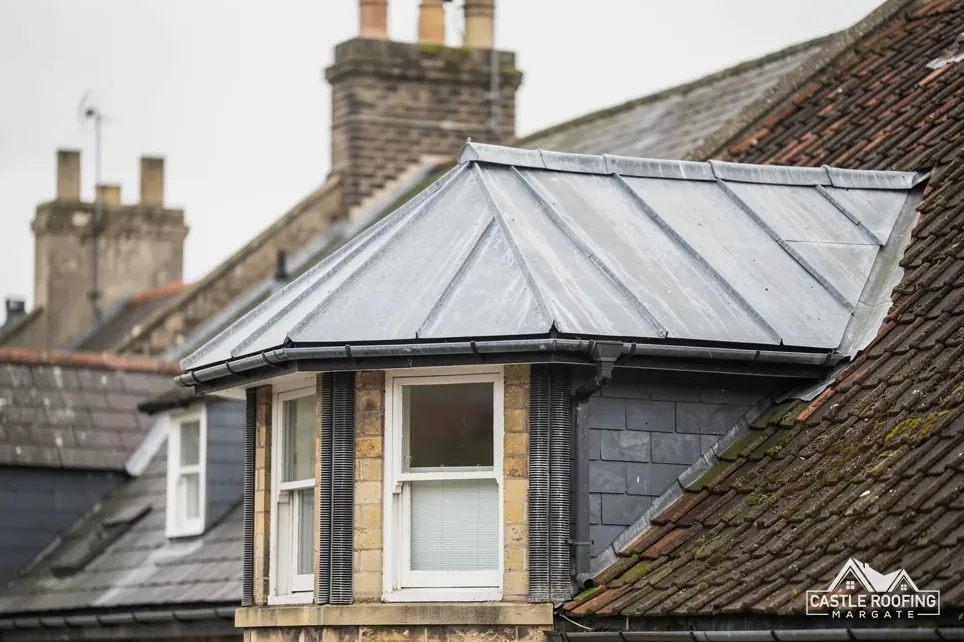
Lead comes into this because it forms part of the visible roof. Flashings, valleys, gutter linings and parapet linings keep the weather out at awkward junctions, and on an old roof they can be the oldest working parts. Whether renewing a particular piece alters the character is for the council's conservation officer to say. Neither the roofer nor the owner can settle it alone.
The habit that avoids trouble is to ask in writing and wait for the reply before any materials are ordered. Our leadwork on listed buildings page covers the wider picture.
Like-for-like lead and what to ask
Putting new lead back in the same place, in the same form and with the same look is the change least likely to alter a listed building's character. It still pays to ask. If the old flashing was a different metal, a different pattern or a different size of detail, returning to lead may count as a change in its own right.
Gather a few facts first, so the council can reply quickly:
- photographs of each existing flashing and the wall around it;
- what the new lead will be, with the sheet thickness taken from the specification;
- how it will be fixed and where it will be dressed into the wall;
- whether any stonework, brickwork or tiles will be disturbed.
Do not assume that an answer from one council carries over to another. Ask the council covering your own address, and keep its written reply with the house papers.
Sheet thickness is explained on what code of lead is used for flashing, which also shows why a written specification sets it and a rule of thumb does not.
Churches and other buildings take other routes
Not every old roof goes to the council. Section 60 of the 1990 Act contains an ecclesiastical exemption, and it covers a listed church only while the building is used for worship. Which system stands in for consent depends on who owns and runs the building.
- A Church of England church still in worship use goes to the faculty system. A cathedral goes to the Care of Cathedrals Measure.
- The United Reformed Church, the Methodist Church, Baptist congregations and the Roman Catholic Church each have a system of their own.
- Unitarian and Quaker meeting houses: listed building consent from the council.
- Churches Conservation Trust buildings: listed building consent too, because they come under the secular controls.
- Scheduled monuments: scheduled monument consent for any works.
A former church now used as a house or a hall is back under the council's control, as the exemption has stopped applying.
Whoever looks after a church roof should find which of these routes applies to that building, and ask that body, before lead is booked. We can price the work and carry it out once the right permission is in place, but that permission has to come first.
Steps to take before the lead comes off
For the owner of a listed house, the order of events is simple.
- Check the listing, and find out which council is the planning authority for your address.
- Ask the conservation officer in writing whether the replacement needs consent.
- If it does, apply with dated photographs, a description of the new lead and a note of where it goes.
- Wait for the decision, then book the work.
A short statement of why the lead has failed helps the officer decide quickly. A split, a lifted edge or a worn valley each tell a different story, and photographs of the fault make the case better than a description.
An emergency changes the order. If a flashing fails and rain is entering, a temporary cover goes on straight away to protect the building, and the permanent work follows once the consent question has an answer.
The lead replacement itself is described on the lead roofing page. Our survey comes before any price.
This page sets out the general rule, not the details of your building. The council, or the body for your denomination, gives the answer for yours.