Two metals, two characters
Both are old roofing metals, and both can last a very long time. They behave differently under a roofer's hands and on the roof, and that difference should drive the choice more than fashion does.
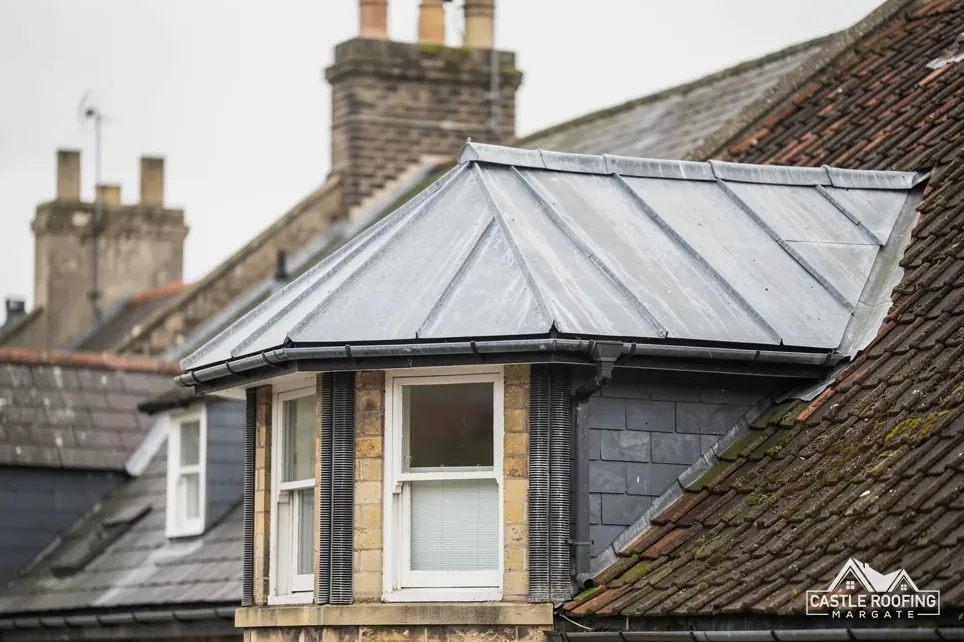
Lead is soft. A roofer can boss it (work it with a wooden mallet) into the corner of a stone window head, a curved bay or the tight angle behind a chimney. It is heavy, which helps it lie flat and resist wind lift, and it takes on a dull grey surface within weeks of being laid.
Copper is harder and lighter. It is made into sheets that are folded together at seams, or cut into strips, and it holds a crisp edge. New copper is bright pink-brown, then darkens, and over many years it turns green. That change is natural, and some owners choose copper for it.
Both metals are used for flashings, small flat roofs, bay roofs, dormers and ornamental features. Our own flashing work is in lead, so the lead detail is where we can speak from the roof.
How the two compare in use
This table sets out general differences, not measured values, apart from the lead sheet weights beneath it.
| Point | Lead | Copper |
|---|---|---|
| Handling | Soft, shaped by hand | Stiffer, folded at seams |
| Weight | Heavy | Lighter |
| Look | Dull grey | Brown, then green |
| Common use | Flashings, valleys, flats | Roofs, domes, features |
Weight is the clearest figure to give for lead, because it comes from a sheet table. The Royston Lead brochure lists Code 4 at 1.80 mm and 20.41 kg/m², and Code 5 at 2.24 mm and 25.40 kg/m². A roof structure has to carry that, which is one reason the timbers are looked at before lead goes on.
For copper, ask whoever specifies the sheet to write down its thickness and weight, so the structure can be checked against them. Where the two metals differ most is at the edges: lead folds tightly into a chase and stays put, while copper wants a seam designed for it and a fixing method to suit the metal and the slope.
How long lead lasts, as published
For lead, two published ranges exist, and they describe different details.
- HomeBuilding gives lead on a flat roof "60-100 years".
- MyJobQuote says lead flashing "can last for over 80 years". Read that as a floor under the range, and not as a forecast for any one roof.
Both depend on the fixing, the thickness and how well the lead is allowed to move. Lead laid in over-long pieces or held rigidly will crack long before it wears out, and a thin sheet in a hard-working spot will go sooner than a thick one in a sheltered corner.
A product warranty answers a different question from a lifespan, and a lifespan is not a promise about what your roof will do. The straight answer for any metal is a range, with the detailing deciding where on the range a roof lands.
If a roofer offers you a life figure for copper, ask who published it and what it is based on. A named source is worth far more than a confident voice, and it takes one question to find out which you have been given.
Choosing for a Thanet roof
Match the metal to the job, because the right choice on a stone-framed bay window is not the right choice on a plain slope:
- A flashing against brickwork, a valley or a soaker: lead is the established choice, and the one we fit.
- A feature roof where the colour change matters to the owner: copper is a design decision, worth raising with an architect first.
- A listed or conservation-area roof: the council and its conservation officer will care about the metal already on the roof, so ask them before changing it.
Mixing metals on one roof deserves a sentence of caution. Metals in contact can attack one another when water runs from one onto the other, so a roofer should say how the two are kept apart. The detail belongs in the specification, in writing, before the work starts. It is also worth asking how rainwater from the metal will reach the gutter, since runoff from a roof of one metal onto a lower roof of another is where trouble can start.
If you are weighing lead against a non-metal option for flashings, lead alternatives for flashings covers it, and how long lead flashing lasts takes the life question further. Both sit under lead roofing.