Patches and seam repairs
EPDM is a single synthetic rubber sheet, bonded to the deck with adhesive. Because there are few joints, damage tends to be local, and local damage can be mended without replacing the sheet.
The common repairs, described in general terms, are these:
- A patch over a puncture or tear. The area is cleaned, primed and covered with a piece of rubber or a purpose-made repair tape, bonded with the maker's adhesive.
- A seam repair. Where two sheets are joined, or a seam tape has lifted, the joint is opened, cleaned and bonded again.
- A corner or upstand repair. Folded corners and the turn-ups at walls are the points that open most readily, and a pre-formed corner piece can replace a failed fold.
- A replaced flashing or trim, where rainwater has got in at the edge and not through the middle of the sheet.
All of these depend on a clean, dry surface, because adhesive will not bond through dust, grease or water. A careful repair takes longer than it looks, since much of the time goes on preparation, not on the patch itself.
A typical cost, and what it does not cover
Checkatrade's roof repair guide (table updated June 2026) lists "EPDM rubber repairs" at £120 to £170 per m², exclusive of VAT. The rates apply up to a maximum of 3m², which means they describe small, local repairs. Treat them as a typical range from a national guide, not a price from us, and do not scale them up into a figure for a whole roof.
Where the damage covers more than 3m², or the roof needs a larger programme of repair, the cost is better treated as a question about whether to replace. The flat roof replacement cost guide gives ranges for that. If you are comparing, ask any quote to show VAT and any access equipment, since the guide's rates leave VAT out.
Two things push a small repair upwards: a hard-to-reach spot, which needs more access, and a hidden second fault. A leak seen at a ceiling is not always where the water came in, and a patch on the wrong spot will not stop it. Tracing the entry point is part of the work, and it often means lifting a flashing or a trim to look behind it.
When a repair will not hold
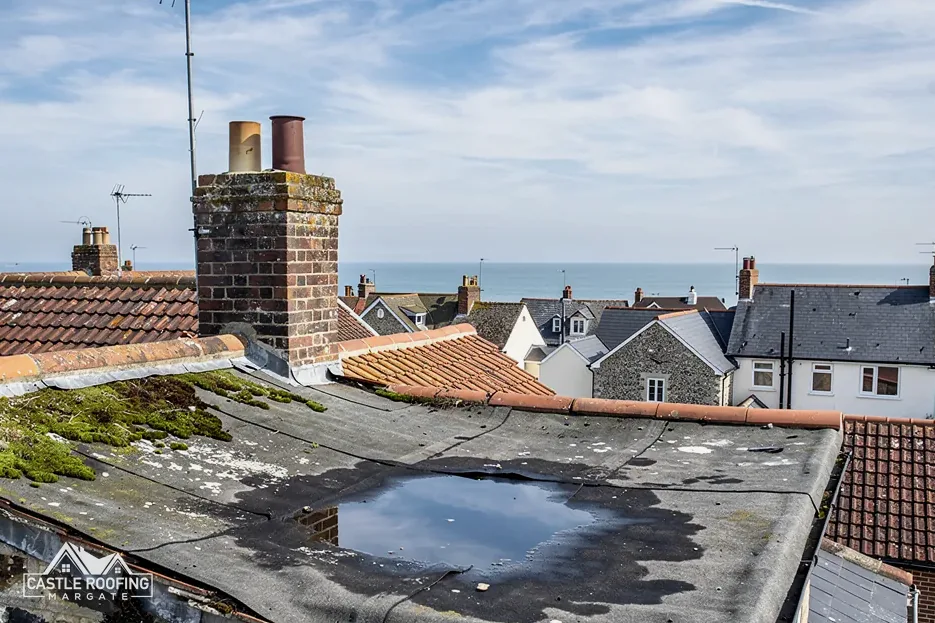
Some roofs are past patching. If the rubber has stiffened and is cracking along folds, a new patch on old, brittle sheet will not bond reliably and the next crack arrives a few inches away. If bonding has failed across large areas, so that the sheet lifts and flaps in wind, mending one spot leaves the rest to follow.
Other signs that a repair is not the answer:
- Soft or springy boards, which mean the deck is wet or rotten and the sheet is only a lid over a bigger problem.
- Water that ponds for days, which keeps testing the same seams. The minimum fall answer explains the drainage standard.
- Repairs that have already been done several times in the same area.
- An age that sits well past the published lives; see the EPDM lifespan answer.
A roofer who says a roof is repairable should be able to point at the leak, the patch and the reason it will last. One who says it is not should be able to back that up with photographs of the damage, and say what the alternative involves. Either way, you should leave the conversation knowing what is wrong and what comes next, in writing.
Deciding between repair and renewal
The honest test is whether a repair removes the cause or only the symptom. A puncture from a fallen branch, a lifted corner or a split at a seam is a clear cause with a clear fix. A roof that leaks in four places is telling you about the whole sheet.
While the roof is being looked at, it is worth checking the things around it: clear leaves from the outlet, check that the gutter is not overflowing back onto the edge, and look at the trims and flashings, since a loose trim can let in water that looks like a membrane failure. Taking a few photos of the stained ceiling, with the date, gives the roofer a useful starting point.
If you are weighing the options, the repair or replace guide sets out the decision, and flat roofing lists the rest of the service. A small repair done now, while the rest of the sheet is sound, is usually cheaper than waiting for the damage to spread, and it keeps the ceiling below dry in the meantime.