Where the two published figures come from
EPDM is a synthetic rubber, ethylene propylene diene monomer, sold as a single large sheet that is bonded to the deck. Because one sheet can cover a whole small roof, there are few joins to fail, which is one reason it has a long published life, and why it is often picked for small flat roofs over extensions and garages.
The guides do not line up:
| Guide | Typical life | Page updated |
|---|---|---|
| HomeBuilding | 25 to 30 years | 30 September 2025 |
| Less | 30 to 50 years | 27 October 2026 |
The ranges barely touch: HomeBuilding's top is where Less's range begins. Neither range can tell you which end your own roof will reach, since fitting, detailing and use all pull the figure one way or the other. A fair reading is that 25 to 30 years is a reasonable planning expectation, and that anything beyond that is a bonus for a roof that has had the right conditions. It is a typical range, not a warranty, and the state of your own sheet counts for more than either figure.
What decides where a roof lands
Much of the result turns on how the sheet is attached and finished:
- Adhesive bond. The membrane is glued to the deck, and a patchy bond leaves loose areas that flap and lift in wind.
- Seams and corners. A single sheet avoids long seams, but any join, and every folded corner or penetration such as a rooflight upstand, depends on the adhesive and tape used.
- Edge trims and flashings, where the sheet is clamped or turned up and where rainwater tends to get in.
- Deck quality. The sheet follows the surface beneath it, so rough boards, nails or debris show up as wear points.
- Falls and drainage. Standing water ages a membrane sooner, and the minimum fall answer explains what is expected of the finished surface.
Sharp objects, heavy foot traffic and furniture dragged across the surface are damage, not wear, and no lifespan range allows for them. A branch dropped in a gale or a ladder footed on the sheet can do more harm in a minute than the weather does in a year.
Reading the age of your own roof
If you do not know when the roof was fitted, there are clues. Look at the condition of the edges and corners first, since that is where problems start. Lifting at the trim, an open seam, a split at a folded corner, hardening or surface cracking, and small tears from branches or tools are all things a survey picks up.
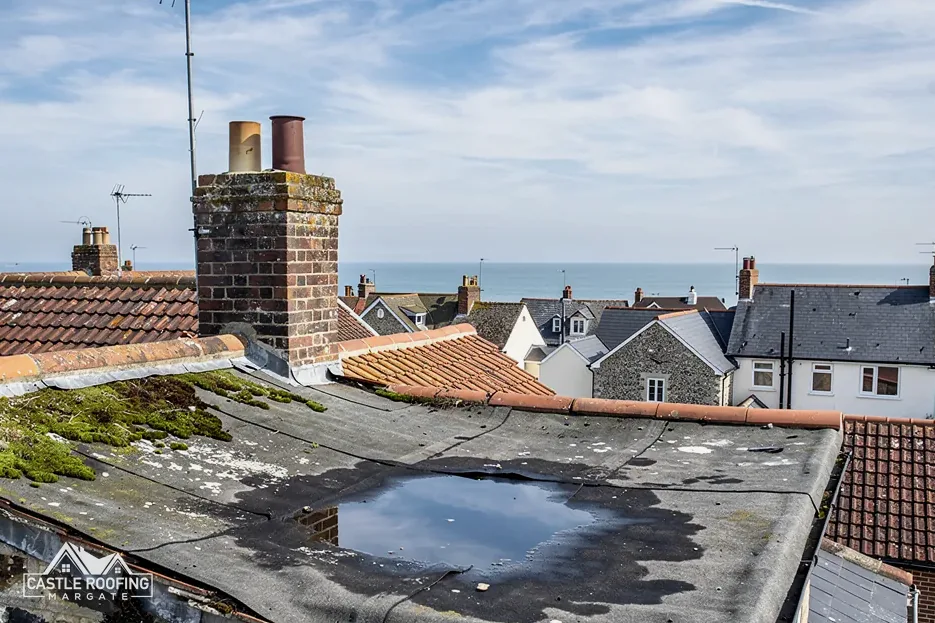
Moss and algae sit on the surface without harming the rubber and are a cleaning matter, not a sign of failure. Ponding that does not clear, or a soft area underfoot, points to a drainage or deck problem that a longer-lived membrane will not fix by itself.
A roof between 20 and 30 years old that is dry, flat to the deck and sound at its edges is not obliged to be replaced just because it has reached HomeBuilding's upper figure. On the other hand, one that is leaking at the age of 10 does not owe you the full figure either. In both cases, the condition is what counts. A dated invoice, a building control certificate or the date an extension was built can all help you pin down when the roof went on.
Repair, renew or leave alone
A good EPDM roof is often repairable, so a single leak is not a reason to renew everything. The EPDM repair answer sets out what patches and seam repairs can do and when they will not hold.
Replacement becomes the honest answer when the sheet is brittle, bonding has failed across large areas, or the deck underneath has gone soft or rotten. Replacement also means the thermal upgrade rules for a new membrane come into play, which a surveyor will explain before any work is priced. For other coverings, the lifespan by material guide sets the figures side by side.
For scale, MyJobQuote (page updated 09/10/26) puts EPDM at around £60 per square metre. That is one guide's typical UK figure, not a total for a roof, and not a price from us. Which? expects the South East to sit high in its price ranges, and HomeBuilding finds labour dearer around London and the South East, so ask for any written price to show VAT and the access arrangements, such as how the roof will be reached.
Start from flat roofing if you want the whole roof looked at, edges and corners included. We survey first.