How air is meant to move through a cold loft
In a cold roof design the insulation lies across the ceiling, and the void above is left to breathe. Moisture that rises from the house is carried off by air moving through that void. BS 5250:2021 is the current code of practice on moisture in buildings, and Approved Document C expects a cold deck roof to be ventilated.
The airflow path matters more than any one vent. Fresh air has to come in along the eaves and go out near the peak, through the ridge or vented tiles. A vent at the top alone pulls air from wherever it can find it, and that can be the house below, which draws warm damp air into the loft instead of clearing it.
For a roof with an HR underlay, the non-breathable kind, Marley's cold roof guidance sets the eaves opening at 25mm for pitches of 15° or less, and 10mm for pitches steeper than 15°. Other underlays and tile types are specified differently, so the product literature sets the number for your roof, and a roofer should read it before the ridge is touched.
What a ridge vent actually changes
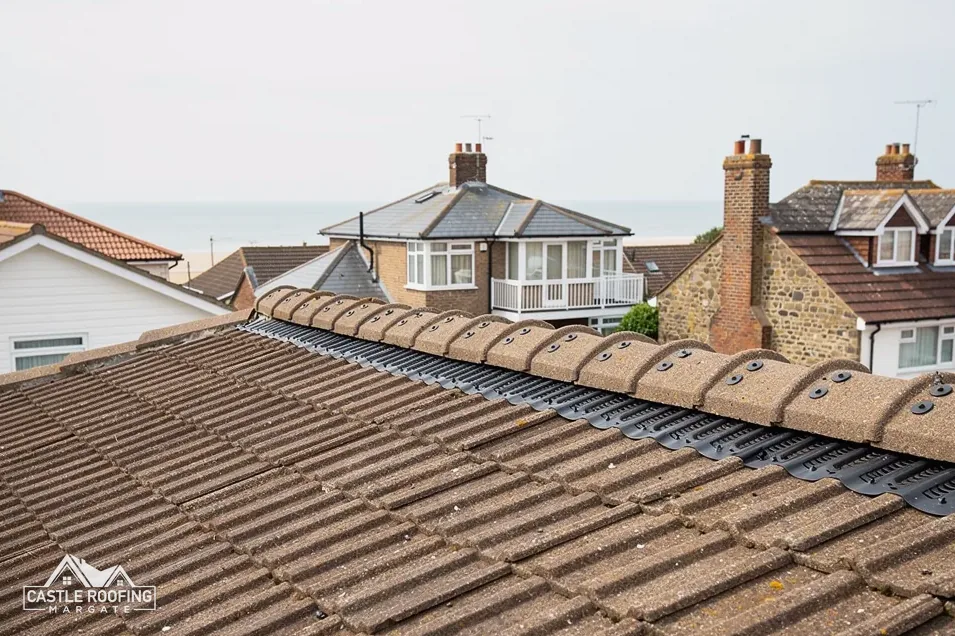
A ridge vent, or a vented dry ridge, sets a gap or a vented component along the apex so air can leave there. It has a clear job in the airflow path, and where the path is otherwise sound, it can help.
It makes the biggest difference where:
- Soffit or eaves vents are open and clear, so air can come in.
- The loft insulation stops short of the eaves instead of blocking them.
- The underlay and tile type suit a vented ridge.
- The loft hatch and ceiling are reasonably airtight.
It does little where those fail. A loft with blocked eaves has no inlet, so the ridge vent has nothing to draw. An old felt underlay that sags against the tiles may leave no air gap to start with. Our page on the vented dry ridge goes through the system, and the BS 8612 dry-fix page covers how a dry ridge is fixed to the standard.
On an older roof that has been patched, a surveyor looks at the underlay, the eaves and the insulation together, not the ridge alone, and says which of them is holding the airflow back.
Other causes a vent cannot reach
Water on the underside of a roof can be fed from the house below, not from the weather. The sources are found in daily life:
- Steam from a bathroom or kitchen with no extractor, or an extractor fan that discharges into the loft rather than outdoors.
- Unvented tumble dryers and drying clothes indoors.
- A gap round a pipe or light fitting where warm air leaks into the loft.
- A hatch that does not seal.
Warm air that reaches a cold loft meets cold surfaces, and the moisture condenses on them. Venting the ridge more widely only runs the damp air out faster, and it will not stop the source. Sealing round the hatch and pipes, ducting an extractor to the outside and turning down the indoor humidity do more.
It also pays to rule out a leak. Droplets on the underside of the underlay in cold weather point to condensation. A stain that spreads after rain points to a leak at a tile, a flashing or a ridge joint. A roofer can tell the two apart from inside the loft, which saves a vent being bought for a leak.
Insulation, underlay and getting the order right
A loft that has had extra insulation added over the years can suffer for it. Extra insulation keeps the roof space colder, which makes condensation more likely when the airflow is not improved with it. Quilt stuffed tight into the eaves can close off the very gap the incoming air needs, so ventilation guards or a tray at the eaves are fitted to keep the path open.
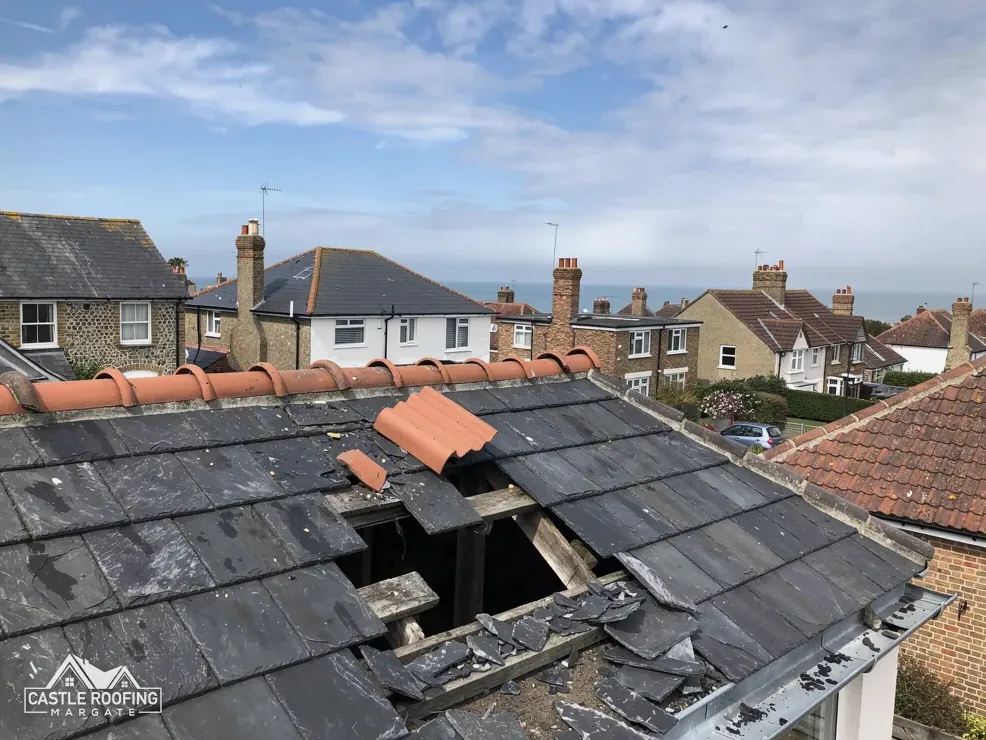
The underlay is the other half. A modern breathable membrane lets some moisture pass through, while an HR underlay does not, and the ventilation figures differ between them. Replacing the underlay and the ridge together is the time to correct both, since the tiles are off anyway and the batten and rafter condition can be checked.
If you are planning ridge work on a roof with damp in the loft, ask for the airflow path to be looked at on the same visit. Timber that has been wet for several winters may need replacing, and that is easier to judge with the loft open than from the ridge. For the work around it, see dry ridge and verge.