Use this to see the typical UK range for fitting a dry verge, the features of a gable end that raise or lower the figure, and how to compare two quotes on equal terms.
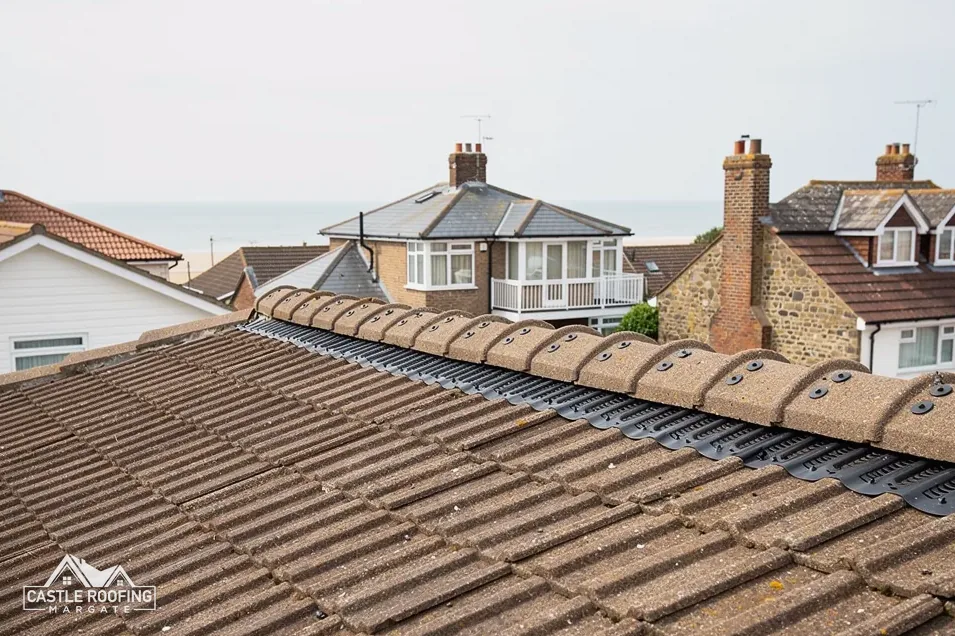
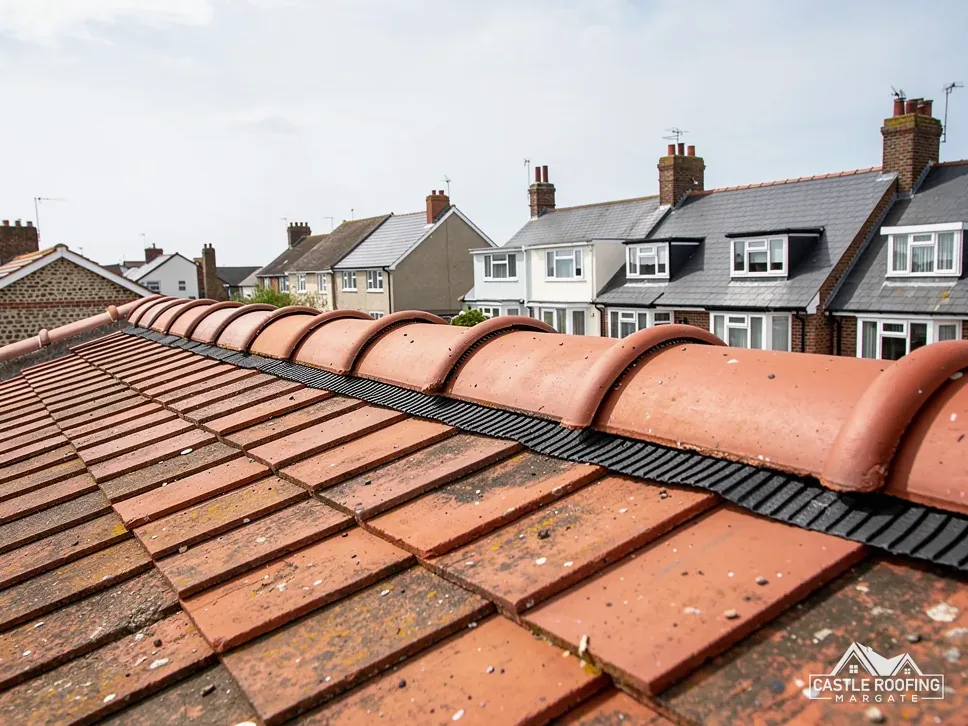
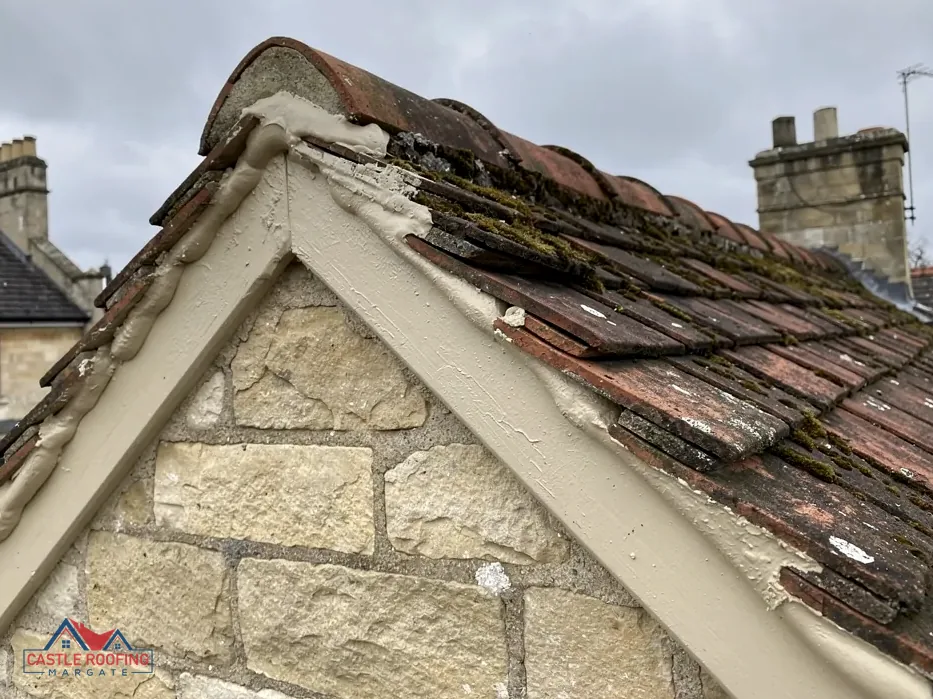
The verge is where a pitched roof stops at a gable wall, the triangular end of a house. For generations the end tiles were bedded in a strip of mortar along that edge. The dry version swaps the mortar for interlocking units that are fixed mechanically, so screws and clips hold the covering down and the mortar is no longer doing that job.
Price is the obvious first point, and a single figure means little on its own. MyJobQuote, a UK cost guide, puts a dry verge system installation between £500 and £2,000 (MyJobQuote, Oct 2026). That is a typical UK range, never a Castle price, and where a job lands within it depends on the house in front of the roofer: how many gables it has, how long each sloping edge is, and how the roofer reaches it.
This guide sets out what moves a dry verge price, how access to a gable changes it, and what a sound written quote contains. How the units work and when they suit is covered in our guide to the dry verge system, and the whole subject sits under dry ridge and verge work.
What the typical UK range tells you
The MyJobQuote range of £500 to £2,000 is wide because the guide is averaging very different houses. One end of it could be a short gable on a single-storey extension. The other could be a tall gable on a pitched roof that needs a scaffold tower or a full scaffold before anyone can reach the edge.
Two other guides help you read a figure like this. HomeBuilding notes that labour for roofing costs more across London and the South East, and Which? Trusted Traders expects its own prices to climb for homes in that region. Kent sits within that region, so a Thanet quote can reasonably sit above a national figure.
Use the range to notice a quote that looks out of line, and never as a price list:
- A figure far below the range calls for asking what is missing from it, such as the undercloak, the scaffold or the waste.
- A figure far above it calls for asking what has been put in, such as timber repair or several gables.
- A figure inside it still needs to be checked against the length of verge on your own roof.
A range tells you whether a quote is plausible, and the survey of your own gable tells you what the work will actually take.
Whatever the number, the quote should say whether VAT is included, because VAT at 20 per cent on a net price makes a visible difference.
Gable length and how many edges you have
The first thing that sets the price is the length of verge to be covered. A gable has two sloping edges, one each side of the apex, called rakes. A hipped roof with no gables has no verge at all, so there is nothing to fit. A detached house with a gable at each end has four rakes, and the figure for it will not look like the figure for a semi with one exposed gable and a party wall on the other side.
Length matters because a dry verge is made of units that run along the edge end to end. Each metre of edge needs its share of units, fixings and cutting.
Other features of the gable change the work:
- Pitch: a steeper rake is harder to work along and slower to fix.
- Tile pattern: the unit has to suit the profile of the tile it finishes, and some tiles need more cutting at the edge.
- Corners: a gable that turns at a return, a bay or an extension adds short awkward lengths.
- Chimney stacks or rainwater pipes on the gable wall: both need working around.
When we look at a roof, we measure and photograph every rake so the quote matches the house, and you see the same photos we do. A gable that looks short from the pavement can turn out to run a long way back along a rear extension, and only a look at the whole roof shows it.
Access, the scaffold and Kent County Council
Access is the second big mover. A gable end is the highest point of an external wall, and the roofer has to stand somewhere safe to work along the edge, with room to pass tiles up and lift old mortar down. How that is done moves the price, so ask about it when a quote arrives.
| Situation | Likely access | Effect on price |
|---|---|---|
| Low side wall on a drive | Ladder or tower | Smaller |
| Two-storey gable beside a path | Tower or scaffold | Larger |
| Gable straight onto the pavement | Scaffold on the highway | Larger again |
Where the scaffold sits above the public road or pavement, section 169 of the Highways Act 1980 applies, Kent County Council grants the licence, and the scaffolder files for it. Kent County Council charges £52 per week for 2026 to 2027 and wants 5 working days' notice. Applicants must hold public liability cover of £5 million or more.
Scaffold for a gable is priced after a survey, because the eaves height, the ground underneath, the pavement width and the length of the job all feed into it. A tower on a drive can be enough for a low gable; a tall one in a street cannot be done from a ladder. Our guide to scaffold for ridge repairs goes into when a tower will do, when a full scaffold is needed, and how that choice affects the start date.
Stripping the old verge and checking the undercloak
Fitting dry verge units is only part of the job. Before they go on, the old mortar bedding and any loose end tiles have to come off, and what is underneath decides whether the work is simple or not.
The undercloak is the narrow strip, often of slate, fibre cement or plastic, that sits under the end tiles and carries the edge of the roof out over the gable wall. If it has cracked, rotted or slipped, it is replaced before the new units are fixed. The batten ends and the outer rafter are checked in the same way, because a unit cannot hold if the timber it is fixed into has gone soft.
The usual order of work looks like this:
- Take off the old mortar and loose end tiles along the gable.
- Check the undercloak, the batten ends and the edge timber.
- Repair or replace whatever has failed, and show you the photos.
- Fit the new undercloak where it is needed.
- Lay the end tiles, cutting where the pattern requires it.
- Fix the dry verge units and clear the debris.
Steps 2 and 3 are the reason a quote for the same gable can differ. A roofer who has looked underneath can price the repair that is really needed. A roofer pricing from the pavement is guessing, and a guess can grow once the old mortar is off.
A dry verge compared with re-pointing the old mortar
Sometimes the cheaper answer is the right one. A short stretch of cracked pointing on an otherwise sound verge, where no tile has moved, can be repaired in mortar, and our guide to verge mortar repair explains how that is done.
The case for a dry verge is that mortar alone no longer carries the load. Marley, the tile maker, reports that BS 5534's 2015 amendments stopped mortar being treated as the only fixing for a covering. The standard is no statute, though it is the code of practice a roofer follows, and its 2018 amendment widened the scope to cover repairs as well as new work.
That leaves three situations in practice:
- Sound verge, one cracked joint: a small repair is reasonable.
- End tiles that have moved, or a fillet that cracks again and again: a dry verge removes the weak point.
- A full re-roof: the verge is finished in the way the new covering needs, so a dry verge is usually part of the same specification.
A repair that has to be redone every few seasons can cost more over the years than fitting units once, though that depends on the roof and how exposed the gable is. It is a reason to compare like with like when two quotes arrive, and a gable that faces open ground gets more wind than one tucked behind a neighbour's roof.
Reading one written price
What reaches you after the survey is one written total, with nothing to add up. That total is the number to compare, and what it should name matters more than how it is laid out. Citizens Advice suggests collecting written quotes from 3 traders or more, which works best when each is for the same job.
Before you accept a written price, check that it says:
- how many gables or rakes are covered, so you can see nothing has been left out
- whether the old mortar and any tiles removed are taken away
- whether the undercloak is replaced or reused
- whether the dry verge units are specified to BS 8612:2018, the standard covering dry-fixed systems for ridges, hips and verges
- whether scaffold or a tower is included, and who applies for the Kent County Council licence if it stands on the highway
- whether VAT is included
The written price follows the survey, because nobody can responsibly give a total for a gable they have not looked at. If you send photos of each gable from the ground, we can tell you whether a tower or a full scaffold is likely before anyone climbs a ladder. Where a verge sits on a listed home or inside a conservation area, the right consent route is checked with the council before any quote is firm.