What repointing is, and what it can fix
Pointing is the visible mortar that fills the joint between each ridge cap and the tiles below, and between one cap and the next. Repointing means raking out the worn surface and filling it with fresh mortar. It renews the seal and the look. It does not put a new bed under a cap.
That is why it only suits one condition: a ridge whose caps are held firmly by a sound bed beneath, where just the surface has crumbled or opened. You can test the idea from the garden. If every cap sits straight and shows no daylight under it, and the damage is a worn edge, repointing may be all that is wanted.
It also helps to know what it cannot do. It cannot stop a cap moving if the bed under it has shrunk away. It cannot tie caps down against the wind. And it cannot reach a bed that is hollow behind a good-looking face, however neat the new mortar looks on the day, and however well its colour is matched.
A cap that rings solid when tapped, and does not move under a hand, is the sign that pointing alone may be enough.
When repointing stops being enough
The signs that the job has gone beyond pointing are plain:
- A cap that rocks, or sits at an angle to its neighbours.
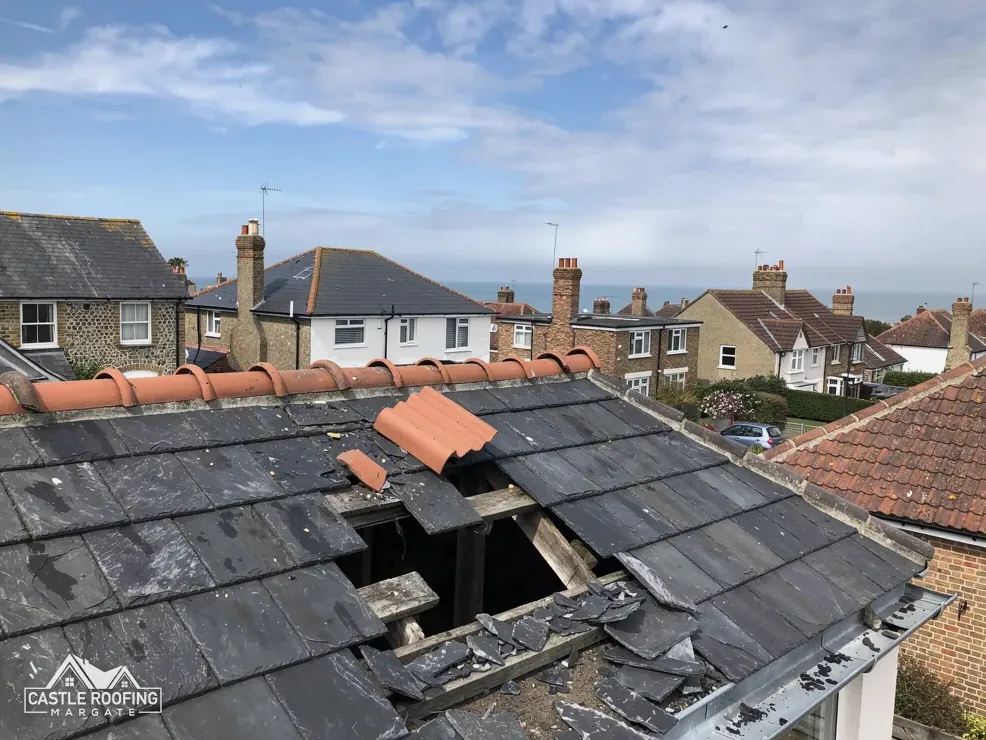
- Daylight visible under a cap, or under the end cap.
- Cracks that run along the bed and not just at the edge.
- Mortar that falls into the gutter in pieces rather than dust.
- A ridge that has been repointed before and has cracked again.
In those cases the bed is the problem, and new pointing sits on top of it like fresh paint on rotten wood. The cap is held by whatever is underneath, so that is what has to be dealt with.
Repeated repointing is a hint in itself. A ridge that needs it every few winters is telling you the bed or the fixing is not working, and each repair adds cost without changing the cause. The better spend is one repair that tackles it.
Ask whether an earlier repair on the ridge was a repoint only. If it was, and the cracks are back, the bed is the likely cause and a second repoint will repeat the first.
The code that sits behind this
BS 5534:2014+A2:2018 is the standard behind fixing tiles and slates, and it is not law. Marley states that no law requires a roof to be installed to it. Marley also records that after the 2015 amendments mortar could not be the only thing securing a covering, and that the 2018 amendment took ordinary re-roofing, repairs too, into its scope.
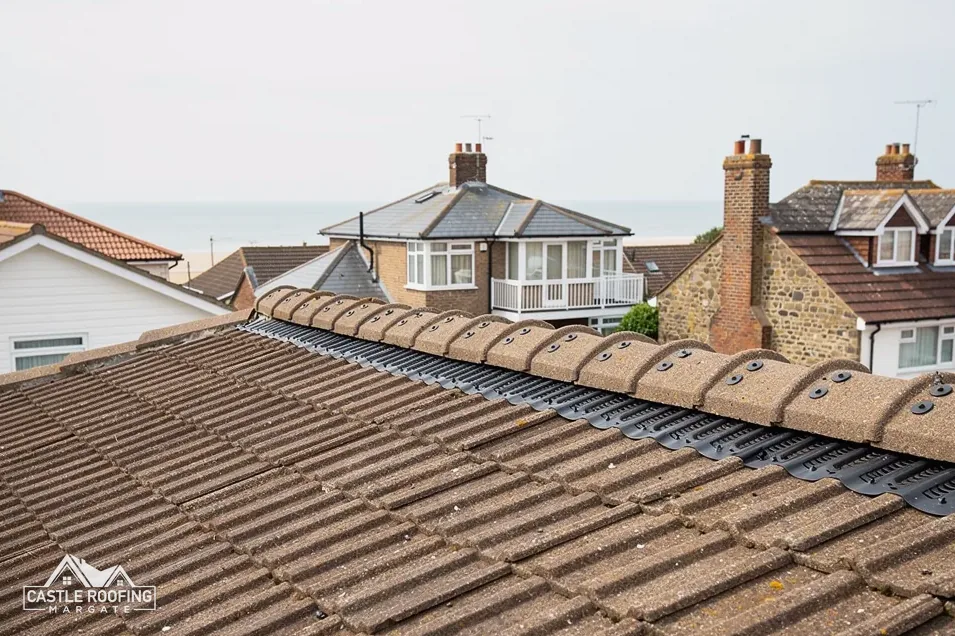
For repointing, that has a direct meaning. A ridge held by mortar alone, repointed with more mortar, is still held by mortar alone. Where the caps are to be kept, mechanical fixings are added, or the ridge is re-bedded with fixings, or it is dry-fixed to BS 8612:2018, the specification for units fixed without mortar along the ridge, hips and verge.
Mortar is not banned. The point is that pointing by itself does not hold a cap down against the wind, so the repair has to include something that does.
Which of these applies is not a matter of taste. It follows from how the ridge was built, what condition the bed is in and how exposed the house is.
Choosing between pointing, re-bedding and dry-fix
The survey decides which of these the ridge needs, and the table sets out the usual split:
| Repair | Suits a ridge where |
|---|---|
| Repoint | Caps are tight and only the surface has failed |
| Re-bed with fixings | The bed has failed but the tiles are sound |
| Dry-fix | The whole run is failing, or the bed keeps cracking |
Where the answer is repointing, that is what we recommend, and the price reflects it. Where it is not, you see why in the photographs taken at the survey, and you can compare the picture with what is visible from the garden.
A dry-fixed ridge is the most thorough answer when the run is failing. A re-bed with fixings keeps the existing caps and the traditional look. The survey weighs both against what the bed is doing now, and the photographs show you the same evidence. A single written total follows the visit. More reading: re-bedding ridge tiles, why ridge mortar cracks and the dry ridge and verge service.