What the cracks are, and why a ridge moves
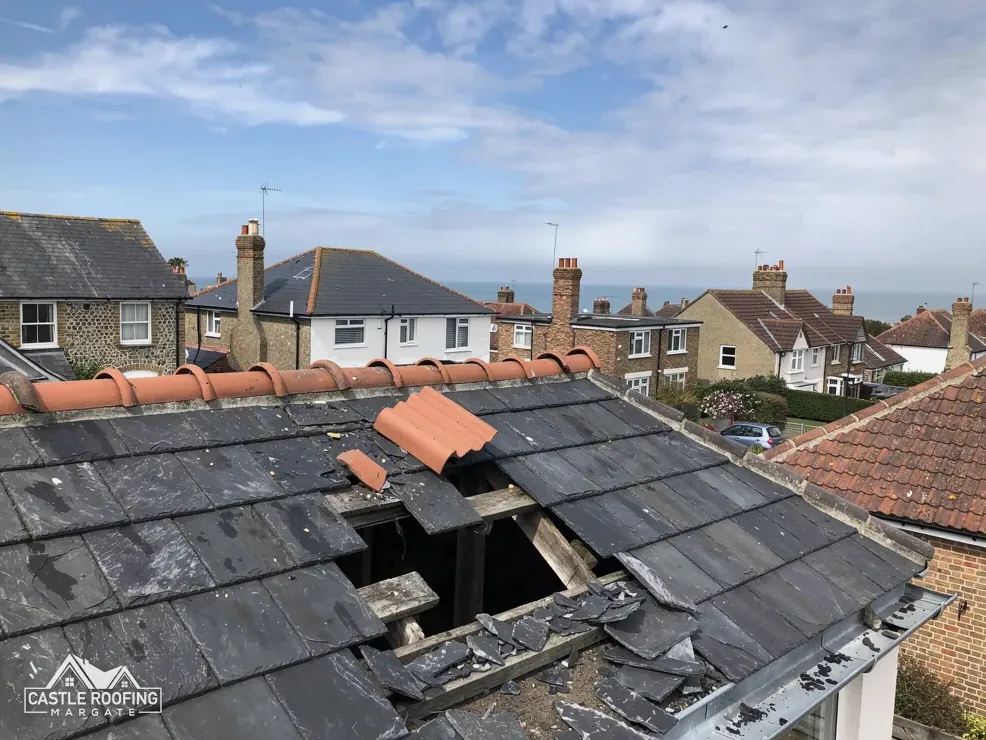
Capping tiles run along the crest, the line where the two slopes meet, and each one sits in a bed of mortar. Sand and cement set hard, and hard material does not forgive movement. Roof timbers swell in damp weather and shrink when they dry. The building settles over the years. The tiles grow and shrink with the daytime sun and the night chill, and the mortar has to follow them without any give of its own.
Wind adds to all of it. The crest is the highest point on the house, so every gust pushes and pulls at the caps. Small movements repeated over many seasons open a hairline crack where the mortar meets the tile, because that edge is the weakest line in the joint.
Age finishes the job. Mortar dries out, turns powdery at the surface and shrinks back from the tile. A bed that was full when it was laid can be hollow behind a face that still looks sound from the pavement.
Much of this is visible without leaving the garden: a pale, crumbly edge, dark staining below a joint, or a chink of daylight at an end cap.
Frost, water and the weak joint
Water gets into every crack, and water that freezes takes up more room than it did as a liquid. Each frosty night pushes the crack a little wider, and each thaw lets more water in behind it. The Met Office puts the Manston average for 1991 to 2020 at 21.43 air-frost days in a year. That is one inland climate station in Thanet, not a count for your street, but it shows a freeze and thaw cycle is a regular part of an East Kent winter.
A ridge suffers more than the field of the roof because both faces of the mortar are exposed, and the shade of a chimney or a gable keeps the joint damp for longer. Cracks that run along the bed matter more than a short one at an end, since they let water travel under the cap.
| Sign | Likely meaning |
|---|---|
| Hairline crack at a tile edge | Early movement; keep an eye on it |
| Sandy, crumbling edge | Mortar breaking down with age |
| Moss or staining below the joint | Water is getting in |
| A gap, or a cap that rocks | The bed has failed |
Patch, re-bed or dry-fix
A cracked bed leaves three routes, and the right one depends on how far the failure has spread.
- Patch the pointing, but only where the bed behind is full and tight and the damage is in the surface.
- Re-bed the ridge, which means lifting the caps, clearing the tired mortar out and setting the tiles again with mechanical fixings added. Marley's reading of the 2015 changes to BS 5534 is that a covering can no longer be secured by mortar alone.
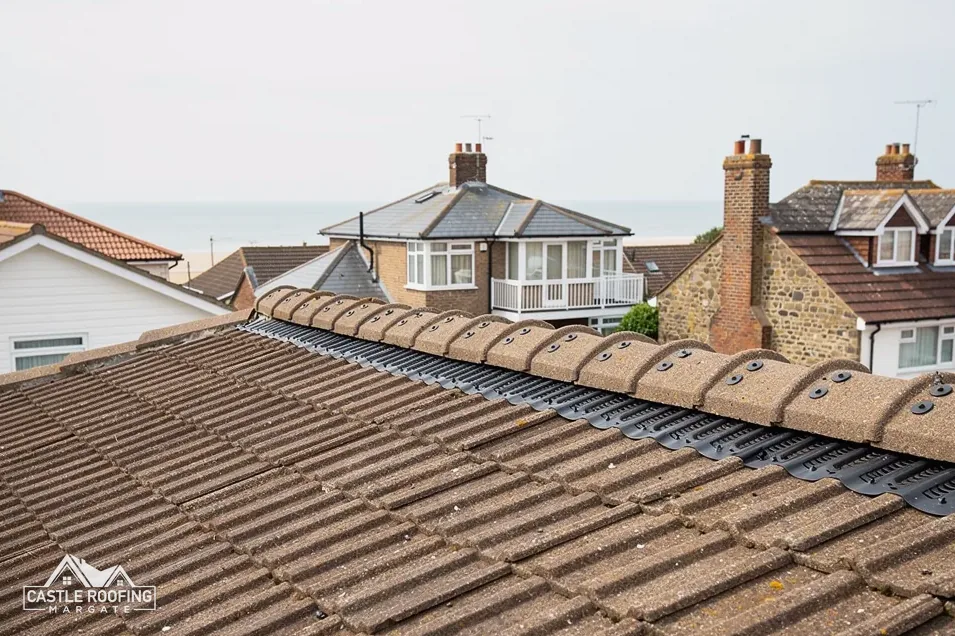
- Dry-fix the ridge, by swapping the mortar bed for a mechanically fixed system made to BS 8612:2018, which sets the bar for fixing a ridge without a mortar bed.
A patch over a hollow bed hides the symptom and leaves the cause underneath, so the crack returns. When you can see daylight under a cap, or a cap sits crooked, the choice is between the second and third routes. Our re-bedding guide and the page on what a dry ridge is set the two routes side by side.
What a close look settles
Cracks tell you the bed is ageing, but they cannot tell you how many caps are loose or what condition the timber under them is in. That takes someone on the roof with proper access. At the survey we check how many caps rock under a hand, whether the end caps are held, how the ridge meets the hips, and what the tiles beneath look like.
You can help before anyone visits:
- Photograph the ridge from the pavement or garden, from the same spot each time, so any change shows.
- Note when the cracks were first seen and whether tiles have shifted after a windy night.
- Pass the photos to us on WhatsApp, with the house type.
A single written total then follows for whichever route suits, from a small re-bed to a ridge dry-fixed along its whole length. If a patch is all the ridge needs, that is what the price covers. The wider picture sits under dry ridge and verge work.
A ridge that has been mended before tells its own story, because patches that stand out in colour or sit proud of the line show where the bed gave way last time.