Why the ridge is the wrong place for a first attempt
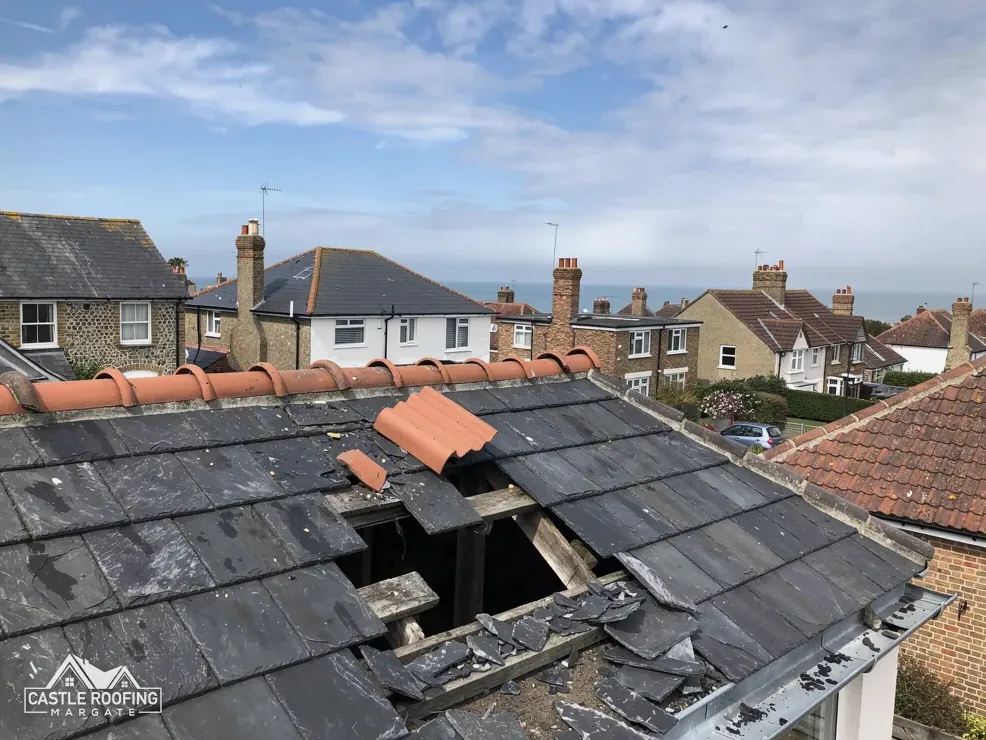
To reach a ridge tile, a person has to get onto the roof, stand or kneel on a pitched surface and work at the very crest. Tiles and slates are slippery when damp or mossy. A ladder rests against the eaves, not the crest, so the last few metres have to be crossed on the roof itself. A slip on a pitched roof ends at the gutter and then the ground.
There is also the tile. A ridge cap that has worked loose is, by definition, sitting on a bed that has failed. Putting weight near it can shift its neighbours, and a lifted cap can fall a long way onto a path.
The law speaks to this for people at work. Regulation 6(3) of the Work at Height Regulations 2005 is written for employers, who must provide suitable and sufficient measures against falls likely to injure a person, as far as reasonably practicable. Roofers plan their access, such as scaffold or edge protection, before anyone climbs. A householder has no such kit to hand.
What proper roof access involves
The equipment is not decoration. For a ridge repair it usually means one of these:
- A scaffold tower or full scaffold, giving a platform and edge protection at eaves height.
- Roof ladders and crawling boards, which spread weight across the slope and give a footing.
- A harness and anchor point, where the work carries a fall risk that cannot be designed out.
Scaffold standing on the pavement or in the carriageway requires a Kent County Council licence, applied for by the scaffolding firm at least 5 working days beforehand. That is part of why a ridge job is planned and not done on the spot. It is also why a roofer asks about the street at the survey, and where the poles can go.
None of this is needed for a person standing in the garden with a phone. It is needed the moment anyone sets foot on the slope. Our page on scaffold for ridge repairs goes through when full scaffold is called for and when lighter access is enough.
What you can do safely from the ground
You can make a loose tile less of a danger without leaving the garden:
- Photograph the ridge with a zoom lens, or binoculars and your phone, from several spots.
- Stop anyone, pets included, walking under the tile, and tape off a drop zone if it looks about to move.
- If a tile has already fallen, leave it where it landed until the area is clear, then bag the pieces.
- Check the loft or top-floor ceiling for fresh damp stains after rain.
- Note the date, and the wind or rain, when it moved.
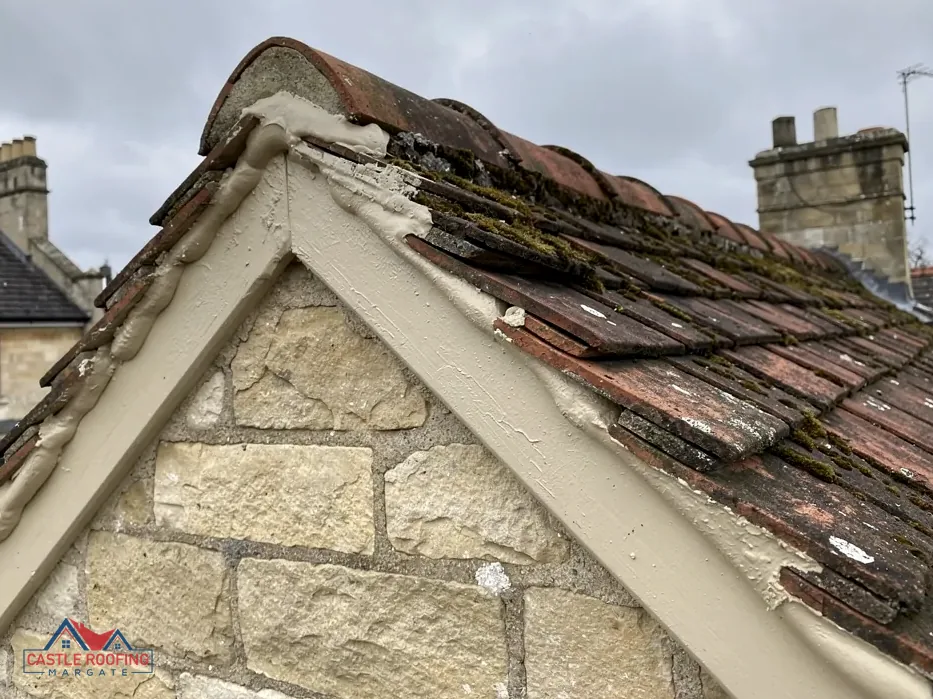
Do not prop a ladder on the gable for a quick tap-down, and do not straddle the crest. Fresh mortar over a failed bed is a plaster over the problem, and it does not hold the cap.
If the tile is shifting in the wind and could land on a public footway, say so when you call, because that changes how the job is planned. The photographs also let us see which cap has moved, how many neighbours look shaky and whether the cause is the bed, the fixing or the wind on that part of the roof.
What a roofer does that a patch does not
A roofer starts by finding out why the tile loosened. It may be one failed bed, or the ridge may be moving along its whole length. We check the neighbouring caps, the end caps and the point where the ridge meets the hips.
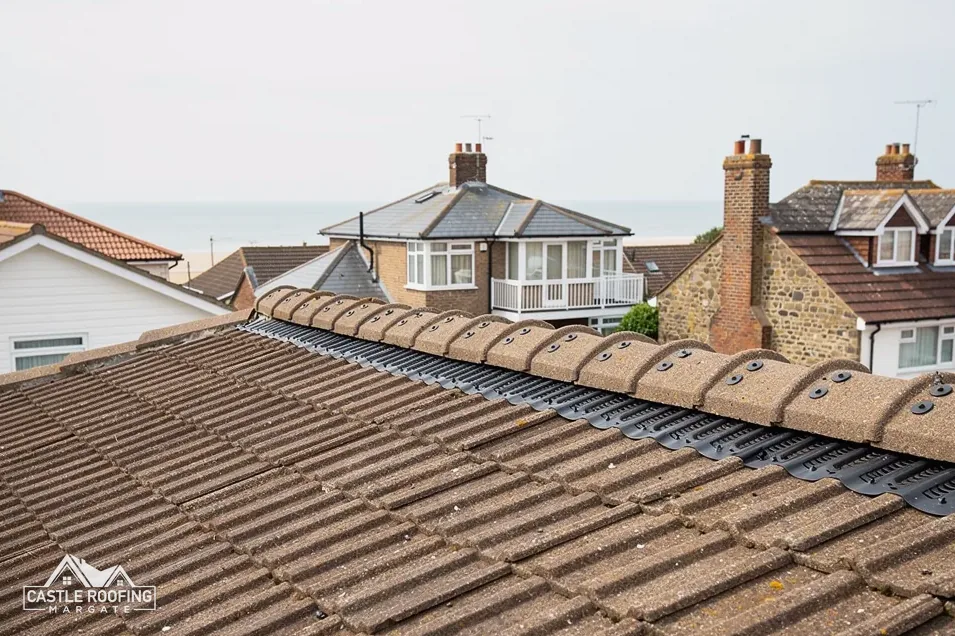
Then the repair matches the cause. A single lifted cap may be re-bedded with mechanical fixings added, because Marley's reading of the 2015 amendments to BS 5534 is that a covering needs more than mortar to hold it. Where the bed has failed along a run, a dry-fixed ridge to BS 8612:2018 replaces it.
You receive photographs of what was found, and one written price that follows the survey. For more on the repair routes, see what to do when a ridge tile has fallen off and the re-bedding guide. The overview of the service is under dry ridge and verge.
The survey also shows whether the loose tile is a one-off or a sign that the whole ridge needs attention, so the first visit settles more than the one tile on the ridge.