Clear the ground, then look from a distance
A ridge tile weighs enough to hurt someone, and the ones beside it may be loose too. Move cars, bins, children and pets away from the foot of that slope. Pick up the broken pieces with gloves, as the edges are sharp, and stack them somewhere out of the way. If a tile has landed on a footpath or in a neighbour's garden, tell them.
Resist the urge to get up there. The ridge is the crest of the building, and a fall from it is serious. Under the Work at Height Regulations 2005, an employer has to take suitable and sufficient steps against falls, as far as reasonably practicable, which roofers meet with scaffolds, towers and edge protection. A householder with a ladder has none of that.
What you can do from the lawn is useful. Stand back with binoculars or a phone zoom and see whether the gap is a single tile, a run of several, or an end cap. Check the roofline against the sky for a ridge that has slumped. Then look in the loft with a torch for daylight or damp patches below the gap, which show a roofer whether rain has already got in.
Photographs, receipts and the call to your insurer
If you think you may claim, ring your insurer before any repair is ordered, and keep every record. The Institution of Structural Engineers describes photographs as vital evidence for a claim. Take them in daylight, before anything is moved.
- The gap in the ridge, with the roof slope in view.
- The fallen tile, where it landed.
- Any damage to a car, fence, glass or garden.
- The date and the weather on the day.
Keep receipts for anything you pay for to make the roof safe or watertight, as the insurer may ask for them. Whether the claim succeeds depends on your policy's own wording, including its definition of a storm and its exclusions, so ask the insurer rather than assuming. Our page on a ridge tile storm damage claim goes through what an insurer looks at.
Do not wait for the claim before you cover the gap, because rain through an open ridge soaks the timbers and the ceiling below. A tarpaulin pinned from the eaves side by a roofer is a short-term answer, and the receipt goes in the file.
Why it fell: the bed, the fixing and the weather
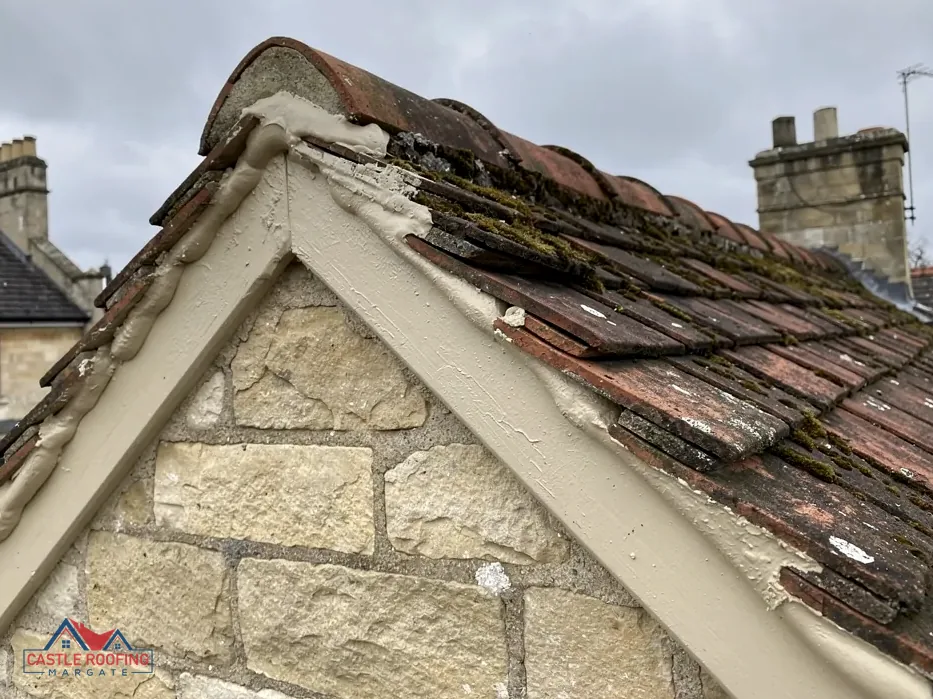
On a traditional ridge, the tiles sit in a bed of mortar along the apex. Over the years the mortar cracks, the bond to the tile weakens, and frost works water into the joint. A gust then lifts a tile that has been held by little more than habit.
Marley's guidance on BS 5534 explains that mortar was ruled out as the sole fixing in 2015. A ridge tile that came off on its own tells you the bed had failed, and the tiles either side of the gap are rarely much better. They are worth testing by hand when a roofer is up there.
Look at the gap for clues. A clean break through a tile points to impact or frost. A tile that came away whole, with a crumbling lump of mortar still stuck to the underside, points to a bed that had lost its grip. The second pattern runs along a stretch of ridge, not one tile, and it changes the repair from a patch to a re-bed.
It is worth checking too whether the missing tile left the batten or ridge board exposed, since timber open to rain soon swells and splits, and a rotten board holds a fixing badly.
Re-fixing the ridge with mechanical fixings
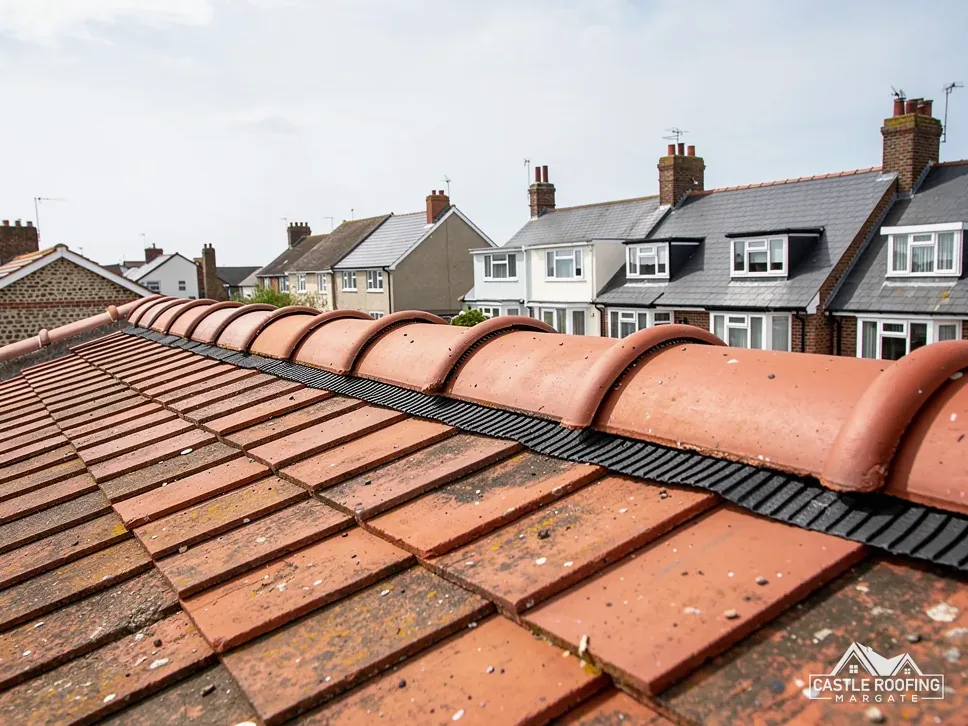
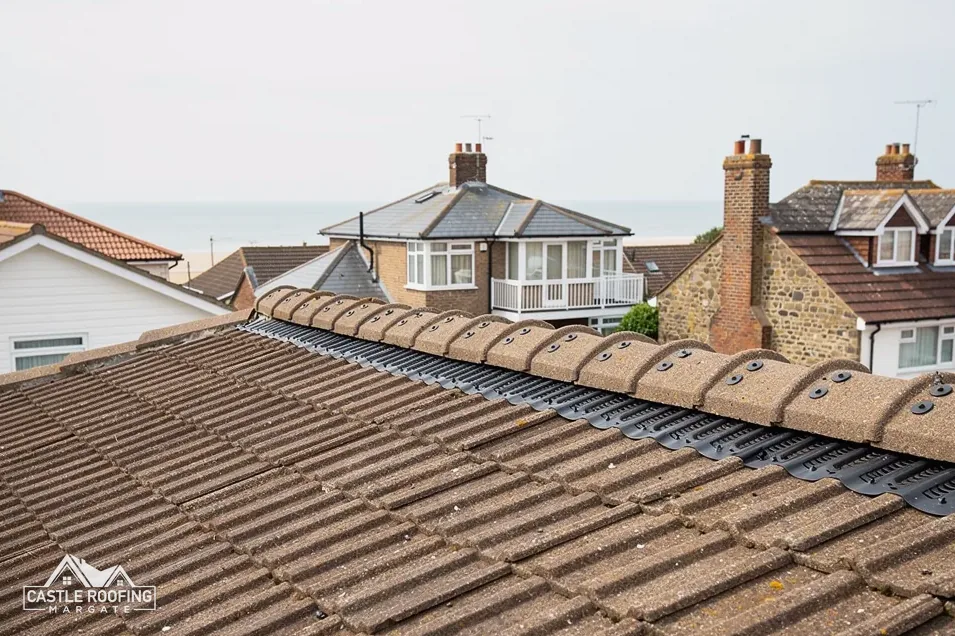
Putting the tile back on a dab of mortar repeats the fault. A sound repair re-beds the ridge in fresh mortar and adds a clip, bracket or screw into the timber below, so no tile depends on the mortar alone. For a longer run, a dry-fixed ridge to BS 8612:2018 is the other route. Our pages on re-bedding ridge tiles and ridge tiles loose in wind explain each.
On cost, Which? Trusted Traders (November 2025) put a new ridge tile at a typical UK range of £80 to £300, excluding VAT, and warn that quotes in the South East, Kent included, run higher. MyJobQuote (October 2026) gives £225 to £550 for a ridge job. The size of the gap, the access and the number of loose neighbours decide where a roof falls, and the dry ridge and verge hub covers the wider work.
Until a roofer arrives, a gap can be covered temporarily from a safe position, which keeps rain out of the loft. Tell the roofer about any tiles that look slipped or rocking in the same run, so they are tested while the access is up.