Age is not the test, fit is
Nothing in the standards sets a maximum age for a roof that takes a dry-fixed ridge. BS 8612:2018 lays down requirements for units that hold the ridge, hips and verge down without mortar, and it speaks of systems, not of the year a house was built. What decides the job is whether the units sit properly on what is already there.
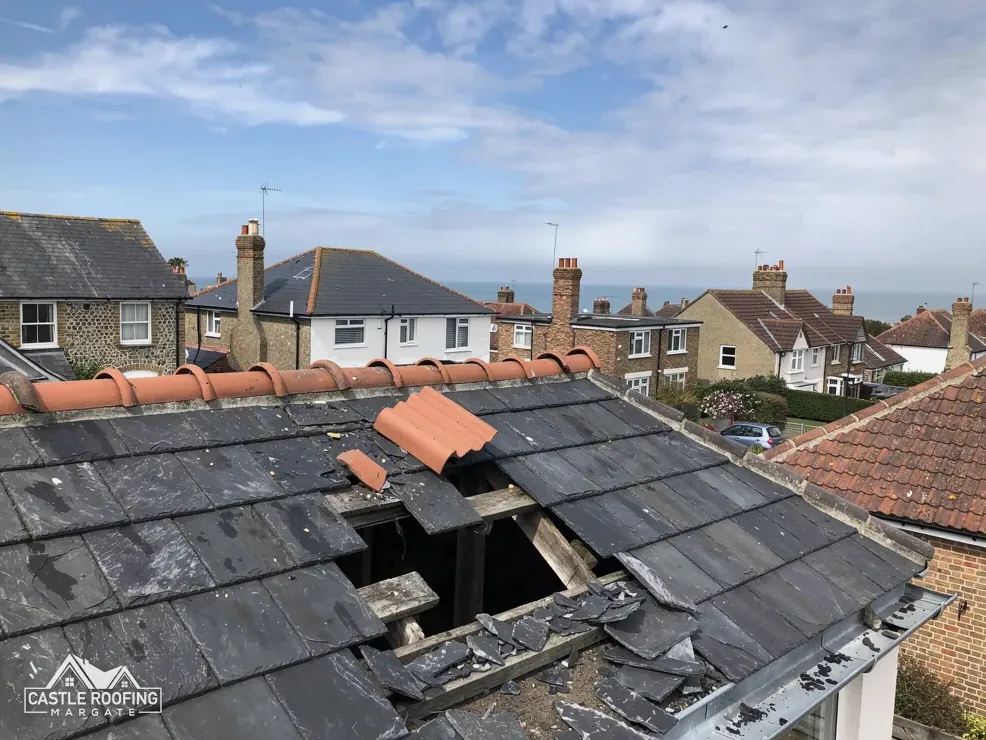
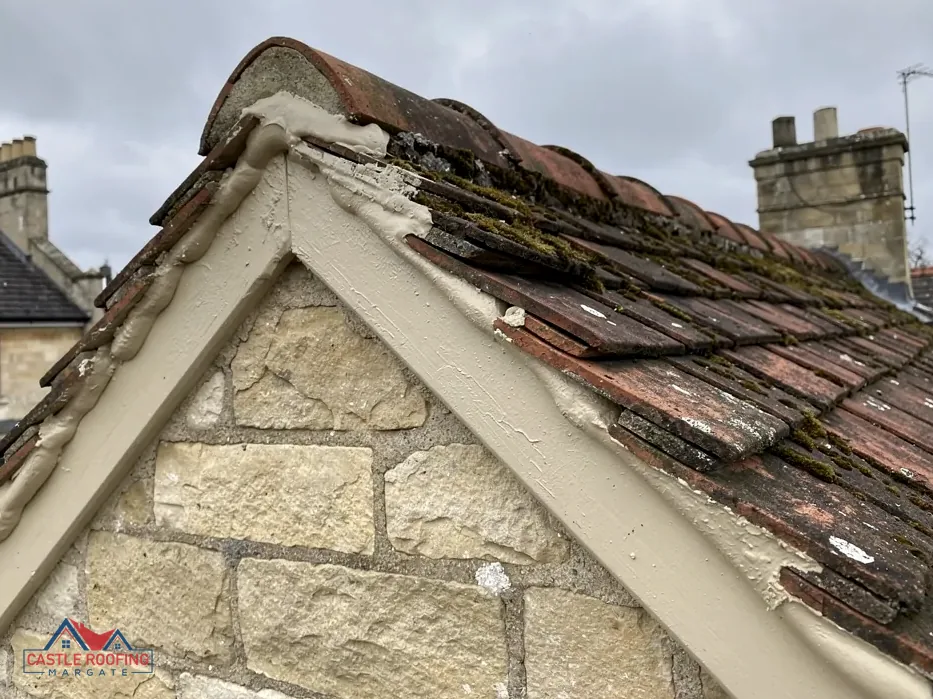
An older roof raises practical questions. Tiles made decades ago may have a profile that no current ridge unit matches. The tiles along the top course may be worn, chipped or sitting at uneven heights. Roof timbers at the ridge may have been wetted by years of leaks round a cracked bed. A dry-fixed system needs sound timber to hold its fixings, and a profile it can sit on without gaps.
None of that can be known from the pavement. It is found by looking at the top three or four courses and the timber behind the ridge, which is why a yes or no is never given over the phone.
An older roof is not a lesser one. Some are sound enough to take new fixings once the top courses have been checked.
What we check before saying yes
A dry ridge is a run of units fixed mechanically down to the roof structure, and the survey confirms that each part of that has something solid to work with. On an older roof we look at:
- The tile profile along the top, and whether a ridge unit made for it exists or can be matched to it.
- The ridge board or rafter ends where fixings will bite, for rot and for splits.
- The top courses of tiles, to see whether they are tight, level and undamaged.
- How the ridge meets hips, a chimney or a party wall.
- The underlay and any ventilation at the top, since the system sits over them.
- Any staining or rot at the ridge timber left by an old, failed bed.
A cracked tile is replaced before the units go on, not after. If the timber has gone soft, the timber is the first job. Where a roof is not ready, a re-bedded ridge with mechanical fixings can be the sounder route, and we tell you so. A dry ridge is not the answer to every old ridge.
Why repairs fall under the standard too
BS 5534:2014+A2:2018 is the code that governs how tiles and slates are fixed. Marley's summary says the 2018 amendment brought ordinary re-roofing within its scope, and that includes repairs, so a ridge job on an old roof sits inside the code, not only a whole new roof. Marley adds that installing to BS 5534 is not required by law, and that since the 2015 amendments mortar by itself is not treated as a sufficient fixing.
In plain terms, a mortar-only repair on an older roof is the method the standard has moved away from. Either mechanical fixings are added to a mortar bed or the ridge is dry-fixed. Both are ways of following the code.
How many fixings are used, and of what kind, is calculated from how exposed the site is, since the standard includes wind uplift calculations. Cupa, a slate maker, grades tall buildings, and ones on slopes, hills or coasts, as more exposed, which is why a Thanet ridge gets that calculation done for its own location and not a stock answer.
Conservation areas, listed homes and matching
An older house may stand in a conservation area, or be listed. Class C of the General Permitted Development Order is normally the route for re-covering a house roof, and a conservation area does not take it away. An Article 4 direction can, and a listed house needs listed building consent for works that touch its character. The council confirms which applies, and the guide to fitting a dry ridge in a conservation area sets out the questions to put to it.
Matching is the practical side. On an older roof the ridge units should sit in the same profile and colour as the tiles, so the line along the top does not draw the eye from the road. Ask for a sample laid against the existing tile before any order is placed, and judge it in daylight and in rain.
The service sits under dry ridge and verge. For the fixing standard itself, see BS 8612 dry-fix. Our written total comes after the survey. Ask for the maker's data sheet for the unit as well, since it names the pitches and tile types the system suits.