When a panel or sheet repair makes sense
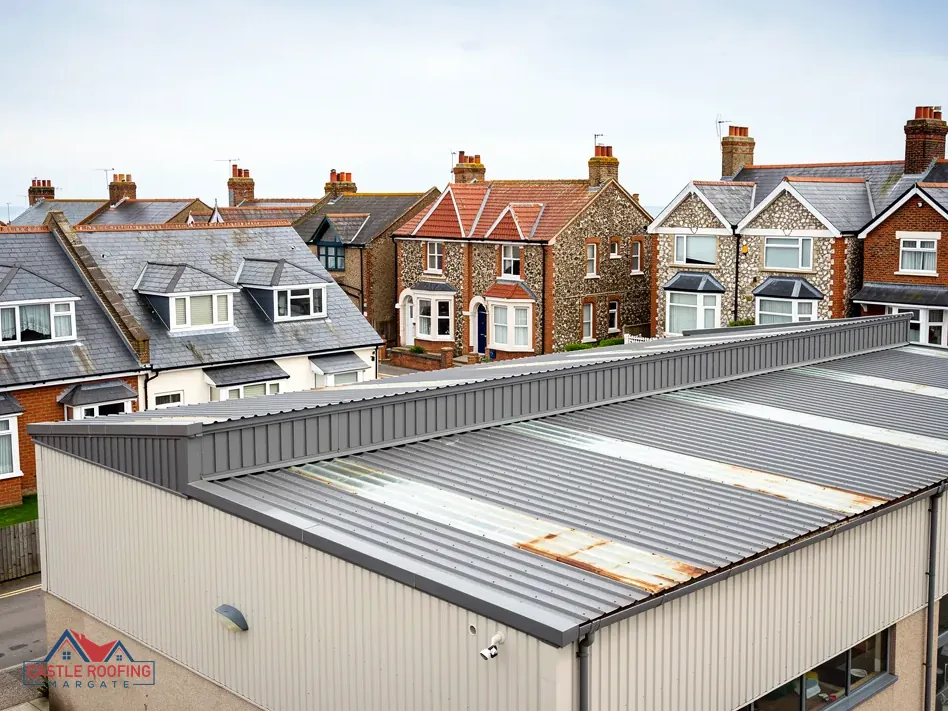
Cladding is a skin of sheets or panels fixed to rails over the frame. Damage tends to be local: a forklift strike on a ground-level panel, a sheet lifted at one corner in a gale, a split where a fixing has pulled through. Where the damage is local and the neighbouring sheets are sound, replacing the affected sheet or panel is a normal repair.
The things that decide whether it works are practical ones. Is the profile still made, or can a matching sheet be found? Are the rails behind the sheet sound? Does the sheet below or beside it overlap the damaged one in a way that means disturbing more than you planned?
A repair makes less sense when the same fault repeats along the elevation. If fixings are corroding sheet after sheet, or the cut edges are rusting, patching one panel moves the problem along the wall. Our answer on cut-edge corrosion explains that case.
The test is the next sheet along: if it is sound, a repair holds. If it is not, the survey should say how far the sound area runs.
Fixings, laps and weathering details
Leaks in sheet cladding tend to trace back to a few places rather than the middle of a sheet. Check these during the survey:
- Fixings that have backed out, corroded or pulled through the sheet, leaving an enlarged hole.
- Side laps and end laps that have opened, where sheets no longer sit tight against each other.
- Sealing strips or sealant at laps that have perished or been squeezed out.
- Flashings at the base, corners, openings and the junction with the roof, where water is directed back into the wall.
Approved Document C para 6.8 deals with fixing on roofs rather than walls, but on an elevation the fixing pattern matters just as much, and a replacement sheet held by fewer fasteners than its neighbours is a weak spot in the next gale, so it gets as many as the sheets beside it, in the same places.
For slate and tile cladding on walls, BS 5534 is the code of practice, since its title covers slating and tiling for pitched roofs and vertical cladding. It is a standard, not the law, and the fixing detail for each job should follow the maker's data sheet.
Safety, access and older sheets
Work on a cladded elevation means working at height. Regulation 6(3) of the Work at Height Regulations 2005 puts the duty on the employer to guard against a fall wherever that is reasonably practicable. On a tall elevation we put up a scaffold or bring in a mobile access platform for the work, not a ladder.
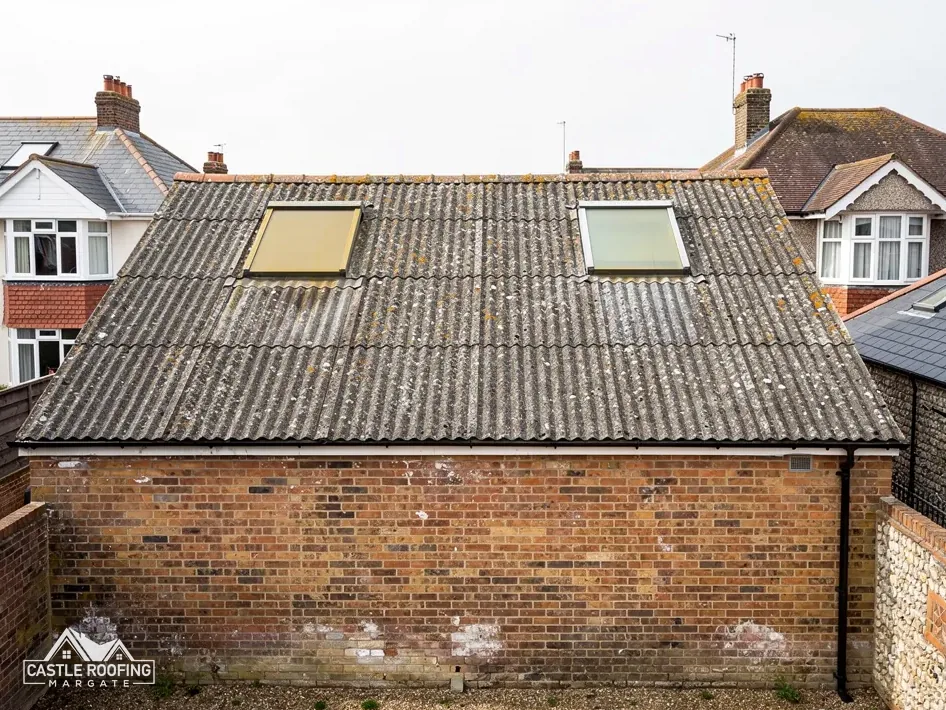
The pre-2000 question applies to cladding as it does to roofs. HSE's year-2000 rule covers the walls as well as the roof: a unit built or refitted before then is presumed to hold asbestos, so its sheet cladding is left alone until a sample result is back. Nobody drills, cuts or snaps a sheet to see what it is. On a unit with sheeting that old, that single step can decide whether a repair is a half-day patch or a controlled job with a specialist.
For a roof-edge job, access also shapes the repair. Our page on roof edge protection covers what is needed along the eaves.
If the sheet turns out to be asbestos cement, the survey result decides who may do the work, as set out in the asbestos survey answer.
What the survey and the written price cover
A cladding survey walks every elevation and records the damaged sheets, the state of fixings and laps, the flashings, and what lies behind any hole or stain. Photographs and a plan of the elevation make it easy to agree the extent.
From that comes one written price for the agreed scope. The price depends on the number of sheets, the access needed, the availability of a matching profile and any extra work that the survey reveals. Check that a quote states what access is included and how VAT is treated.
If the profile has been discontinued, the options are a close match that overlaps correctly, replacing a full run so the profile stays consistent, or overcladding the elevation. The survey report should set out which options are workable, and the choice rests with the building owner.
Other roof and cladding questions are collected under commercial roofing. Looking first means nothing is priced from a guess, and the owner sees the evidence behind the figure, sheet by sheet, before agreeing to it.