You will see why covered timbers worry surveyors, what the Energy Saving Trust says about leak water and open-cell foam, which other pressures push owners to remove it, and what a roofer looks at once the roof is bare.
Spray foam has a simple pitch. An installer arrives, coats the underside of the roof with foam that swells to fill every gap, and leaves a loft that feels warmer. For some owners that is exactly what happened and nothing more needs saying. For others the story has a second chapter, in which the foam is taken out again.
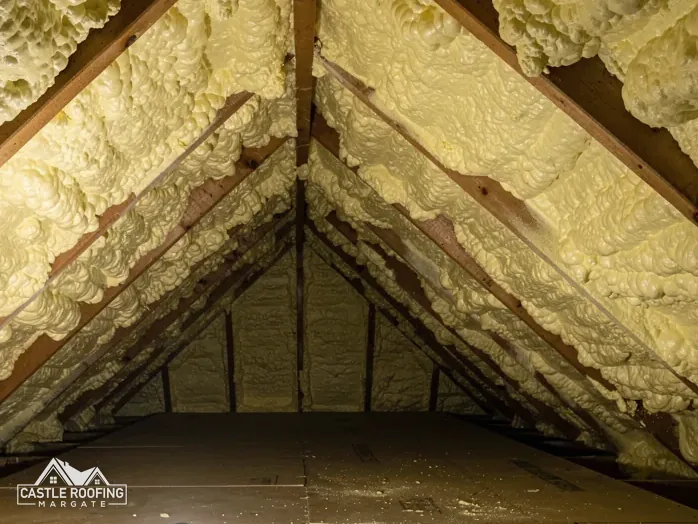
The reasons are not mysterious, and they are not all about a failed product. They come from what spray foam does to the roof timbers: it covers them, so nobody can see them. A roof that cannot be seen cannot be checked, and the question of what is going on under the foam soon turns into a worry for the owner, the surveyor and the lender.
Here we set out the main reasons, using what RICS and the Energy Saving Trust have published, and finish with what a roofer checks after removal. It is general information, not a verdict on your roof. Our spray foam insulation removal page covers the work itself.
The timber you can no longer see
A pitched roof is a timber frame with a covering on top. Rafters carry the weight, battens carry the slates or tiles, and the underlay behind them is the second line of defence if water gets past the covering. The roof stays sound for generations when that frame stays dry.
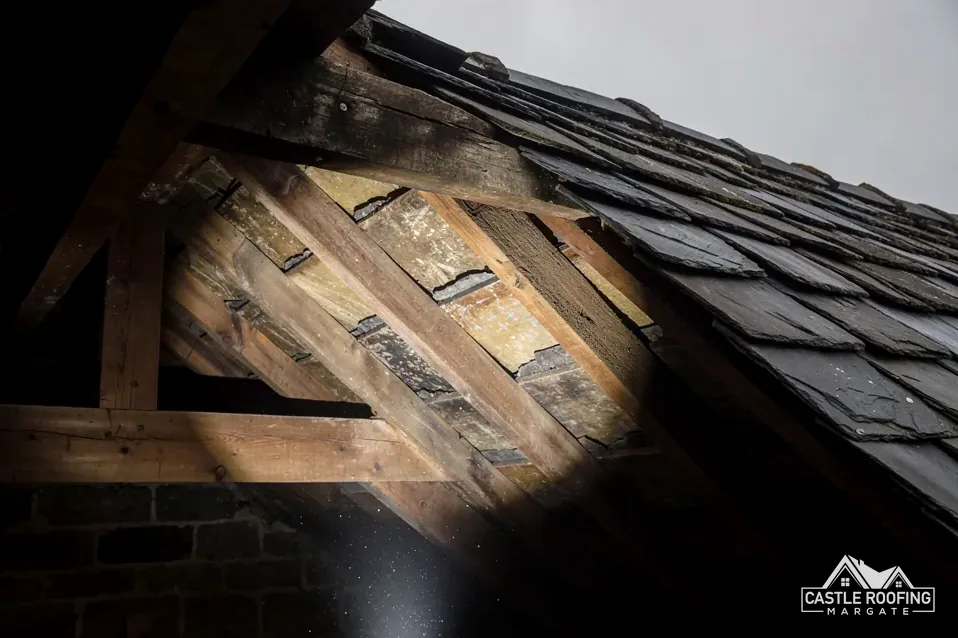
Roofers and surveyors judge the frame by looking at it. They watch for dark stains, softness at the ends of rafters, daylight where there should be none and tide marks on the underlay. In a loft with ordinary blanket insulation, all of this can be seen from inside with a torch. A torch and a ladder used to be enough to judge a loft; with foam on the slope, that check stops working. The same goes for a surveyor checking a house before you buy it.
Spray foam changes that. Once the foam has bonded to the rafters, the underlay and the back of the covering, it hides them in one layer, and the RICS consumer guide acknowledges that a full inspection of timber under foam is not possible. For an owner this is the heart of the matter. The foam may be doing nothing wrong. But if you cannot see the timbers, you cannot show anyone else they are sound, and a removal can be about getting the evidence back. Our page on spray foam and timber rot goes into this in more detail.
Moisture that has nowhere to go
Water reaches roof timbers in two ways. It comes in from outside, through a cracked tile or a failed flashing, and it comes from inside, as moisture in the warm air of the house. A traditional loft deals with both by being ventilated and by letting the timbers breathe and dry.
Foam sprayed onto the timber changes how it dries. The Energy Saving Trust explains that foam across the rafters partly seals them, which is why leak water can set rot going out of sight. It sees open-cell foam as carrying a risk that is much lower, never zero, and it steers owners away from spraying a leaking roof at all.
Two things stand out.
- The risk is tied to a leak, so a sound roof is the best safeguard.
- The Trust's wording is about degree and not absolutes.
That makes a small, slow leak under foam the case to worry about. A slipped slate or a failed lead flashing might drip for months onto timber that is coated and cannot be seen. By the time a stain shows on a ceiling, the damage may have spread behind the foam.
Condensation is a separate matter from a leak. It comes from warm, damp air indoors meeting a cold surface, and it is managed by ventilation and by keeping the roof's layers in the right order. The code of practice for this is BS 5250:2021.
Fix a leaking roof first, whatever insulation is going in, and above all before anything is sprayed.
Where foam is already up and a leak is suspected, the first job is to find the source, which can mean opening the foam at the likely spot.
Lenders, surveys and the paperwork problem
A second group of owners removes foam because of money, not damp. RICS launched its consumer guide with a press release in March 2023 that mentioned unease in particular lending sectors, equity release among them, that was by then reaching lenders more widely.
For an owner this turns into a series of small obstacles. A homebuyer survey notes the foam. A buyer's lender asks for a specialist report. A remortgage stalls while a valuer decides. The guide's advice is to ask your own provider whether its policy permits foam, and policies differ.
Not every owner meets these obstacles, and none is a certainty. An owner who is not selling and not borrowing may never meet them at all, so they are a reason to know your position, not a reason to worry. If a sale is planned, tell your solicitor early, since it is far easier to settle the roof question before an offer than during the conveyancing. The reasons to remove the foam in this group are:
- A buyer or lender has asked to see the timbers and nothing else will answer the question.
- The owner wants to sell, and wants the roof space to be an asset and not a query.
- The owner has an equity release plan in mind and has been told the foam is a concern.
- The roof needs repair work, and the foam stops the repairer reaching the fault.
Our article on whether spray foam can be removed covers how that is done, and the companion post on selling and remortgaging covers the lender side in full.
What foam can do to later repairs
Some removals come down to the job a roof asks of its owner over the years. A roof is repaired many times: a slipped slate here, a failed flashing there, a new batten when one splits. Foam on the underside makes each of those jobs harder.
The reasons are plain trade logic, and they vary from roof to roof:
- Foam that has bonded to the back of the covering can mean a single tile cannot be lifted without cutting through the foam beneath it.
- Foam over the battens and underlay hides the nail points and tears that show a roofer where water is getting in.
- Foam packed into the eaves can interfere with ventilation paths that the roof was built with.
- Foam across the wall plate and at the gable can cover the junctions where moisture can find a way in.
None of this applies to every installation, and some are tidy. The thread running through the list is that foam on a roof cannot be taken back in small steps. If the roof then needs attention, the work meets a layer that has to be cut or scraped away first.
Removal is therefore not always about the product failing. Often it is about getting back to a roof that can be maintained, repaired and sold in the ordinary way, as our page on re-felting after spray foam removal sets out. Ask a roofer to explain what the foam is bonded to on your roof before agreeing to any removal, because the method and the time depend on it.
What a roofer checks once the foam is off
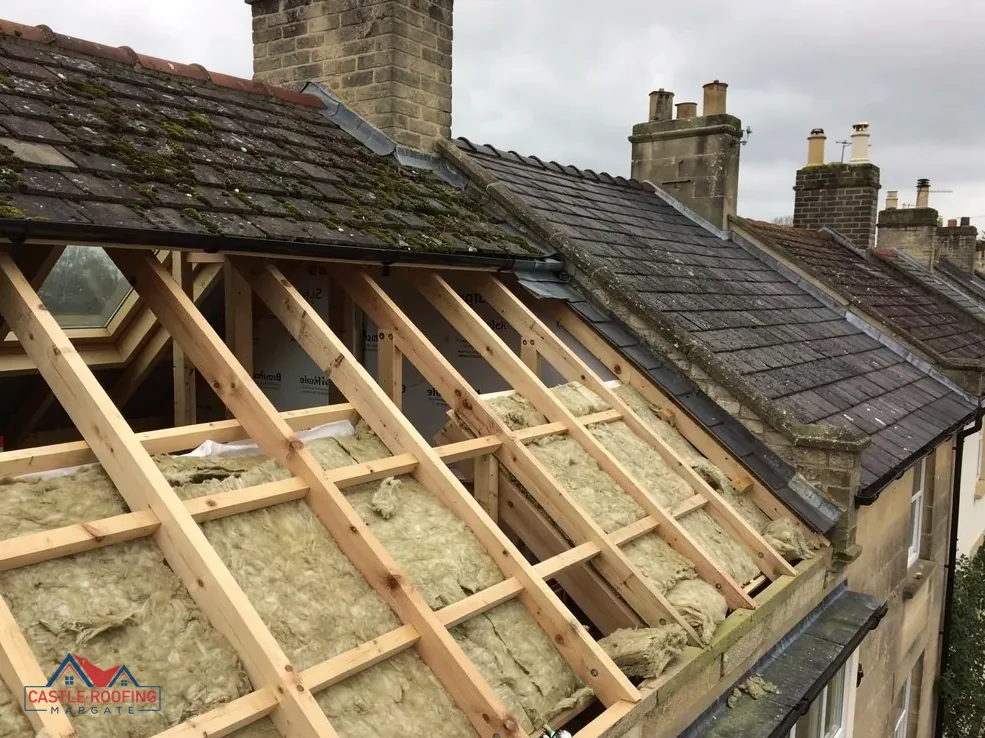
Removal is the start of the useful part. With the foam off, the roof is visible again for the first time since the installation, and a roofer can do the inspection that was impossible before. A good visit works through the roof in a set order:
- Every rafter, looking for darkening, softness at the ends and any sign of past damp.
- The battens and the underlay, noting tears, wet patches or rust on the nails.
- The wall plates and the junction with the gable walls.
- The back of the roof covering, looking for slates and tiles that have slipped, cracked or gone missing under the foam.
- The lead work and chimney junctions, from below as well as above.
What comes next depends on what turns up. Sound timber can be left, with a new insulation layer and proper ventilation put in. Damaged timber needs a decision about repair or replacement, and a structural opinion if the damage is large. Failed underlay may mean part of the roof is re-felted.
Photographs of each slope, and a short written note, give an owner a record to show a buyer or lender. The price for work like this follows a survey and arrives in writing as one total.
Each finding goes into the note, even a minor one, because a clean record only means something if it records the small things as well.
When removal is worth considering, and when it is not
Not every spray foam roof needs to be stripped. Removal is a disruptive, dusty job, and the decision deserves the same care as the installation did. A few questions help an owner decide.
| Situation | Leaning |
|---|---|
| Roof is sound, no leaks, no sale planned | Leave and monitor |
| A leak was found under or near the foam | Look at the timbers |
| A lender or buyer wants the timbers seen | Remove, at least in part |
| Repairs to tiles or flashings are blocked | Remove the foam at the fault |
The first row matters. If nothing is wrong and nobody is asking, the sensible step is to keep an eye on the ceilings and the roof covering, and to deal with any leak at once. Whether spray foam insulation is bad is a question with a balanced answer, and that answer depends on the roof.
A second opinion is reasonable before a large job. A roofer can look in through the hatch using a torch and a camera, note where the foam meets the wall plate and the eaves, and say where a small opening would tell you most.
If you do decide to go ahead, ask for the removal to be done with a record of the timbers made at the same visit. The point of taking foam out is to learn what is beneath it, and a removal without a record leaves that question open.