Why the dense kind grips so hard
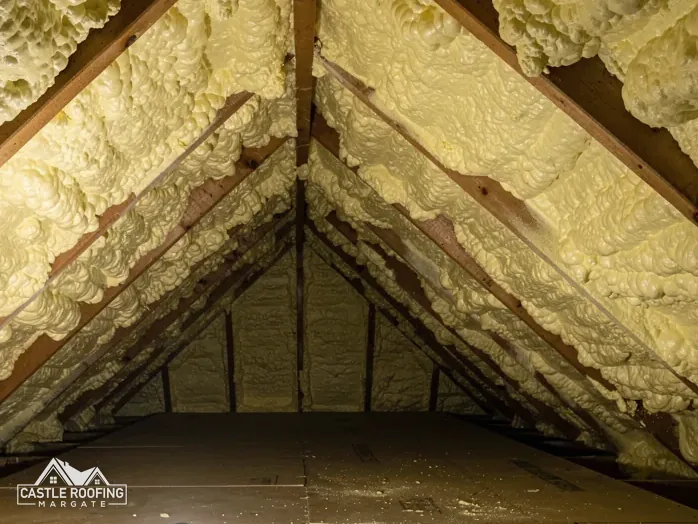
Closed-cell foam sets as a rigid, tightly packed material. Sprayed against the underside of a roof, it bonds to the surface behind it: the rafters, the battens and often the underlay. Where it has expanded into gaps, it locks itself into them like a key in a lock.
Compare it with a softer foam, which can be eased away with the hands. A rigid foam does not give. It has to be cut, and the cutting must go along the line between the foam and the timber without digging into either.
Details of the difference between the two types are set out in the guide to open-cell and closed-cell foam.
For the owner, the result is simple. The harder the foam, the more time, care and patience the removal calls for, and the more the survey matters in setting the plan. The practical effect is on the pace. Rigid foam can come away in blocks or in splinters, and neither can be hurried. So the first rafter bay is worked slowly, to learn how this particular foam behaves before the pace picks up.
How the cutting is done
The usual order of work is:
- protect the loft floor and seal the hatch
- score the foam along the rafter edges so it breaks away in manageable pieces
- lever and cut each piece free, working from the eaves upward or from the open end of the roof
- scrape the timber to remove what remains stuck to it
- bag the waste and carry it out as the work proceeds
Hand tools do the fine work close to the timber. Power tools may speed the bulk cutting, but a roofer keeps them away from the rafters and the felt, because a slip scars wood that has to carry the roof.
Dust sheets, masks and a clear route out are in place before any cutting starts. Rigid offcuts are awkward to handle, and sacks are filled only part way so that nobody carries more than they can safely lift.
Offcuts from rigid foam are bulky and sharp-edged. They are bagged in strong sacks as soon as they come off, so they do not scatter across the joists, and the loft floor is checked at the end of each session for pieces that have dropped between them.
More felt damage is likely
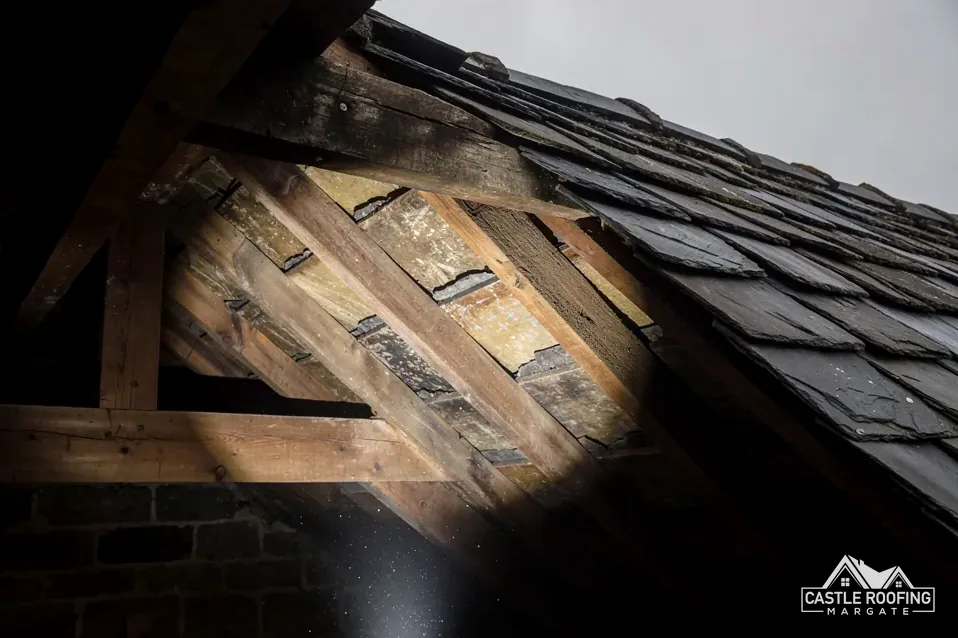
Foam that has bonded to the underlay does not come away cleanly. As a rigid slab is levered off, it can pull the felt with it, tearing it along the battens or leaving strips stuck to the foam. In general terms, the harder the foam, the greater the chance that this happens.
The roofer therefore expects to find torn, thinned or detached felt, and checks for it as each section is cleared. Where the felt is lost, the batten space can be opened to water and the covering is no longer fully protected from the underside.
The timbers get the same attention. The Energy Saving Trust says that water getting behind spray foam causes timbers to rot, and RICS adds that timber under foam cannot be properly viewed. Once the rigid foam is gone, the rafters can finally be probed, measured and photographed.
Anything soft or stained is marked for repair, and the findings go in the written price. The roofer photographs each stretch of exposed timber as it comes clear, noting the position along the roof. You get that record, and it is the evidence that the timbers were seen, which is what any later buyer's surveyor will want to know.
Re-felting after a hard foam
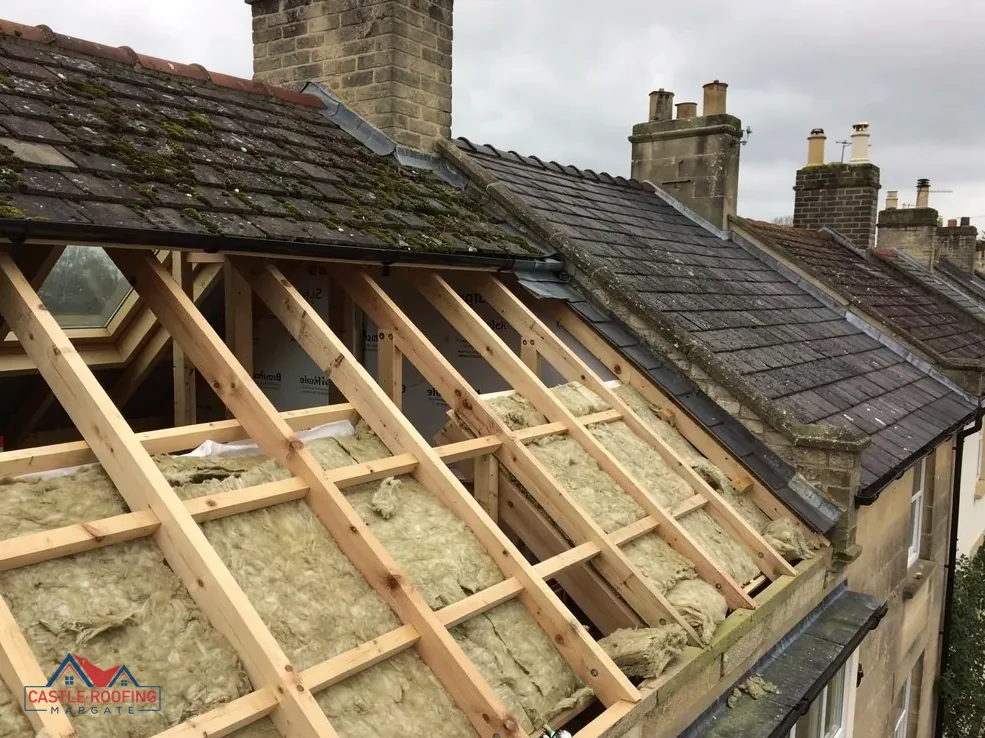
With closed-cell foam it is sensible to plan for new felt from the start, even if the survey cannot say how much. Where felt has gone, fresh underlay is laid over the rafters and under new battens, which means lifting the covering in sections.
That work is larger than clearing foam from inside, so it affects the programme and the cost. The re-felting guide sets out how it is done and how the roof is kept weathertight while it is open.
New ventilation follows. A cold roof needs air to move through the eaves, and any new underlay has to suit the ventilation plan, with BS 5250:2021 as the code that applies.
The price arrives in writing once the survey is done. For the wider service, see spray foam removal, which follows the job from first visit to finished loft. A closed-cell roof is not a lost cause: it can be cleared, re-felted and put right, leaving the roof in a condition that can finally be checked. The survey sets out what yours is likely to need before you decide anything.