

Roofers in Fordwich
14.2 road miles from Margate. Careful roofing for Fordwich's old houses and civic buildings: repairs, re-roofs, chimneys and lead, with one total in writing once the survey is done.
- Canterbury planningPlanning sits with Canterbury City Council.
- Two conservation areasTwo conservation areas within 0.75 km of the village.
- STG PartnershipBuilding control through STG, based in Rochester.
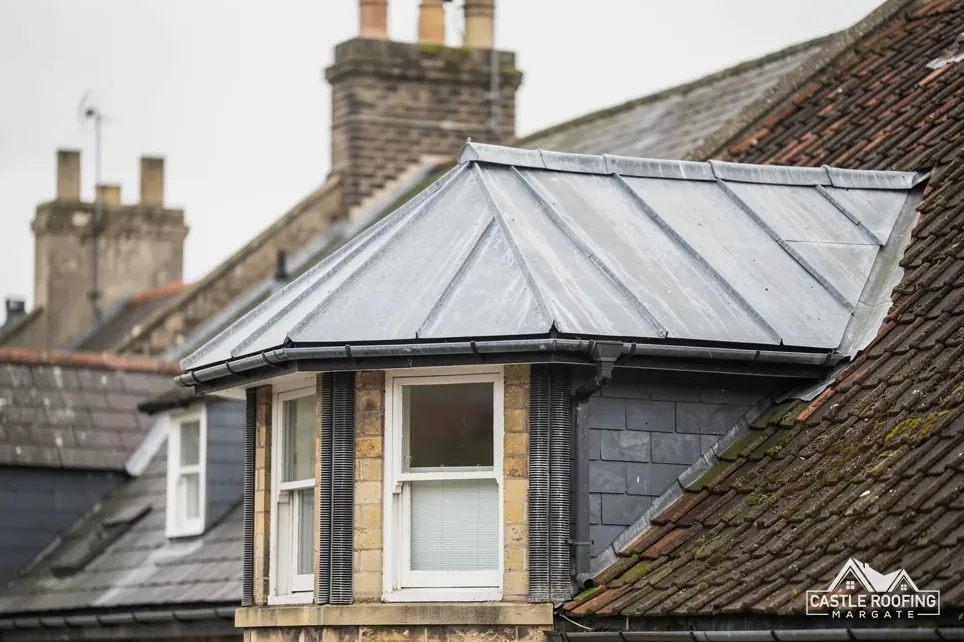
A Trust church, two Grade I neighbours in Sturry and a shared boundary
Trust church
Grade I St Mary's is a Churches Conservation Trust church, so its roof needs listed building consent.
Shared boundary
The Sturry and Fordwich conservation areas both fall within 0.75 km of the centre, and your address may sit in either.
High Street
Canterbury's Article 4 data lists numbers 1 to 6 High Street, so owners there should ask the council first.
Fordwich, 372 residents
Fordwich's listings and boundaries before a roof is touched
| Council | Canterbury City Council |
|---|---|
| Building control | STG Building Control Partnership |
| Scaffold and skip licences | Kent County Council |
| Conservation area | Sturry; Fordwich |
| Population, 2021 | 372 (Fordwich parish) |
| From Margate | 14.2 road miles, about 24 min |
| Usual residents, 2021 Census | 372, Fordwich parish |
| Grade I, first listed 1967 | St Mary's, Fordwich; St Nicholas, Sturry |
| Grade I, first listed 1952 | The School Hall, Sturry |
| Listed entries within 900 m | 58, National Heritage List |
Fordwich is a small parish in Canterbury City Council's area, so planning and building control through STG follow the Canterbury route while the highway licence comes from Kent County Council, with 58 listed entries within 900 metres of the village centre.
Sources: ONS Census 2021, Canterbury City Council, Kent County Council, OSRM road routing.
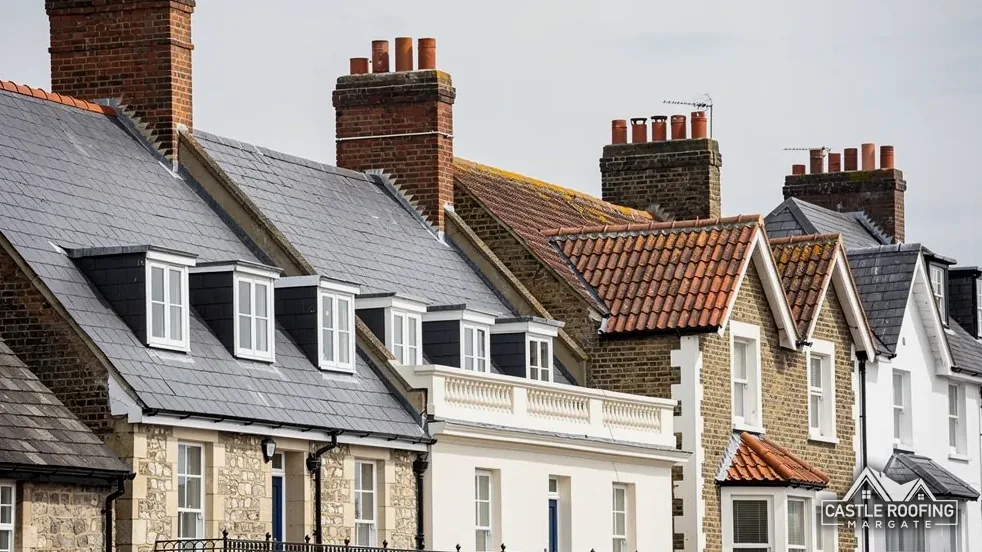
Fordwich, grade by grade
Fordwich roofs, from a Grade I church in the Trust's care to the notice a scaffolder must give
Three chapters: the Grade I buildings and the church routes, the boundaries and Article 4 entries on King Street and the High Street, and Kent's scaffold and skip rules.

Chapter 01 of 03
St Mary's, the Trust and two Sturry neighbours
Fordwich had 372 usual residents at the 2021 Census, and Historic England shows 58 listed entries within 900 metres of the village centre point. With numbers like that, listing is the first thing to check on a roof here. Fordwich's own parish church, St Mary's, has been Grade I since 30 January 1967. Two more Grade I entries fall inside that radius but stand over the boundary in Sturry: the Church of St Nicholas, also first listed on 30 January 1967, and The School Hall, first listed on 29 September 1952.
Listing attaches to the entire building, so the roof covering, the timbers beneath it, the lead where roof meets wall and the rainwater goods all fall within it. Section 7 of the Planning (Listed Buildings and Conservation Areas) Act 1990 requires consent for works that would change what makes the building special. For a Grade I roof that is a high bar, and it is the reason a quick patch with whatever is in the van is the wrong approach. Lead, stone and clay or slate coverings each have their own ways of failing, and a repair has to suit the material it joins.
Churches are a case apart, because the route turns on who looks after the building. The Churches Conservation Trust looks after St Mary's, and the exemption the law gives to churches in use does not reach a Trust building, so roof work there needs listed building consent from Canterbury City Council, exactly as a listed house would. A Church of England church still used for worship goes through the faculty system instead, and a cathedral answers to the Care of Cathedrals Measure; whether St Nicholas over in Sturry is in that position is confirmed before any work is planned. Each of the Methodist, Baptist, Catholic and United Reformed churches runs its own internal procedure for buildings in use, a Quaker or Unitarian meeting house takes the ordinary consent route, and a scheduled monument needs scheduled monument consent.
For a house or hall the sequence is shorter. We look at the entry, inspect the roof from the ground and close up, and send you photos of the slopes, valleys and stacks so you can follow what we describe. If the job needs consent, Canterbury City Council decides it, and our lead roofing and roof inspections pages show the kind of work involved. No start date is promised before consent is in place, because the scaffold date follows the decision and never leads it. A written total follows only once the route is clear.
Myth
Listing protects only the front, so the back slope is fair game.FactListing covers the whole building; section 7 asks for consent to works affecting its character.
Myth
A church roof is handled like a house roof.FactThe route depends on who uses the building, from faculty to listed building consent.
Myth
Grade I means no roof repair.FactRepairs go ahead, with consent where character is affected and materials matched.
Source: Planning (Listed Buildings and Conservation Areas) Act 1990, s7; DCMS ecclesiastical exemption guidance
Chapter 02 of 03
King Street, the High Street and the Article 4 entries
The national planning dataset places two conservation areas within about 0.75 km of the centre of Fordwich, Sturry and Fordwich. Canterbury City Council counts 97 conservation areas across its district, and the council's maps show which one, if any, covers your house. Inside a conservation area the General Permitted Development Order treats the land as article 2(3) land, which takes the dormer allowance away. Our roof window planning guide covers what applies to dormers and roof windows.
Article 4 is a separate layer. A direction under it lets a council withdraw named permitted development rights over a defined area. Canterbury's published data lists 18 Article 4 areas touching Fordwich. They include a wide-area direction dated 25 February 2015 and effective from 25 February 2016, River Cottage on King Street and numbers 1 to 6 High Street. The classes of work each one removes are for Canterbury City Council to state, so owners of those houses should get the council's answer in writing before commissioning anything.

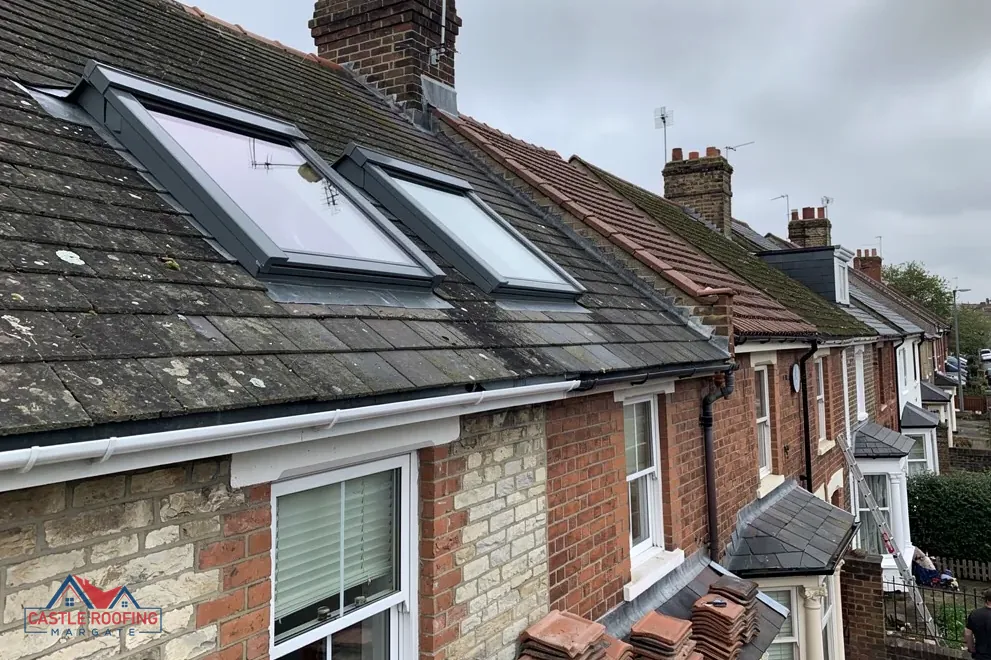
Roofs in lanes like these are full of small junctions, and each junction is a place a leak can start. A valley is the trough formed where two roof slopes run into each other. The verge is the sloping side edge of a roof that ends at a gable wall. A soaker is a small folded sheet of lead woven in beside a chimney or wall so that water runs over it and away. Each is a place where a repair must follow the existing detail, and each can be seen from the photos we send you. Permitted development does not reach flats: Canterbury City Council says a flat or maisonette has none of those rights, so external changes to a converted house in the village need planning permission.
Building control follows its own test. Canterbury City Council tells applicants to apply through its building control partner, STG, on 01634 331133. The Planning Portal's guide puts re-roofing outside the approval rules when under 25 per cent of the building envelope and under 50 per cent of the roof is affected, with an exception for a covering that adds 15 per cent or more to the weight. Heavier coverings on old timbers are a case for an engineer's opinion first, and a listed house needs its consent as well.
Chapter 03 of 03
Scaffold and skip rules for a Fordwich street
Scaffold that stands on a Fordwich street or footway is covered by section 169 of the Highways Act 1980, and Kent County Council issues the licence as the highway authority. Canterbury City Council does not. Kent's own page says the firm responsible for the scaffold should lodge the application, which is why scaffolding dates are fixed with that firm once the roof has been surveyed.
The terms attached to the licence shape how a job is laid out. The scaffold has to leave at least 1.2 metre between itself and the carriageway, the upright tubes are painted white from pavement level to a height of 2.5 metres, and a scaffold in or within 45 centimetres of the carriageway must be lit at night. Applications and renewals go in 5 working days before the start. The fee for 2026 to 2027 is £52 per week, and Kent may add a £78 inspection charge if it decides a visit is necessary.
A skip is a separate application, again with 5 working days' notice, at £45 per week for 2026 to 2027. Kent's terms cap a skip at 5 metres long and 2 metres wide. A skip is not allowed to take over the footway unless the council expressly permits it, and 1.5 metres must stay free for people walking past. A skip put down with no permit incurs a £120 inspection fee plus a £45 retrospective permit, so the permit comes first. Waste planning for a Fordwich roof starts from those limits, so loads are timed and the skip is cleared before it overstays.
The Met Office's Manston station gives 1991 to 2020 averages of about 613 mm of rain a year, 110.05 days with 1 mm or more of rain and 21.43 days of air frost. They are readings from Manston, not from Fordwich, and they are quoted as averages only. What they tell a roofer is that slates, tiles and lead are working through wet days and frosts every year, so fixings are calculated for how exposed this particular roof is. Before the scaffold goes up you are told the dates, the skip day and who is applying, so nothing arrives on the street unannounced.
| Rule | Figure |
|---|---|
| Scaffold application notice | 5 working days |
| Skip application notice | 5 working days |
| Scaffold to carriageway distance | 1.2 metre |
| White standards from pavement | 2.5 metres |
| Largest skip, length by width | 5 m by 2 m |
Source: Kent County Council, scaffold and skip terms and conditions
10-Year workmanship guarantee. In writing
Around Fordwich
Fordwich and the next parishes along
Fordwich sits among the Canterbury district's villages, and Sturry is the nearest neighbour; the paperwork for a roof runs one way through Canterbury City Council, STG and Kent County Council across all of them.
Fordwich churches, High Street and boundaries
What route applies to roof repairs on a Grade I church in Fordwich?
St Mary's belongs to the Churches Conservation Trust's collection, and a Trust church has no ecclesiastical exemption, so listed building consent from Canterbury City Council is the route. A Church of England church still used for worship would go through the faculty system instead. The route is settled before any scaffold is booked or any slate lifted.
Is my Fordwich house inside the conservation area boundary?
Two conservation areas, Sturry and Fordwich, lie within 0.75 km of the village centre, and Canterbury City Council's maps show the line for each. Being inside one makes the land article 2(3) land and removes dormer rights, while a repair matching existing work is judged under planning law's section 55 test (Town and Country Planning Act 1990). Your address is plotted on the boundary map first.
What does Article 4 mean for numbers 1 to 6 High Street, Fordwich?
Canterbury's Article 4 data lists those six addresses, with River Cottage on King Street and a wide-area direction effective from 25 February 2016. A direction withdraws specified permitted development rights from a defined area, and Canterbury City Council is the body that says which of them are gone for a given Fordwich house. The job is planned from its reply.
Who deals with building control on a Fordwich re-roof?
STG Building Control Partnership, which Canterbury City Council names as the partner to apply through; its number is 01634 331133. By the Planning Portal's test, approval is not normally needed while the job stays under 25 per cent of the building envelope and under 50 per cent of the roof, while a covering that weighs 15 per cent or more extra needs approval, so tell us if the covering is changing.
How much notice does scaffolding on a Fordwich street need?
The scaffolder applies to Kent County Council at least 5 working days ahead of the licence date, and the council's fee for 2026 to 2027 is £52 per week. A skip is permitted separately, on its own application. Kent County Council's highways line, 03000 41 81 81, takes questions from anyone preparing to apply.
A Fordwich roof, seen up close first
Describe the problem or send a few pictures, then we fix a time to see your Fordwich roof; one total in writing follows.