
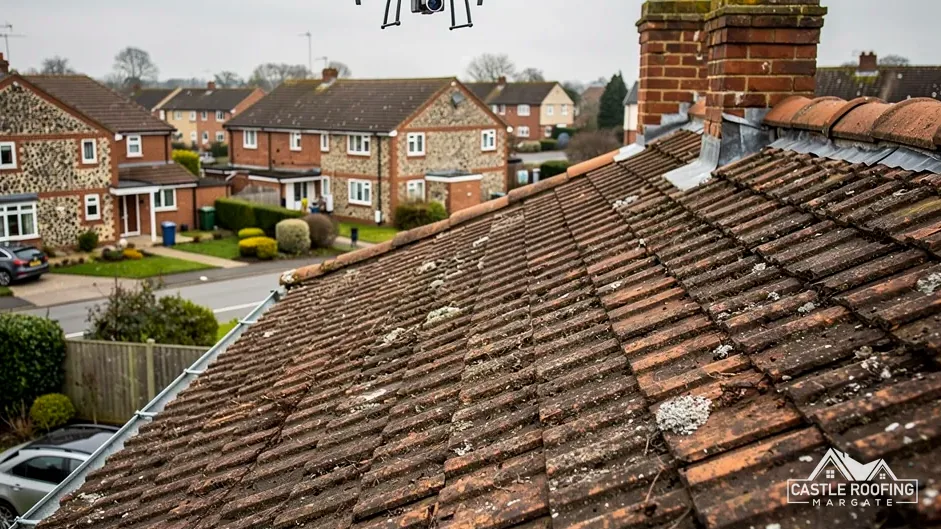
Roofers in Folkestone
28.5 road miles from Margate. Folkestone roof repairs, re-covers and leadwork, started with a survey of your roof and a set of photographs for you before anything is priced.
- Own conservation areaFolkestone conservation area within 0.75 km.
- Three Grade II*Three Grade II* listed buildings in the town.
- Council inspectsFolkestone & Hythe's own Building Control team.

Three starred listings and a council with its own re-roofing wording
Starred trio
The parish church, the War Memorial and Holy Trinity are all Grade II*, so roofs near them are set against the list.
Own wording
Folkestone & Hythe District Council names replacing roof coverings among alterations that may need approval, in its own words.
Storm record
Met Office records for the 1987 storm include a ferry driven onto the shore near Folkestone.
Folkestone, Folkestone & Hythe district
Folkestone's listed roofs and the council's re-roofing line
| Council | Folkestone & Hythe District Council |
|---|---|
| Building control | Folkestone & Hythe District Council's own Building Control team |
| Scaffold and skip licences | Kent County Council |
| Conservation area | Folkestone |
| Population, 2021 | 47,356 (Folkestone parish) |
| From Margate | 28.5 road miles, about 44 min |
| Parish Church of St Mary and St Eanswythe | Grade II*, first listed 5 December 1949 |
| Church of the Holy Trinity | Grade II*, first listed 11 March 1975 |
| Folkestone War Memorial | Grade II*, first listed 24 June 2010 |
| Folkestone & Hythe Building Control | 01303 853538, 10:00am to 4:00pm |
Folkestone has 47,356 residents, 92 listed entries within 900 metres of its centre and the sea only 0.34 km away, so listing and exposure both shape how a roof is consented and specified.
Sources: ONS Census 2021, Folkestone & Hythe District Council, Kent County Council, OSRM road routing.
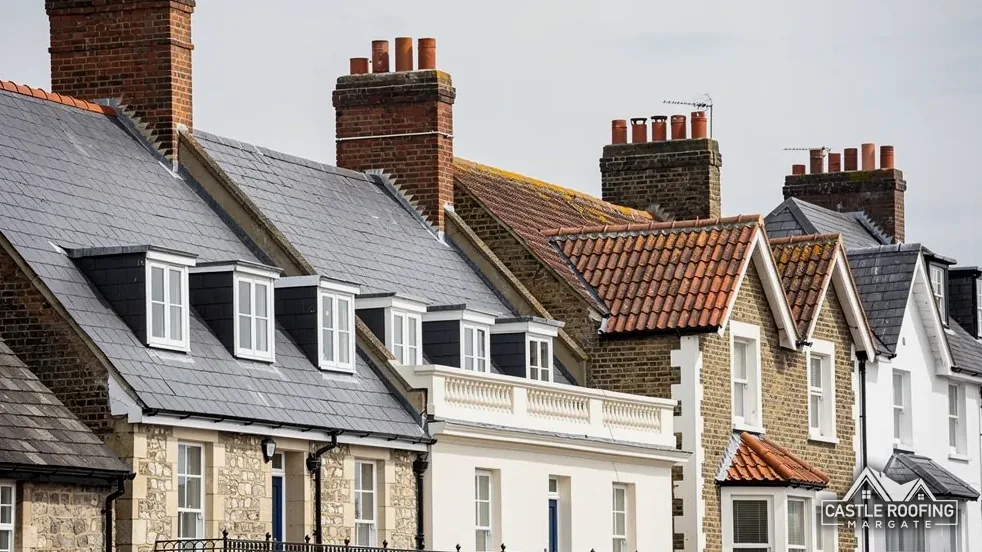
Folkestone, stars and storms
Folkestone roofs meet three Grade II* listings, a council with its own wording and exposure on the Channel
Three chapters: the starred listings and the 92 entries around them, what Folkestone & Hythe says about re-roofing and approval, and how exposure and highway licences shape a job.

Chapter 01 of 03
Three Grade II* buildings among 92 listed entries
Folkestone is 28.5 road miles from Margate, about 44 minutes' drive, and its parish held 47,356 usual residents at the 2021 Census. Historic England's National Heritage List shows 92 listed entries within 900 metres of the centre, a count wide enough that any roof in the middle of town deserves a look at the list before a ladder is carried in. The figure counts entries, and one entry can cover a terrace or a pair of houses, which is why the exact address on the quote matters.
Three Grade II* listings head the register. The Parish Church of St Mary and St Eanswythe was first listed on 5 December 1949, the Church of the Holy Trinity on 11 March 1975, and Folkestone War Memorial on 24 June 2010. The parish church serves the Church of England, so works to it are decided through a faculty and not by the council. A memorial has no roof to repair, but its late listing date is a reminder that the list is still growing, so an entry you were told did not exist ten years ago may exist now.
For a listed house, the test comes from section 7 of the Planning (Listed Buildings and Conservation Areas) Act 1990: consent before works that alter the building's character. Roofs carry much of that character, in the slope, the covering and the details at hips, valleys and stacks, and the whole building is protected. The Folkestone conservation area lies within about 0.75 km of the centre, and Folkestone & Hythe District Council points owners to its interactive map for the boundaries, and an Article 4 question is one to put to the council direct.
The way this works on a Folkestone survey is simple and fixed. We start with the roof itself, photograph every slope, and then match the address to the list and the map, so the consent route is settled alongside the specification. A listed or boundary house gets a specification written to match, in line with how we handle pitched roofing and lead roofing, and whether an application is in play is settled before any tiles are ordered. Flat sections on extensions, porches and garages go under flat roofing.
| Building | Grade | First listed |
|---|---|---|
| Parish church of St Mary and St Eanswythe | II* | 5 December 1949 |
| Church of the Holy Trinity | II* | 11 March 1975 |
| Folkestone War Memorial | II* | 24 June 2010 |
Source: Historic England, National Heritage List for England
Chapter 02 of 03
What Folkestone & Hythe says about re-roofing
Building Regulations in Folkestone are handled by Folkestone & Hythe District Council's own Building Control team, reached on 01303 853538 between 10:00am and 4:00pm. The distinction between a repair and a renewal of the covering shapes the team's answer, so the survey records how much of each slope is sound. The council's page lists "replacing roof coverings" among alterations you "may also need approval for", and it also says repairs, replacements and maintenance generally do not need approval. Both statements are the council's, and both are worth holding in mind at once.
The Planning Portal gives the national test, which no Kent district turns into a percentage of its own. On the Planning Portal's test, a re-roof needs no application only if less than 25 per cent of the building envelope and less than 50 per cent of the roof is affected. Weight matters too, and approval comes in regardless for a covering 15 per cent or more heavier, or one whose behaviour in a fire would depart significantly from the old. For a Folkestone address we use the council's wording and the Planning Portal's test together, and the Building Control team has the last word.
Myth
Folkestone & Hythe says a re-roof never needs approval.FactThe council lists replacing roof coverings among alterations that may need approval, while saying repairs and maintenance generally do not.
Myth
The 25 per cent test is Folkestone's own rule.FactIt is the Planning Portal's national test, and the council words its page differently.
Source: Folkestone & Hythe District Council, building control pages; Planning Portal
Planning is a separate matter, and a registered building control approver is a private route for the Building Regulations side only. If the house is a flat, planning permission is needed for outside changes, because the General Permitted Development Order leaves flats out of its definition of a dwellinghouse. For a house, re-covering is normally within permitted development, while a new window or dormer needs the conditions checked, and the planning guide for tile changes is the place to start.
Article 4 is one more layer to check. An Article 4 direction is a council's way of withdrawing named permitted development rights from a mapped area, and Folkestone & Hythe District Council publishes its directions through an interactive map. Check whether one applies to your address before altering any visible part of the roof, and keep the answer with the house papers. When you ring the Building Control team, have to hand the address, the share of the roof being replaced, the old and new coverings if you know them, and whether the house is listed. The team can say whether an application is needed, and a reply by email is worth keeping with the deeds.
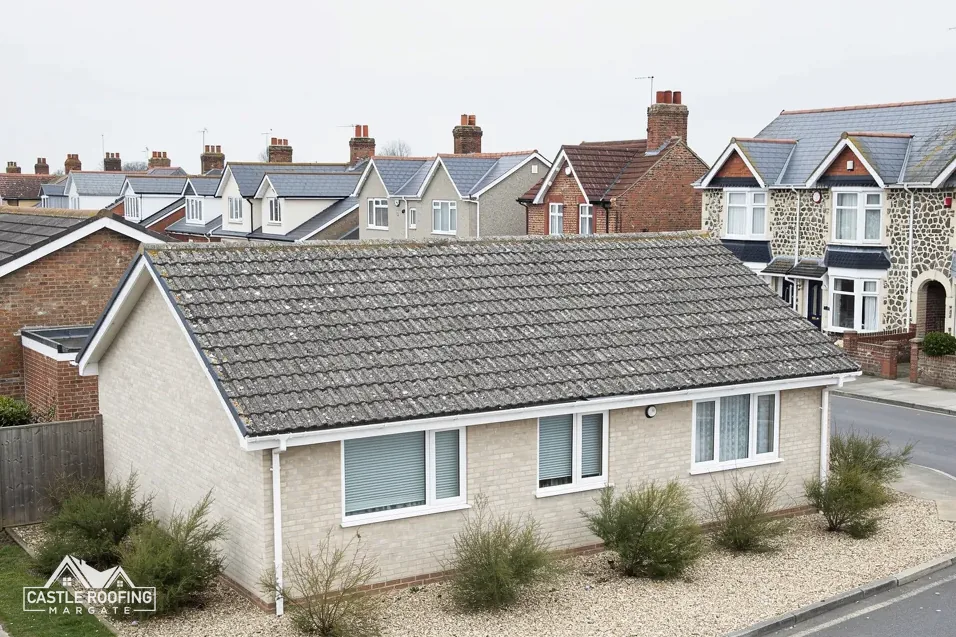
Chapter 03 of 03
The 1987 storm, exposure grading and a Folkestone scaffold
Met Office case studies on the Great Storm of 1987 describe one Channel ferry that ended up ashore near Folkestone, and Force 11 winds, 56 to 63 knots, along parts of the south-east coast. It is a reason for care, not a forecast, and what it does justify is a close look at the exposed edges: ridge tiles, verges at gable ends and any lead dressed over a stack. A Folkestone roof is a coastal-area roof, so under BS 5534 each fixing is chosen from a calculation for that particular site's exposure.
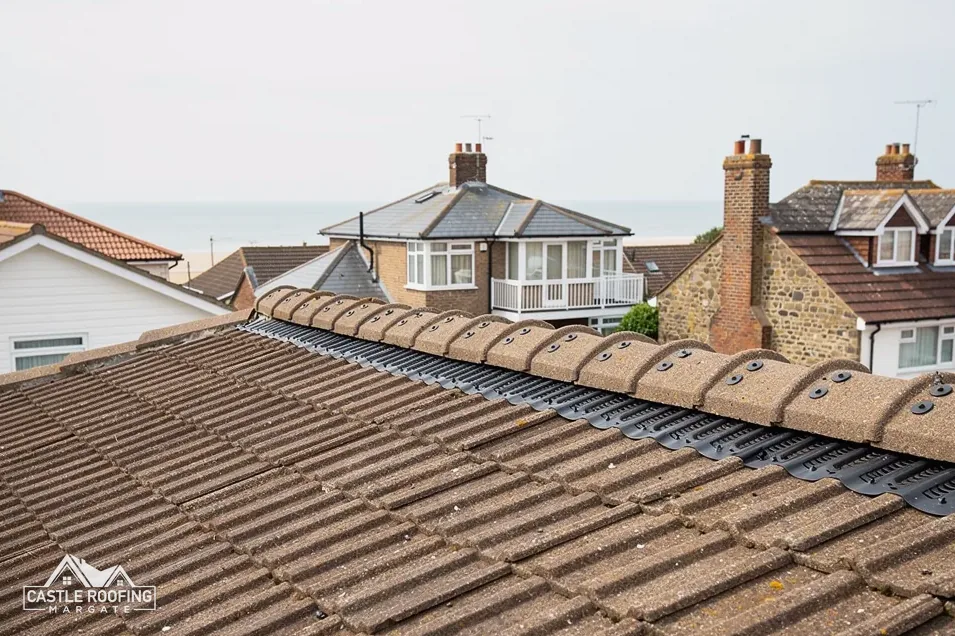
Cupa, the slate maker, treats hilltop, sloping, coastal and tall-building sites as higher exposure when grading a roof, and Marley describes BS 5534 as the source of the uplift calculations that set fixings. Put together, ridge, hip and verge fixings on a Folkestone job come from a calculation for that site, not from habit, and an exposed gable end is fixed accordingly. Where an earlier repair used a different fixing, the survey notes it and the schedule replaces it. For weather averages, the Met Office publishes figures for Manston, the Thanet station: about 613 mm of rain a year and a mean wind of 9.86 knots. They are Manston's, not Folkestone's, and serve as background rather than a Folkestone reading.
Kent County Council licenses any scaffold that occupies the highway, under section 169 of the Highways Act 1980, once the scaffolding firm has applied with 5 working days in hand. The council charges £52 per week for 2026 to 2027 and adds £78 if it inspects the site, and public liability insurance of £5 million is demanded of the applicant. Skips on the highway need a separate Kent County Council permit at £45 per week, no bigger than 5 m by 2 m. The licence period is built into the programme from the start, so a wet week that stretches the work is a delay the plan has already allowed for, and the licence is renewed in good time if the job runs on.
Each day you are told what has been done, the waste goes with us, and the written plan separates the fixings work from the covering so you can see where exposure has changed the specification. Our lead roofing detail at chimneys and abutments gets the same treatment: the code and fixing are set in the specification, not guessed.
10-Year workmanship guarantee. In writing
Around Folkestone
Folkestone, Sandgate and the Folkestone & Hythe boundary
Folkestone and its neighbour Sandgate share one district council, one Building Control team and one county highway authority, so crossing from one to the other changes the view from the roof but not the paperwork for it, whether the job is a repair, a re-cover or a chimney.
Folkestone roofs: starred listings, council wording and weather
What do Folkestone's Grade II* listings mean for a roof near the parish church?
Nothing changes for an unlisted house next door, which follows the conservation area and ordinary rules. A house with its own entry needs listed building consent before works alter its character, roof included. The parish church of St Mary and St Eanswythe serves the Church of England and goes through the faculty system instead.
Does re-roofing a Folkestone house need building control approval?
Folkestone & Hythe District Council says you may need approval for replacing roof coverings and that repairs and maintenance generally do not. The Planning Portal's test asks that less than 25 per cent of the envelope and less than 50 per cent of the roof be affected, and a covering 15 per cent or more heavier needs approval. The council's team is on 01303 853538.
How is a Folkestone roof fixed against Channel weather?
Under BS 5534 each site's exposure sets the fixings, and Cupa, the slate maker, treats coastal sites as higher exposure. The Met Office gives Manston averages of about 613 mm of rain a year and a mean wind of 9.86 knots. Those are reference figures from Thanet, not Folkestone readings, and they say nothing about any single Folkestone street.
Is there an Article 4 direction on my Folkestone street?
Folkestone & Hythe District Council publishes its directions through an interactive map. An Article 4 direction withdraws named permitted development rights from a mapped area, so before altering the outside of a roof, ask the council whether one applies to your address, in writing if you can, and keep the reply with the house papers.
Who puts in the scaffold request on a Folkestone job?
The highway authority, Kent County Council, gets the scaffolding firm's application and wants 5 working days' notice before the licence starts. The 2026 to 2027 fee is £52 per week, a site inspection adds £78 if needed, and a skip on the road takes its own permit at £45 per week. Kent County Council highways are on 03000 41 81 81.
Your Folkestone roof, surveyed before pricing
Send a photo and the street name; the list entry and the council's wording come first, and the survey ends in one total in writing.