From the rafters to the bag
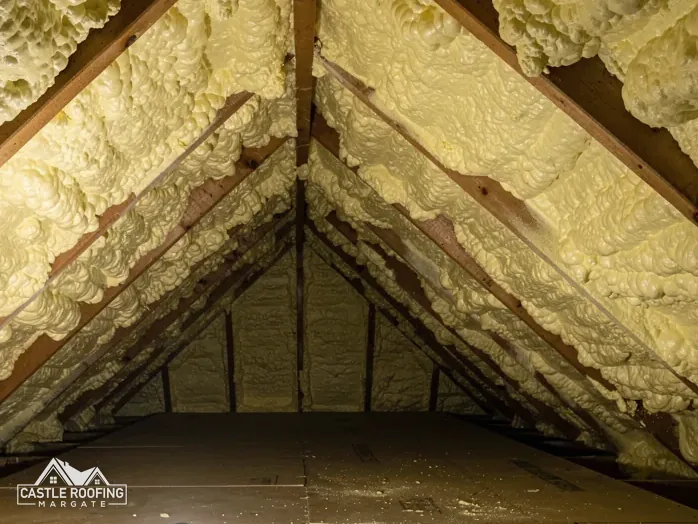
The journey starts the moment foam is cut away. It is scraped or pulled from the rafters in pieces of all sizes, from strips as long as a forearm down to powder, and the pieces go straight into bags instead of onto the loft floor.
Bagging in place matters for two reasons. It keeps the debris from spreading through the roof space, where it would otherwise be trodden into the boards and the insulation that is left. It also makes the waste easy to count and to carry, because a full bag has a size and weight a person can lift through a loft hatch.
Strong bags are used, and they are not overfilled, since a split sack on a staircase is a poor start to a clean-up. Foam is light for its volume, so bags can be filled to a good size without becoming heavy, but sharp offcuts and nails from old fixings can split a thin sack. A bag that bursts on the stairs is the sort of mess a crew wants to avoid.
Bags are tied, passed down the hatch, and stacked at the exit rather than left in the loft. The route to the door is clear before the first one comes down.
Carrying it out and away
How the bags leave the property depends on the house. Three routes are possible:
- down the stairs and out through the front door, protected with floor covers
- over the roof and down a chute onto the vehicle or into a container, where scaffold is already in place
- from an upstairs window onto the scaffold platform and down by hand
The survey picks the route for each house, because it is easier to choose once the hatch, stairs and front garden have been seen. A narrow hallway, a steep stair or a first-floor window each points to a different choice, and a chute needs scaffold in place.
The waste then goes in the roofer's vehicle or a container sited on the property, and the bags are loaded by hand rather than tipped. If a skip sits on the highway, the skip company requests the permit from Kent County Council. For 2026 to 2027 it costs £45 per week. Our removal process page shows where this fits.
The crew takes the waste with them when they finish, so nothing is left at the property.
Questions about who carries the waste
Waste leaving a property is worth a question or two. A householder who has hired a tradesperson can reasonably want to know how the rubbish will be moved on, and that it will not turn up fly-tipped down a lane. A few short questions put that right.
Ask who is taking the waste away, and whether it goes in their own vehicle or via a skip firm. Ask where it is going. Ask whether they can show you the details of their waste carrier registration, if you want to check them. Asking is normal, and a roofer who gets on with the job properly will not mind.
How a particular kind of waste is classified and handled is for the carrier and the disposal site to settle. What the householder needs is a clear answer and a plan that does not leave them with the problem.
Written down in the job notes, the arrangement is easy to refer back to if a question comes up later. A short line in the agreed scope is enough, and it costs nothing to add.
Leaving the site as it was found
When the last bag is out, the loft is swept and vacuumed, the dust sheets are folded and taken with the rest, and the landing and stairs are cleared. The aim is a house that looks as it did before, apart from a roof space you can now see into.
The foam is not the only thing that leaves. If old, damaged felt has to come out, it goes too, together with any lengths of batten or rafter cut out and replaced. A note of what was taken, with photographs, goes into your record of the work so you can see it was dealt with.
Foam waste is only one part of a roof job's waste. A scaffold, a chimney repair or a patch of re-roofing brings other material, and all of it is handled in the same spirit: collected daily, loaded properly and taken away by the firm doing the work.
Our page on how messy the job is covers the dust side, and spray foam removal describes the whole job.