Where the dust and fragments come from
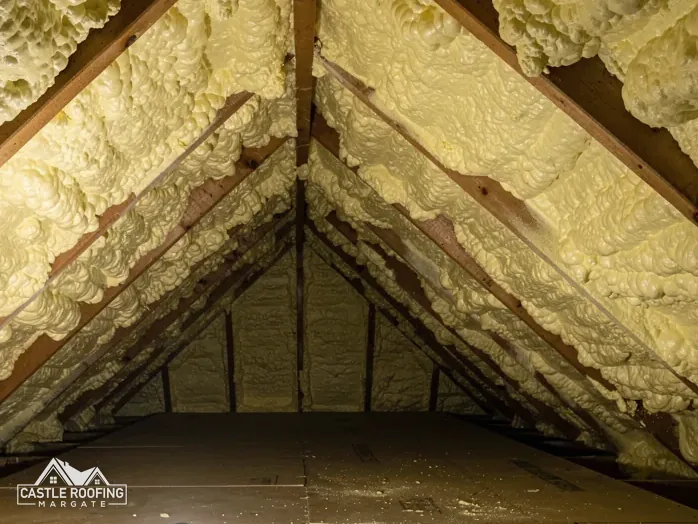
Spray foam is not lifted off in neat sheets. It sets against the rafters, the battens and the roof covering above them, so removal means cutting it, scraping it, and sometimes pulling it away in lumps. Each of those actions sheds crumbs, dust and fine particles into the air of the roof space.
Foam that is softer comes away more easily and makes a different kind of mess from a dense, hard foam that needs more cutting. The loft layout counts too: a low, cramped space with many hips and valleys has more corners for debris to settle in than a plain gable roof.
The point is not to pretend the job is clean. It is to plan for it. A crew that expects dust brings the right protection, works from one end to the other so waste is not walked through finished areas, and clears as it goes instead of leaving everything until the end.
The reassuring part is that the mess lives where the work is. Done properly, the rooms below should not need a deep clean afterwards, though a wipe of the landing and the hatch surround is always sensible. Ask the crew to show you the loft before they leave, so you can see for yourself what has been done and what remains.
Keeping it out of the rest of the house
Protection goes in before any foam is touched, and it stays until the last bag is out. These are the usual measures:
- dust sheets or polythene laid over the landing, the stairs and anything stored near the hatch
- the hatch opening sealed or screened from the landing side so loose dust cannot drift down
- a clear route marked from the loft to the door or the scaffold, so debris is not carried through rooms
- bagging of waste in the loft as it is removed, not afterwards
- breaks to clear surfaces, so the dust does not build up thick enough to disturb
Furniture and belongings in the loft should be moved before the day. Anything that cannot be moved is covered.
Doors to the rooms below can be closed, and windows near the work are better kept shut while the foam is cut. It helps to tell the crew about any dust sensitivities in the household beforehand, because the order of work and the protection can be adjusted around them. Say so at the survey, not on the morning.
Getting into the loft and out again
Access decides a lot of the tidiness. A wide hatch with a fixed ladder below it makes a loft easy to work and easy to clear. A tight hatch in a bathroom ceiling is slower, and every bag has to be squeezed through it.
The crew looks at access during the survey, so the day holds no surprises over how things get out. For some houses, bags are carried down the stairs and out of the front door. For others, particularly where a scaffold is up for roof work, waste can go out over the roof or down a chute, which keeps it out of the house altogether.
Where scaffold stands on the pavement, the scaffolder applies to Kent County Council for the licence it needs. The removal process page sets out where that sits in the order of work.
A clear path from the hatch to the outside helps more than anything. Move furniture from the landing, and clear the way to the front door, so the crew can carry bags without wrestling with ornaments.
What is left when the crew goes home
Each evening the loft is swept or vacuumed and the filled bags go out of the house. Nothing is left stacked on your landing overnight if it can be helped. Loose foam, offcuts and the dust sheets leave with the rest.
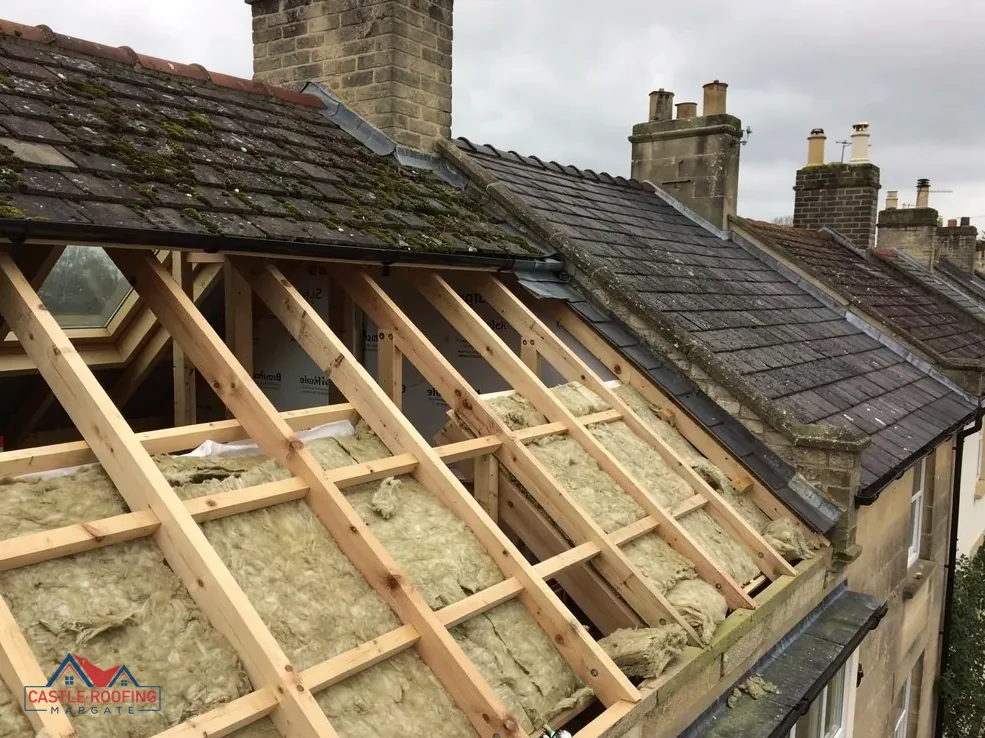
Once the foam is off, the timbers are bare. That is the moment they get inspected, and a bare loft is a clean-looking one. New insulation and ventilation can then be installed, and the finish is quite different from the grey, foamed state it started in.
Expect some fine residue on rafters and in corners. A thin skin can cling to the timber even after careful scraping, so ask at the survey what finish to expect on your type of foam.
The crew tells you each morning what the day holds, and each evening what comes next. Anything you want kept from the loft is set aside before work begins and handed back afterwards. If you want to look at the loft afterwards, it is yours to see, and spray foam removal ends with the roof left clear, with the waste taken away.