Cutting out the old slate and sliding in the new
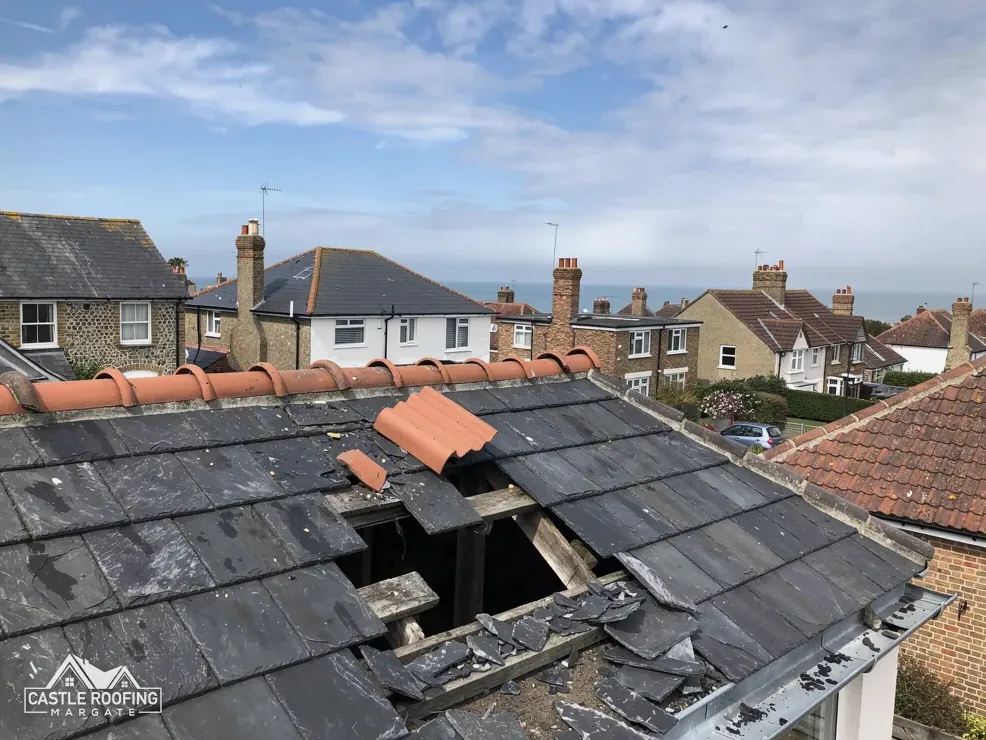
A slate roof is laid in rows called courses, each course overlapping the one below, and every slate is nailed to a timber batten (the thin strip running across the rafters). That overlap is why a broken slate can be swapped from the outside without opening up the roof.
The order of work on a single slate runs like this:
- Slide a slate ripper, a long flat tool with a hooked blade, under the broken slate and cut or pull the nails that held it.
- Take out the pieces, and check the batten behind for rot or splits.
- Choose a replacement of the same size, thickness and colour as its neighbours.
- Slide it up under the course above until its tail lines up with the row.
- Fix it with a tingle or a hook, so no nail hole is left to let rain in.
A tingle is a short length of metal, nailed down to the batten at one end and curled over the slate's lower edge at the other. A hook is a metal clip that catches the slate and is fixed to the batten instead. Either way, the slate is held without a new hole through its face.
The reaching is the part that takes planning, covered below.
Why the roof's pitch picks the fixing
Pitch is the angle of the roof slope. A steep slope sheds water fast and holds a slate in place with little help. A shallow one asks more of every fixing, because wind-driven rain is pushed up between the slates.
Cupa, the slate maker, gives two numbers worth knowing. Its guidance puts the lowest pitch BS 5534 indicates for natural slate at 20 degrees, for moderate exposure with a 500 mm slate and a 115 mm lap. It rules hooks out on any slope pitched under 25 degrees.
So the same repair can call for a different fixing on two houses. On a roof at 22 degrees a hook is off the list, and the roofer picks another way to hold the slate. On a steeper roof either method may suit. Neither is better in every case; the choice follows the pitch and the way the other slates are held.
If you are not sure of your pitch, a roofer can measure it from the ground or from the loft before ordering anything. Our pages on tingles against hooks go further, and the main slate roofing page covers the wider work.
When one slate points to a bigger fault
A single failure is sometimes just a single failure. A branch hits the roof, a ladder leans on the edge, or a slate had a flaw from the quarry. But a slate that slips or drops without a knock often tells you the nail holding it has given way.
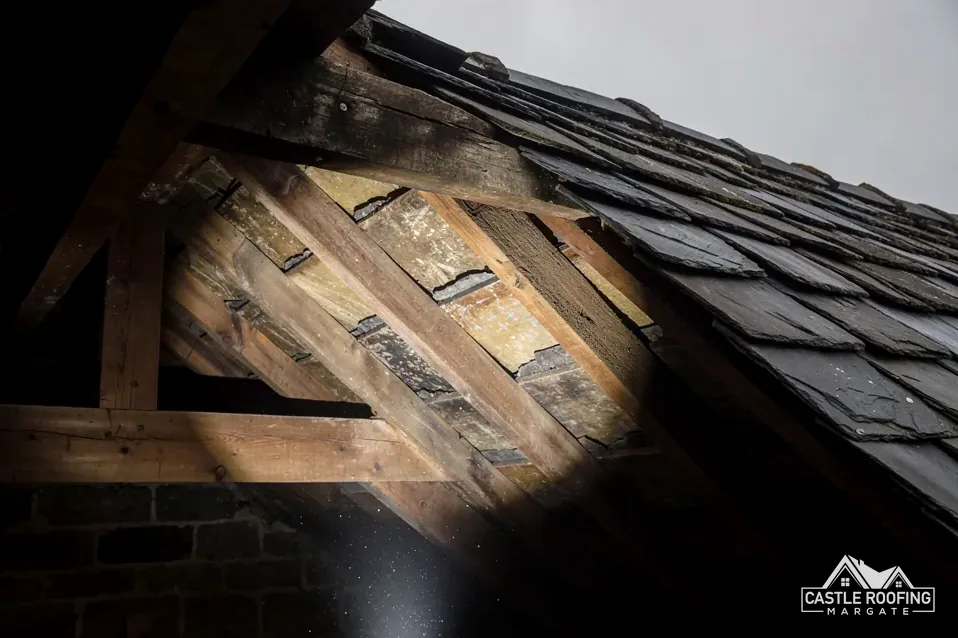
Nails in a slate roof sit under the course above, out of sight, in damp air. Over decades they can corrode through. The slate then hangs by less and less until it slides. That condition has its own name, nail sickness, and our guide on what nail sickness is explains what to look for.
Signs that one slate is not alone:
- More than one slate has slipped or fallen in the last year.
- Slate fragments or loose nail heads turn up in the gutter or on a path.
- The rows no longer run straight, with tails sagging below their line.
- Slates beside the gap lift or rattle when a roofer eases them.
When the surrounding slates come away with little resistance, patching one hole at a time stops being sensible. Checking costs little at the point the first slate is out, because the roofer can see the old nail beside it.
Getting at it, matching it and paying for it
Slate is thin and brittle, so it should not be walked on. A roofer reaches a repair with a roof ladder hooked over the ridge, or with scaffold where the site calls for it. Where the poles have to stand on a Thanet footway, the scaffolders ask Kent County Council for the licence.
Matching matters as much as the fix. A new slate that is the wrong thickness sits proud of its row, and one of a different colour shows from the road. Old roofs sometimes call for reclaimed slates, and our page on matching old slates covers that choice.
On cost, Checkatrade's June 2026 repair guide quotes natural slate repair at £150 to £220 per m², ex VAT, for work up to 3m². One slate is far under that area, and the figure is a general national range, not a quote. Which? and HomeBuilding both flag higher South East prices, which takes in Kent.
Photos of the slipped or missing slate, taken from the ground, let a roofer judge the access before anyone climbs.