The published range
HomeBuilding, in its roof cost guide last updated on 30 September 2025, puts Spanish slate at 75 to 100 years. It is a typical range reported by a magazine, and it describes a roof built and maintained well. It is not a promise from the slate maker. A figure like this suits planning a budget over decades, not setting a calendar.
Set beside the other slate figures from the same guide, it helps to see where Spanish slate falls.
| Slate | Typical life |
|---|---|
| Welsh | 100+ years |
| Spanish | 75 to 100 years |
| Reclaimed Welsh | 50 to 80 years |
What separates a long life from a short one is the care the roof gets, more than the line it sits on in the table. A Spanish slate roof on sound fixings can see out a Welsh one whose battens have rotted, so use the table to orient yourself and not to decide.
A range this wide also tells you something. The top figure is for the best conditions, and a roof may fall anywhere inside the span, or outside it.
Why one Spanish slate is not another
Spanish slate comes from more than one quarry, and the stone is not uniform. Some quarries produce dense, thin, consistent slate. Others produce material that is thicker, more variable or more likely to take in water, and a supplier will grade the output into bands.
That is the reason a single figure for "Spanish slate" is only an average. The same label can cover slates of quite different quality. You cannot see the difference by looking at a pallet.
What helps is information. Ask the supplier or your roofer for the product name, the quarry, the grade and the technical data sheet before you order, and have it written into the specification. A slate bought on those facts is a better bet than one bought on a country of origin.
Thickness and size matter to the finished roof too, since a thick slate is heavier and a thin one is more easily cracked. They affect how much headlap is needed at your pitch, which the slate headlap page explains, and how the roof looks from the street.
What fails before the stone does
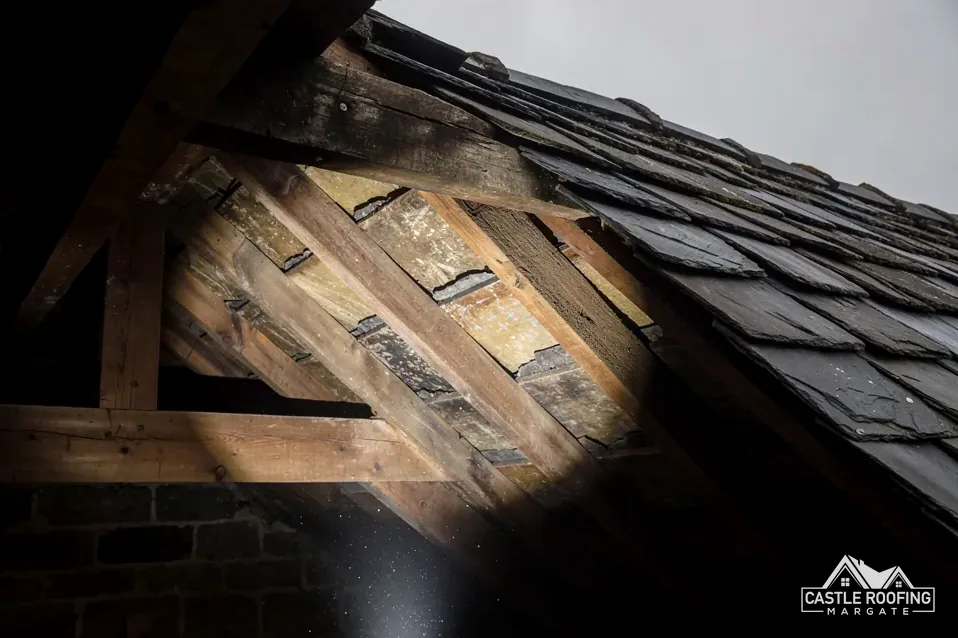
On many slate roofs the covering is not the weak link. The parts under and around it age faster, and a long-lived slate can end up held on by tired fittings. The parts that wear include:
- Nails corrode and loosen, so slates begin to slip.
- Timber battens soften and split, especially where water has got in.
- Underlay perishes, which matters when it is the roof's second line of defence.
- Lead flashings and valleys wear and split at the details.
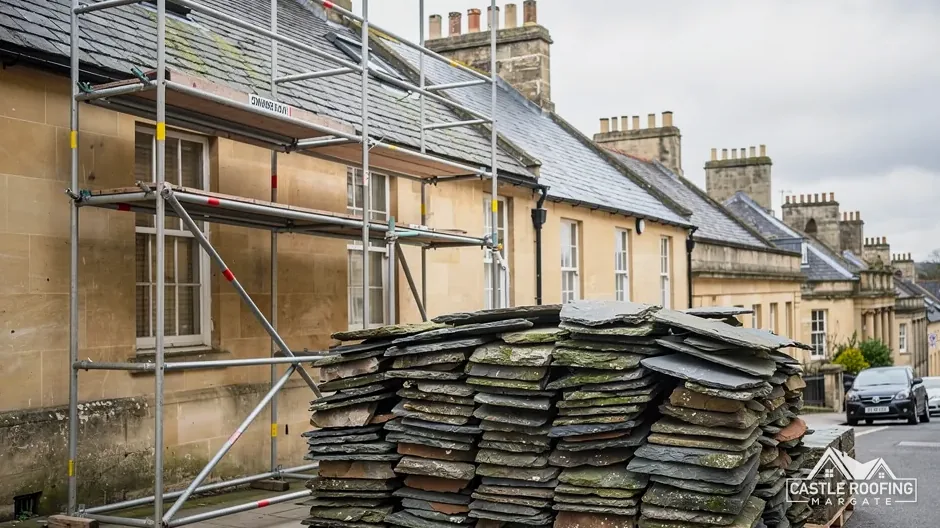
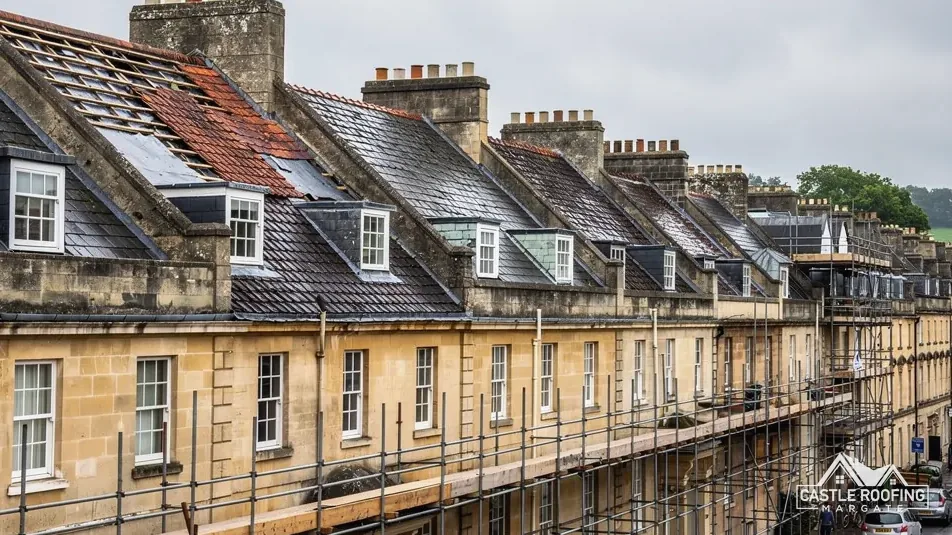
None of that says the slates themselves are finished. A roof can be stripped, the sound slates sorted, and the roof refixed on new battens and underlay, and the slates go on to serve again. That is a cheaper outcome than a complete new covering, and it is open only if the stone is in good enough condition. Reusing sound slates also keeps the roof's appearance, which matters on a street where neighbours share the same stone.
The page on how long a slate roof lasts follows these wear points in more detail, and the post on nail fatigue explains the first of them.
Reading your own roof
Do not work out the remaining life by subtracting the roof's age from 100. The figure does not count down like that, and a roof of thirty years may have more life ahead than a poorly built roof of fifteen.
Look at what the roof is doing. These signs say it is moving toward the end of its life, whatever its age:
- Slipped slates, or a growing number of repairs.
- Flaking at the edges of the slates.
- A dark, soft look to the batten ends seen from the loft.
A tight, even roof with few repairs says the opposite. Dated photographs of each slope, taken once a year from the ground, give you a record of how the roof is changing. If you know where the slate was bought, keep that record, because the grade and quarry help a roofer judge the stone and match it when a repair is needed.
A survey with photos puts a view of your roof's condition in front of you, and from it you can decide between repair, partial re-slating and a full replacement. Each is priced after that look. The full range of slate work is described on the slate roofing page.