Why a head count misleads
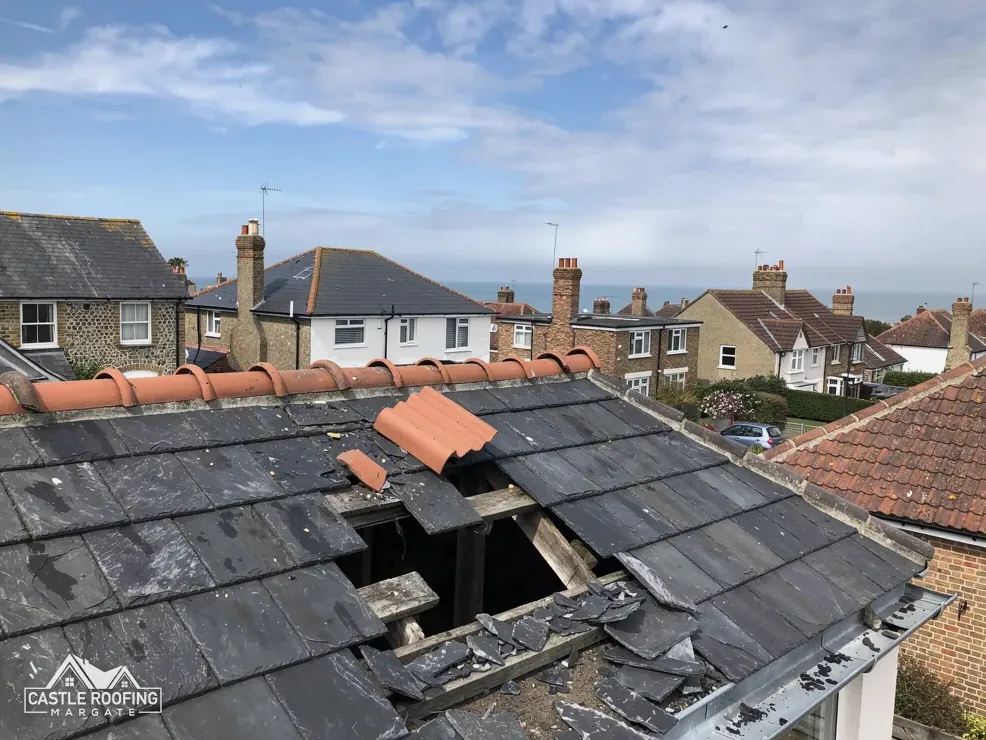
Two houses on the same Thanet street can each have ten broken slates and need completely different work. On one roof, a branch came down in a gale and cracked ten slates in a cluster. The slates around them are sound, so replacing those ten is the whole job. On the other, the ten are scattered over three slopes, and each one broke because the slate above lost its grip and slid.
A count tells you how much has shown itself so far. It says nothing about the cause, and the cause is what decides whether a repair will hold. A cracked slate is the symptom. A slipped one, a slate that has dropped from its position because its fixing gave way, can be the first warning of a fixing problem that has not finished spreading.
That is why a roofer who quotes a re-roof on the strength of a number alone, or promises a repair on the strength of a number alone, has skipped the part that matters. The better question is what the broken slates have in common, and whether the unbroken ones nearby are held by anything sound.
Look, then, at the arrangement of the damage before you worry about the total.
Reading the pattern across the roof
When a surveyor looks at a slate slope, the layout of the damage tells a story. These are the patterns that change the answer:
- Breaks in a line below a tree, an aerial or a chimney point to an impact or a fall, and a repair suits them.
- A single slate gone beside a repaired patch suggests the earlier repair has loosened its neighbours.
- Slipped slates spread over one slope, with gaps at similar heights, point to fixings failing together.
- Slates that split into thin layers rather than cracking across are a problem with the stone itself, not the fixings.
The third pattern is the one to take seriously. When fixings across a slope are tired, each repaired slate is held by the same type of nail that let go next door, and the next gale picks off another. Slates that are still whole can be lifted and refixed on a sound batten, but that is re-slating that slope in all but name.
The first two patterns are more forgiving. Impact damage rarely tells you how the other slopes are doing, so a tidy repair is the sensible buy.
Nail fatigue behind the break
A slate does not hang on its weight alone. Each is held by nails driven through it into the batten, and the slate below covers the nail heads. Over the decades that metal corrodes and loosens, and the timber around it can soften. Roofers call this nail fatigue, and it is covered in more detail in the post on nail fatigue in slate roofs.
Nail fatigue is quiet. The slate looks fine from the pavement until the day it slides, and the first sign is often a slate lying in the garden or the gutter. By then several neighbours may have lost their grip without moving.
This is why the decision is rarely about the stone. A sound slate on a failed fixing sits on a roof whose fixing life is over, and the useful test is whether the nails and the battens beneath will hold new work. Where they will, repairs make sense. Where they will not, replacing broken slates one at a time is money spent on fixings that are about to fail again.
A loft inspection helps here, because daylight, damp or dust marks under the slope show how far the problem runs.
What a photo survey puts on the table
A proper look at the roof covers more than the broken slates. It follows the slope, checks the nails where they can be seen, looks at the battens and underlay from the loft and notes the lead details at the chimney and the valleys. The photos taken along the way are of your own roof, so you see the same pattern the roofer saw and can judge the advice yourself.
From that comes one of three answers. Repair the broken slates and leave the rest. Strip and refix one slope that has failed, leaving the sound ones. Or re-slate the roof, which is the right answer when fixings, battens or underlay have gone across the whole covering.
You can help before anyone visits by looking from the ground. Note where slates are missing, whether any have slipped part way down, and whether broken pieces are lying in the gutters or at the foot of the downpipes. Never go onto a slate roof yourself.
For the full inspection, see the guide to a slate roof survey, and for the next question, re-slate or repair. The wider service is on the slate roofing page.