Reading the phrase word by word
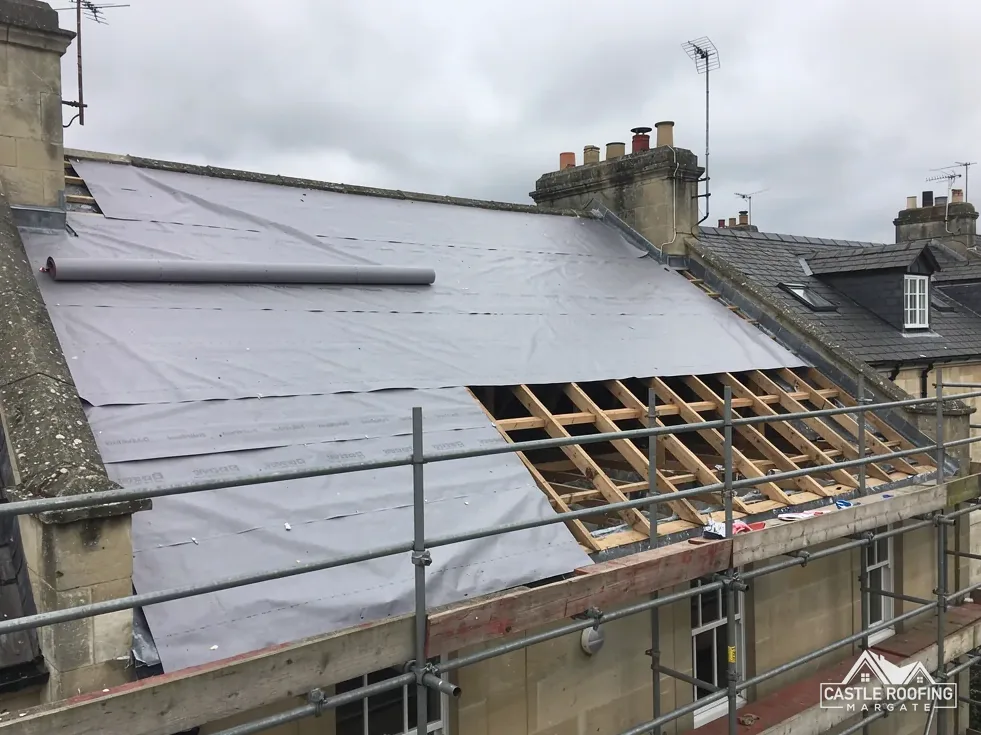
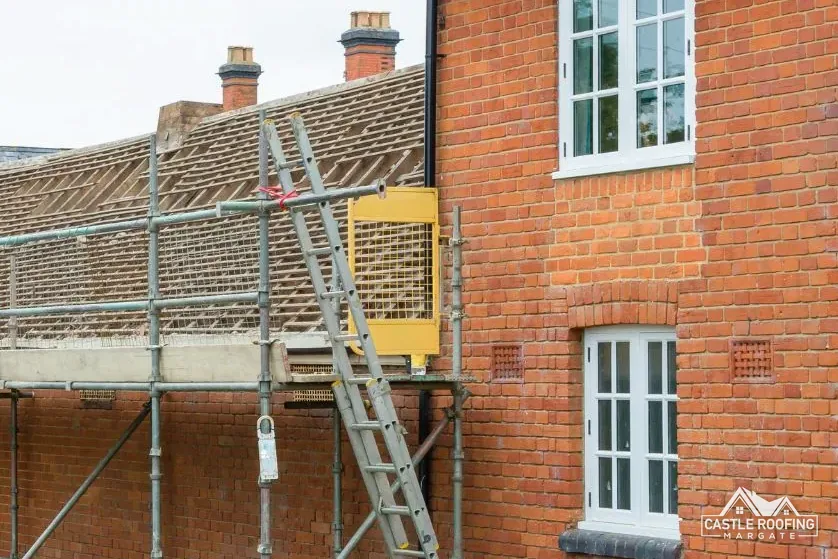
To strip a roof is to take off everything that sits above the rafters. That means the tiles or slates, the battens they hang from (the thin timber laths running across the slope) and the underlay, the sheet laid beneath the battens to catch what gets past the covering. The ridge at the top, the hips at the corners and the verges at the gable ends come off with them.
To re-cover is to build the same layers back: fresh underlay, fresh battens, then a covering. The covering may be new tiles or slates, or sound ones reclaimed and relaid, according to the survey and your own choice. Flashings round chimneys, walls and valleys are renewed or reworked as the new covering goes down, and the ridge, hips and verges are fixed back with a system chosen for the roof.
The roof does not come off in one go. A competent crew strips in small sections and closes each one in before moving on, so the house stays protected throughout. Nothing is left to chance on the first wet evening or the first windy night, and the loft below is checked after rain.
What stays and what goes
The point of the method is to keep what is sound and replace what wears out. In broad terms:
| Part | Usual outcome |
|---|---|
| Rafters and wall plates | Kept, with defective timbers repaired |
| Battens | Replaced |
| Underlay | Replaced |
| Tiles or slates | New, or sorted and relaid if sound |
| Flashings and valleys | Renewed or reworked as needed |
Reusing slates or clay tiles can suit a period roof, but only the survey says whether enough of them are in good condition. Cracked ones are replaced to make up the numbers, and a slope with many new pieces among old ones can look patched. Rafters are inspected as the roof opens, and a rotten end can be cut out and spliced, so the structure stays and only the damaged length is renewed, rather than the whole roof being rebuilt. Lead and other flashings are judged separately: one may be good for reuse while the next is spent, and the survey notes which is which for each flashing.
How it differs from a repair
A repair puts right a particular fault: a slipped slate, a cracked ridge tile, a split flashing. The rest of the covering is left as it is. Strip and re-cover renews the whole covering on the slope, or on the whole roof, because the fault is the covering itself rather than one place on it. Doing a repair that runs into the same trouble next winter is the signal to move to a re-cover.
The rules treat the two differently. For a re-roof, the Planning Portal's yardstick is that no building regulations application is normally needed while under 25 per cent of the building envelope and under 50 per cent of the roof is touched. Stripping the whole roof goes past the 50 per cent roof figure, so check with the building control team. Approval also applies where the new covering is heavier by 15 per cent or more. BS 5534 is the slating and tiling code; Marley confirms that no law demands compliance with it, and its 2018 amendment extended it to cover ordinary re-roofing. Approved Document C expects each piece of covering to be fixed in a suitable way.
The order of work on site
On a typical slope, a strip and re-cover usually runs in this order:
- Scaffold goes up and any licence is in place.
- The covering is taken off in a section, and the old battens and underlay with it.
- The rafters and the eaves are inspected, and timber repairs are made.
- New underlay and battens are fixed, then the covering is laid course by course.
- Ridge, hips, verges and flashings are completed, the scaffold is struck and the roof is cleared.
Each day is explained to you, and the waste is carted away. Weather sets the pace: a section that cannot be closed in before dark is not opened, and a wet forecast moves the stripping to the next dry spell. A roof of ordinary size is done in stages, and a covering with valleys, dormers or lead takes longer. The slate version of the same sequence is in the slate re-roof, step by step guide. For the felt and batten layers, see new felt and battens, and for the wider job, roof replacement.