What the designation does and does not remove
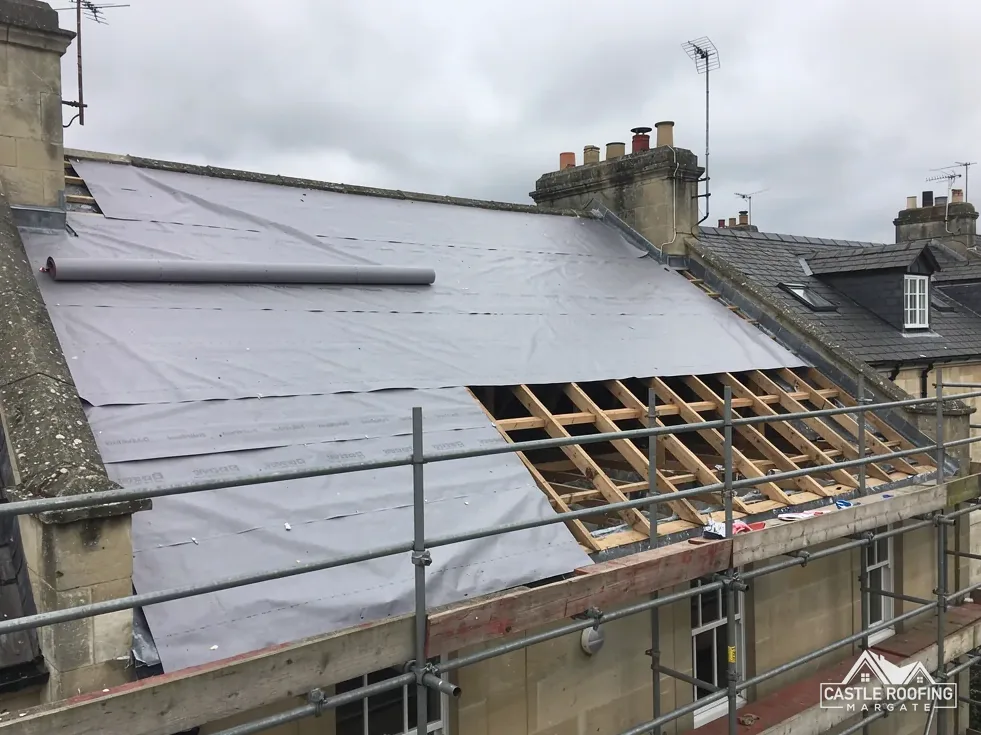
Conservation areas are listed in the General Permitted Development Order as article 2(3) land, the same group that includes a National Park and a World Heritage Site. Designation takes away Class B, which is the right to build a dormer. It leaves Class C alone: that is the right covering changes to a house's roof, and re-roofing normally sits within it.
So the starting position for a house is more open than the designation suggests: a new covering is not automatically a planning matter just because the street is designated. Three things can change that answer. The building may be a flat or maisonette, which has no permitted development rights. It may be listed, which brings in listed building consent. Or an Article 4 direction may apply to the street.
Councils publish how many areas they hold: Thanet 27, Canterbury 97, Dover 57 and Swale 51. Folkestone & Hythe points people to a map instead of a count. Checking which side of the line an address falls on takes a few minutes on that map, and it is the first thing worth doing before you ask anyone for a price.
Article 4 directions, council by council
An Article 4 direction is the tool a council uses to take named permitted development rights away across a set area. Whether roofs are among the rights withdrawn differs from place to place, and only some councils say so on their pages:
| Council | Published wording |
|---|---|
| Swale | Faversham: roof coverings on main elevations facing a public highway |
| Dover | Directions may reach roof alterations on parts facing a road, waterway or open space |
| Thanet | Directions in Ramsgate, Ramsgate Marina extension and Pegwell; ask the council for the classes |
| Canterbury | A map of directions; ask what one covers |
| Folkestone & Hythe | A direction page; ask the council |
| Ashford | Ask whether a direction applies |
A direction does not forbid re-roofing. It means the change needs an application where the right has been withdrawn, usually for the elevation seen from the street, so the back slope of the same house may be treated differently. Read the notice for your own street, because two directions in one town can cover quite different things. The notice is the document that settles the question, and the planning team can send it to you.
When a council page says more than the law
Council pages are written for the public and are not always the same as the order itself. Swale's conservation area page lists minor alterations, including extensions or alterations to roofs, among works needing permission in a designated area. That is broader than the permitted development order, under which Class C still applies, so read it as Swale's cautious advice and not as the law. It is a good reason to ask Swale before assuming either way.
Thanet's page leans the other way for work that matches the existing roof: it says that where work is like for like, a need for planning permission is less likely. Less likely is not a promise. Thanet's planning team can say what it expects for a particular street, and a written reply is worth keeping.
Appraisals show why councils care about roofs. Thanet's own appraisal for the Clifftop part of Cliftonville records mixed roof materials, with red clay tile and natural slate both present. A covering that suits one terrace can look wrong beside its neighbour, which is why a change of material draws more attention than a like-for-like re-cover.
Questions to settle before ordering
A conservation area roof job runs more smoothly when the questions are asked early and the replies are kept. Before you commit, work through this list:
- Find the address on the council's conservation area map and note whether a direction is shown.
- Ask the planning team whether the new covering needs an application, and keep the reply.
- Say whether the house is listed, a flat, or a maisonette, because each changes the route.
- Name the covering you want, with its colour and size, so the council is answering the real job.
- Ask whether the reply covers the back slope as well as the front.
- Allow for the answer before the start date is fixed.
At the survey we photograph the front slope and the street, then write the price once the covering is agreed. Where an application is needed, the programme waits for the council, and keeping its reply with your quote shows what the price was based on. For the wider picture, see roof replacement, re-roofing a listed building and planning for a new roof.