What the Planning Portal says about weight
The Planning Portal's re-roofing guidance sets out when a new covering needs building regulations approval. It names two triggers: a covering at least 15 per cent heavier than the old one, and one whose fire performance would differ markedly. On weight, its advice is to have the structure looked at by an engineer or surveyor before work begins.
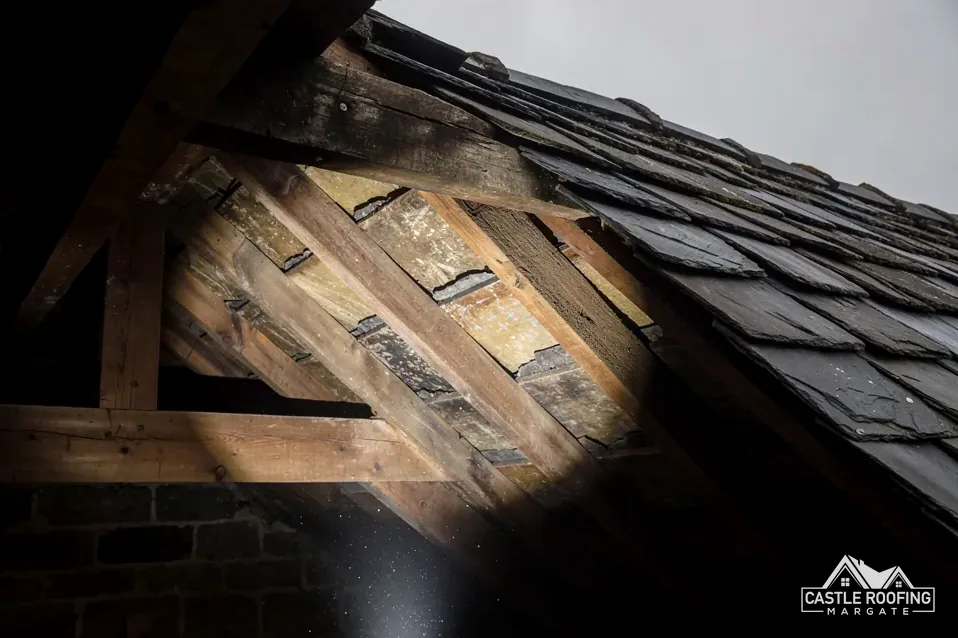
That advice is aimed at the owner, not at the roofer alone. The roof is a structure: rafters, purlins (horizontal timbers that carry the rafters) and walls designed to carry a certain load, and sometimes carrying it with little margin after many decades. Putting more weight on it is a design question, and one that a person trained in structures answers by calculation.
A surveyor may be enough on a straightforward roof. Where the timbers are old, undersized, notched or already deflecting, an engineer's calculation is a better route to a conclusion that a building control team will accept, and it protects you if the roof is ever questioned at a sale. A written calculation is much easier to hand over than a memory of what someone said on the scaffold.
The Approved Document A line
Approved Document A deals with structure and puts the same idea in slightly different words. It calls a loading increase above 15% a significant change. The two sources agree in substance and differ only at the boundary, with one written as 15 per cent or more and the other as more than 15%. An increase of exactly 15 per cent falls under the first wording and outside the second, so any figure you are given should say which of the two documents it comes from.
| Document | Wording |
|---|---|
| Planning Portal | increases the weight by 15 per cent or more |
| Approved Document A | loading increased by more than 15% |
Neither tells you the weight of the covering you have or the one you want. That comes from the manufacturers' data sheets and from the survey of the roof. The comparison is made on paper before any tiles are ordered, so a roof that cannot take the change is found out at the desk rather than on the scaffold, when changing course costs a great deal more.
When a like-for-like re-roof needs no engineer
Where the new covering is of similar weight to the old one, the loading does not change in a way that raises the question. A strip and re-cover with the same type of covering, fixed to new battens on the existing rafters, is the ordinary case. The roofer inspects the timbers as the covering comes off, and the roof goes back on without further input unless something turns up.
An engineer comes in when something specific points that way:
- Rafters that are cracked, rotted at the feet or visibly bowed.
- A ridge or slope that sags before the work starts.
- A request for a covering that is clearly heavier than the one removed.
- Alterations such as a loft conversion, a dormer or a removed chimney breast, which have structural consequences of their own.
In those cases the engineer's note or calculation goes with the job, and the building control team for the district sees it. Keeping the paper together means the question never has to be answered again from memory. A short folder with the survey photos, the data sheets and the engineer's note is enough to show what was checked and by whom.
What to ask for and who to give it to
Where a heavier covering is being considered, ask your roofer for the following before you agree anything:
- Weights for the present covering and the new one, taken from the data sheets.
- Photos of the rafters, purlins and wall plates from the loft.
- The name of the building control team that will be notified.
- The engineer's or surveyor's written conclusion, kept with the paperwork.
The engineer works for you and reports in writing. The roofer then builds to what that report says, on timbers that have been checked. The engineer's fee is the engineer's to set, and the roofing price follows the survey. Agree the order of events in writing too: the engineer's visit, the report, then the roofer's start date. Ask each person to date and sign whatever they give you. If the answer is that the roof needs strengthening, you want to know before the old covering is off, not after.
For the approval side, see approval for a heavier roof covering and who notifies building control. The overview is in roof replacement.