Why winter is possible but slower
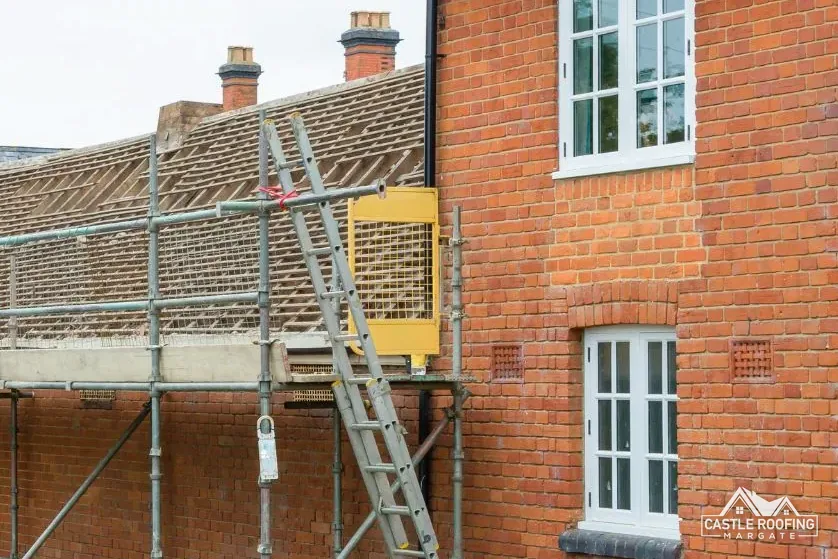
Roofs are repaired and replaced all year round, because leaks do not wait for spring. Winter changes the method more than the result. A roofer has fewer hours of usable light, so less of the roof is opened in a day. Wet slopes are slippery, so some mornings start late or do not start. And a strong wind makes it hard to carry sheets and tiles up a scaffold safely.
The answer is to plan the roof as a series of small, self-contained parts. One slope, or half of one, is stripped, the underlay and battens go on, and the covering follows or the area is sealed under a temporary cover before the crew leaves. The house is never left with a long open stretch overnight. Daylight is the main limit, so each day is planned backwards from the time the light goes.
That is why the survey comes before any number is written down. A simple gable with good access can be sequenced differently from a hipped roof with valleys and a chimney in the middle, and the difference shows up fast once the days are short.
What the Manston averages actually say
The Met Office has published long-run figures for its Manston station, and they cover 1991 to 2020. They are annual averages, not forecasts, and they describe one inland Thanet site rather than every street, so treat them as background and not as a prediction for your week. They are 30-year averages, so any single winter can run wetter, drier or windier.
| Measure | Average |
|---|---|
| Rainfall | About 613 mm a year |
| Days with 1 mm or more of rain | About 110 a year |
| Days of air frost | About 21 a year |
| Mean wind at 10 m | 9.86 knots, 11.21 in January |
Read together, they say that wet days are common, air frost is occasional, and January's mean wind runs above the annual figure. None of that rules out a winter re-roof. It does mean a winter programme should have slack built in rather than a date carved in stone, and that a roofer promising an exact finish in January deserves a second question, however mild the forecast looks.
How the job is kept dry and safe
The working habits that matter in winter are simple and specific:
- Strip only as much as can be made weathertight before dark, and no more.
- Fix new underlay and battens in the visit that the old ones come off, so no slope is left on bare rafters.
- Keep sheeting and spare battens on site to cover any open area when rain is forecast.
- Check the loft and ceilings below after rain, so a problem is caught early.
- Stop work on a slope when wind or ice makes it unsafe, and say so.
The legal backdrop is regulation 6(3) of the Work at Height Regulations 2005, which obliges employers to take measures, wherever reasonably practicable, that prevent a fall likely to injure anyone. In practice that is the reason a roofer will call a morning off, and a good one tells you, rather than leaving you to find out from the street that nobody has turned up.
Wet weather also affects what can be done on the ground. Materials need to be stored off the wet and sheeted, and the working area kept clear so nobody slips carrying slates or tiles.
What to ask before agreeing a winter start
A winter booking is worth making when the roof is failing, and the questions below separate a planned job from a hopeful one, so put each of them before you sign:
- How will each stripped slope be covered if the weather turns?
- Who decides when to stop, and how will you be told?
- What is the plan for the loft contents and the rooms under the work?
- If the job stretches, what happens to the scaffold and its licence dates?
The last point matters because Kent County Council's scaffold licence runs by the week, and a delay for weather can carry the scaffold into another week. Ask who renews it and who pays for the extra time. Winter bookings also need a flexible start date, so ask what the fallback is. Ask, too, how the crew will protect the loft and what happens to materials stored on site overnight. A roof that is already leaking may first need a temporary make-safe to hold until a calmer spell arrives.
For the wider timing question, see how long a re-roof takes and living at home during a re-roof, both within roof replacement.